Shi Haoshen, Carion Thomas W, Jiang Youde, Chahine Adam, Steinle Jena J, Berger Elizabeth A
Department of Anatomy & Cell Biology, Wayne State University School of Medicine, Detroit, Michigan, United States of America.
Department of Ophthalmology, Kresge Eye Institute, Detroit, Michigan, United States of America.
PLoS One. 2017 Nov 2;12(11):e0185383. doi: 10.1371/journal.pone.0185383. eCollection 2017.
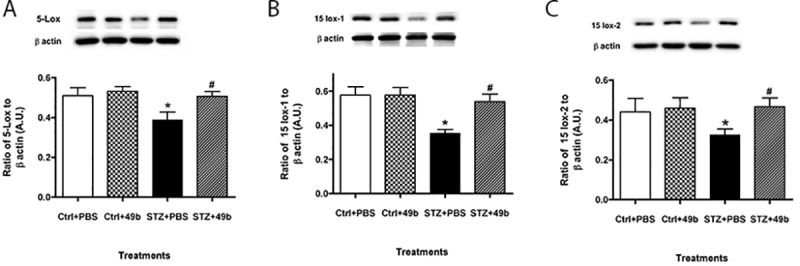
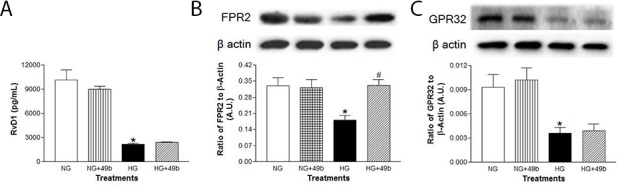
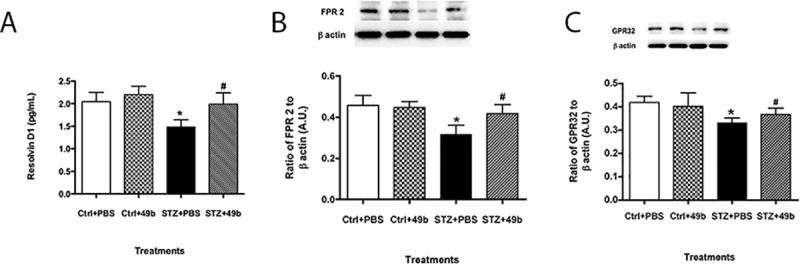
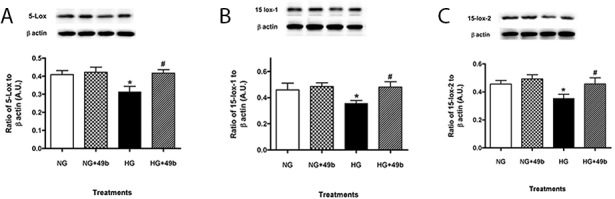
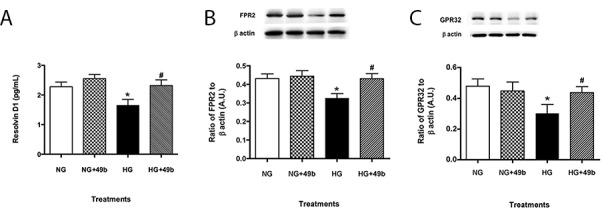
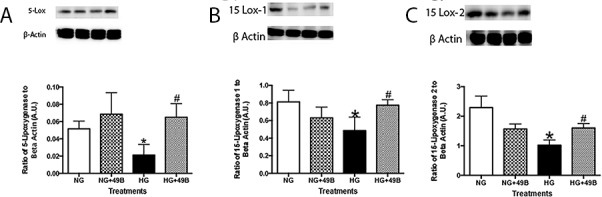
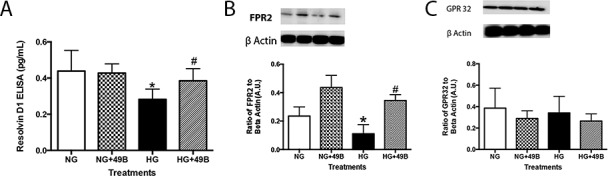
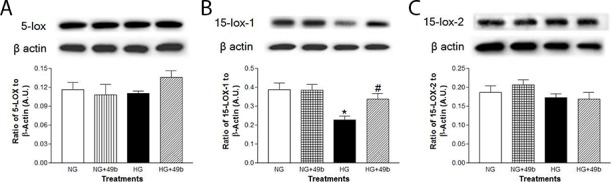
Diabetic retinopathy is a visually debilitating disease with limited treatment options available. Compound 49b, a β-adrenergic receptor agonist, has been demonstrated to effectively reduce disease pathogenesis associated with diabetic retinopathy. While the exact mechanisms are not fully understood, previous studies have determined that it reduces the pro-inflammatory cytokine, TNF-α, and inhibits apoptosis of the retinal microvasculture. As inflammation becomes more recognized in driving disease pathogenesis, so does the regulation by pro-resolving pathways as therapeutic points of intervention. The current study sought to explore whether Compound 49b had any influence on pro-resolving pathways, thus contributing to improved disease outcome. Using in vivo (animal model of type 1 diabetes) and in vitro (retinal endothelial cells, Müller cells, neutrophils/PMN) techniques, it was determined that high glucose lowers pro-resolving lipid mediator, resolvin D1 (RvD1) levels and differentially alters required enzymes, 5-lipoxygenase (5-LOX), 15-LOX-1 and 15-LOX-2. RvD1 receptors formyl peptide receptor 2 (ALX/FPR2) and G-protein coupled receptor 32 (GPR32) were also downregulated in response to hyperglycemic conditions. Moreover, it was observed that β-adrenergic receptor activation restored high glucose-induced decreases in both enzyme activity and RvD1 levels observed in vivo and in vitro. The current study is the first to describe a regulatory role for β-adrenergic receptors on pro-resolving pathways.
糖尿病视网膜病变是一种会导致视力衰退的疾病,可用的治疗选择有限。化合物49b是一种β-肾上腺素能受体激动剂,已被证明能有效减轻与糖尿病视网膜病变相关的疾病发病机制。虽然确切机制尚未完全明确,但先前的研究已确定它能降低促炎细胞因子肿瘤坏死因子-α(TNF-α),并抑制视网膜微血管的凋亡。随着炎症在疾病发病机制中的作用越来越受到认可,促消退途径作为治疗干预点的调节作用也日益受到关注。本研究旨在探讨化合物49b是否对促消退途径有任何影响,从而改善疾病预后。通过体内(1型糖尿病动物模型)和体外(视网膜内皮细胞、穆勒细胞、中性粒细胞/多形核白细胞)技术,研究发现高糖会降低促消退脂质介质、消退素D1(RvD1)的水平,并差异性地改变所需的酶,即5-脂氧合酶(5-LOX)、15-脂氧合酶-1(15-LOX-1)和15-脂氧合酶-2(15-LOX-2)。RvD1受体甲酰肽受体2(ALX/FPR2)和G蛋白偶联受体32(GPR32)在高血糖条件下也会下调。此外,研究观察到β-肾上腺素能受体激活可恢复体内和体外观察到的高糖诱导的酶活性和RvD1水平的降低。本研究首次描述了β-肾上腺素能受体在促消退途径中的调节作用。