Division of Endocrinology and Diabetes, Center for Internal Medicine, University Medical Center Ulm, Ulm, Germany.
PLoS One. 2011;6(8):e22815. doi: 10.1371/journal.pone.0022815. Epub 2011 Aug 5.
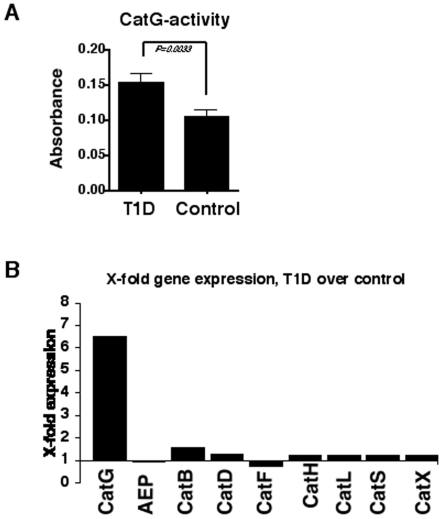
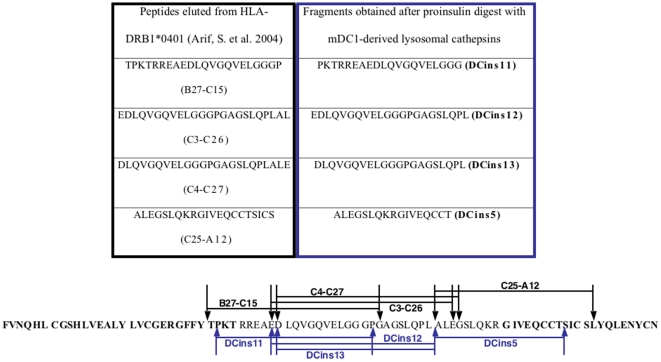
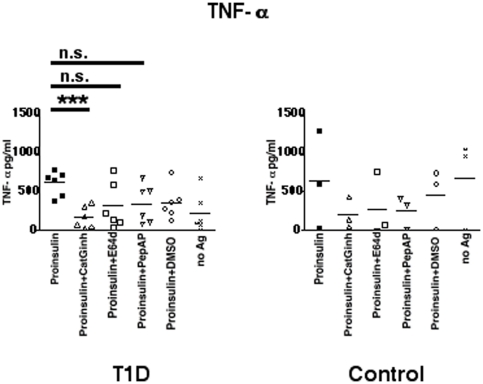
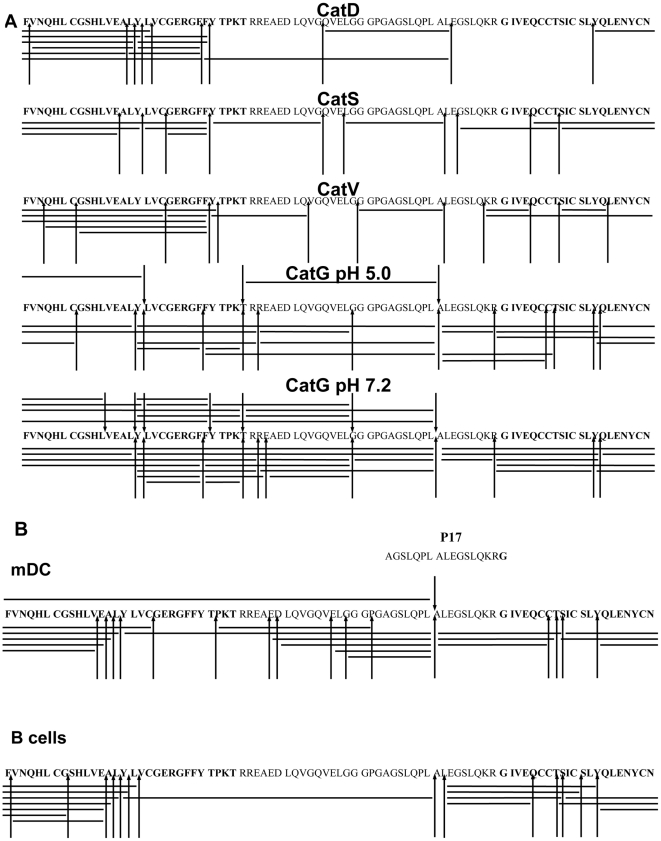
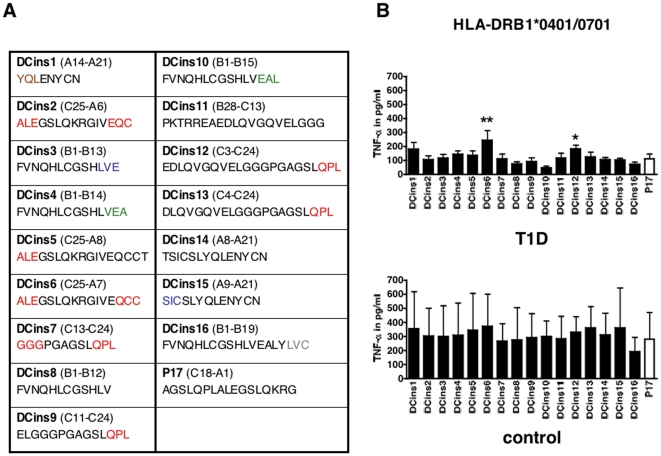
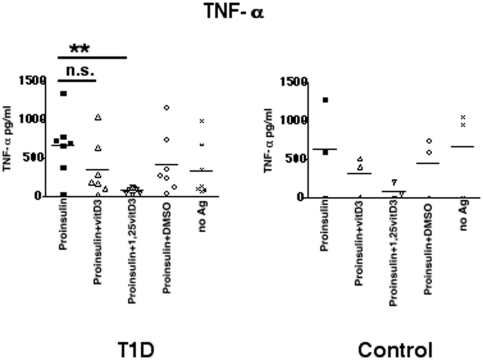
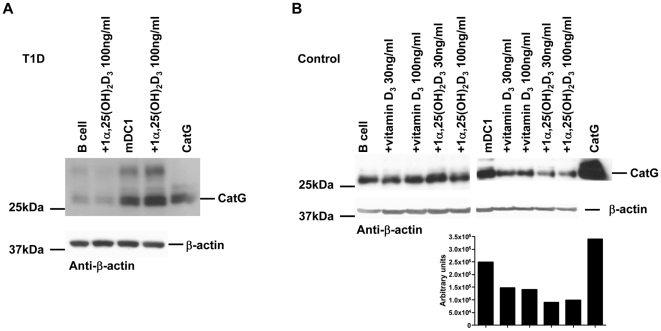
Autoantigenic peptides resulting from self-proteins such as proinsulin are important players in the development of type 1 diabetes mellitus (T1D). Self-proteins can be processed by cathepsins (Cats) within endocytic compartments and loaded to major histocompatibility complex (MHC) class II molecules for CD4(+) T cell inspection. However, the processing and presentation of proinsulin by antigen-presenting cells (APC) in humans is only partially understood. Here we demonstrate that the processing of proinsulin by B cell or myeloid dendritic cell (mDC1)-derived lysosomal cathepsins resulted in several proinsulin-derived intermediates. These intermediates were similar to those obtained using purified CatG and, to a lesser extent, CatD, S, and V in vitro. Some of these intermediates polarized T cell activation in peripheral blood mononuclear cells (PBMC) from T1D patients indicative for naturally processed T cell epitopes. Furthermore, CatG activity was found to be elevated in PBMC from T1D patients and abrogation of CatG activity resulted in functional inhibition of proinsulin-reactive T cells. Our data suggested the notion that CatG plays a critical role in proinsulin processing and is important in the activation process of diabetogenic T cells.
自身抗原肽来源于自身蛋白,如胰岛素原,是 1 型糖尿病(T1D)发展的重要参与者。自身蛋白可以在细胞内体中被组织蛋白酶(Cats)加工,并加载到主要组织相容性复合体(MHC)II 类分子上,供 CD4+T 细胞检查。然而,抗原呈递细胞(APC)对胰岛素原的加工和呈递在人类中还不完全清楚。在这里,我们证明了 B 细胞或髓样树突状细胞(mDC1)衍生的溶酶体组织蛋白酶对胰岛素原的加工导致了几种胰岛素原衍生的中间产物。这些中间产物与使用纯化的 CatG 获得的中间产物相似,在体外,与 CatD、S 和 V 的作用程度较小。其中一些中间产物在 T1D 患者的外周血单核细胞(PBMC)中极化了 T 细胞的激活,提示存在天然加工的 T 细胞表位。此外,发现 T1D 患者的 PBMC 中 CatG 活性升高,CatG 活性的阻断导致胰岛素原反应性 T 细胞的功能抑制。我们的数据表明,CatG 在胰岛素原加工中起着关键作用,并且在致糖尿病 T 细胞的激活过程中很重要。