Department of Forest Sciences, University of British Columbia, Vancouver, British Columbia, Canada.
Genome Biol Evol. 2011;3:851-67. doi: 10.1093/gbe/evr069. Epub 2011 Aug 17.
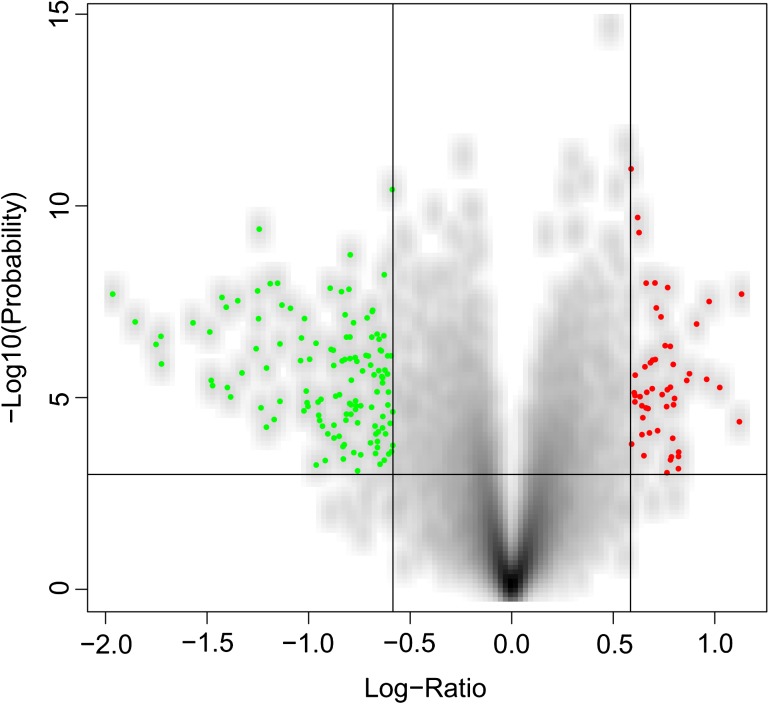
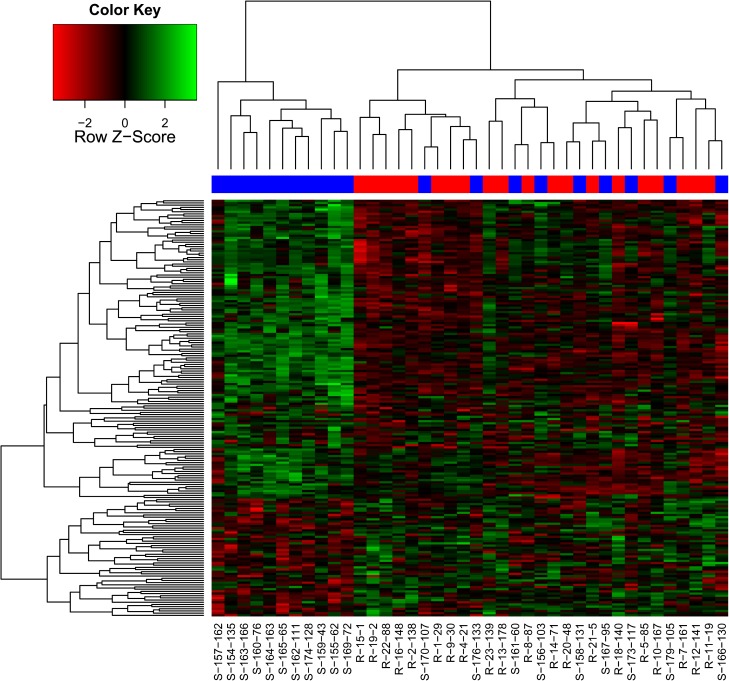
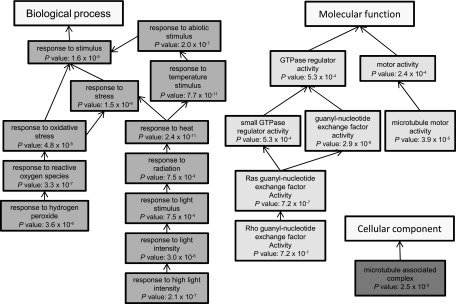
Constitutive defense mechanisms are critical to the understanding of defense mechanisms in conifers because they constitute the first barrier to attacks by insect pests. In interior spruce, trees that are putatively resistant and susceptible to attacks by white pine weevil (Pissodes strobi) typically exhibit constitutive differences in traits such as resin duct size and number, bark thickness, and terpene content. To improve our knowledge of their genetic basis, we compared globally the constitutive expression levels of 17,825 genes between 20 putatively resistant and 20 putatively susceptible interior spruce trees from the British Columbia tree improvement program. We identified 54 upregulated and 137 downregulated genes in resistant phenotypes, relative to susceptible phenotypes, with a maximum fold change of 2.24 and 3.91, respectively. We found a puzzling increase of resistance by downregulated genes, as one would think that "procuring armaments" is the best defense. Also, although terpenes and phenolic compounds play an important role in conifer defense, we found few of these genes to be differentially expressed. We found 15 putative small heat-shock proteins (sHSP) and several other stress-related proteins to be downregulated in resistant trees. Downregulated putative sHSP belong to several sHSP classes and represented 58% of all tested putative sHSP. These proteins are well known to be involved in plant response to various kinds of abiotic stress; however, their role in constitutive resistance is not yet understood. The lack of correspondence between transcriptome profile clusters and phenotype classifications suggests that weevil resistance in spruce is a complex trait.
组成型防御机制对于理解针叶树的防御机制至关重要,因为它们构成了抵御害虫攻击的第一道屏障。在内部云杉中,被认为对星天牛(Pissodes strobi)具有抗性和敏感性的树木通常在树脂管大小和数量、树皮厚度和萜烯含量等特征上表现出组成型差异。为了提高我们对其遗传基础的认识,我们比较了来自不列颠哥伦比亚省树木改良计划的 20 株假定抗性和 20 株假定敏感性内部云杉之间 17825 个基因的组成型表达水平。我们在抗性表型中鉴定出 54 个上调和 137 个下调基因,相对于敏感表型,最大倍数变化分别为 2.24 和 3.91。我们发现一个令人费解的现象,即下调基因会增加抗性,因为人们会认为“采购武器”是最好的防御。此外,尽管萜烯和酚类化合物在针叶树防御中起着重要作用,但我们发现这些基因的表达差异很小。我们发现 15 个假定的小热休克蛋白(sHSP)和其他几种与应激相关的蛋白质在抗性树木中下调。下调的假定 sHSP 属于几个 sHSP 类,代表所有测试的假定 sHSP 的 58%。这些蛋白质是众所周知的参与植物对各种非生物胁迫的反应;然而,它们在组成型抗性中的作用尚不清楚。转录组图谱聚类与表型分类之间缺乏对应关系表明,云杉对星天牛的抗性是一个复杂的性状。