Department of Biochemistry and Biophysics, School of Medicine, University of North Carolina, Chapel Hill, North Carolina, United States of America.
PLoS One. 2011;6(8):e23582. doi: 10.1371/journal.pone.0023582. Epub 2011 Aug 10.
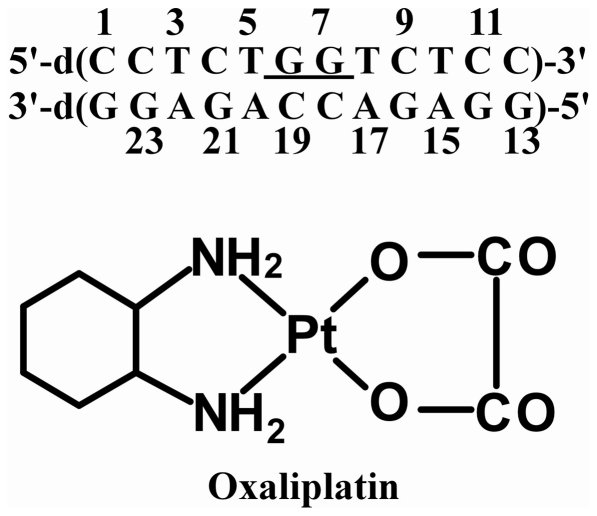
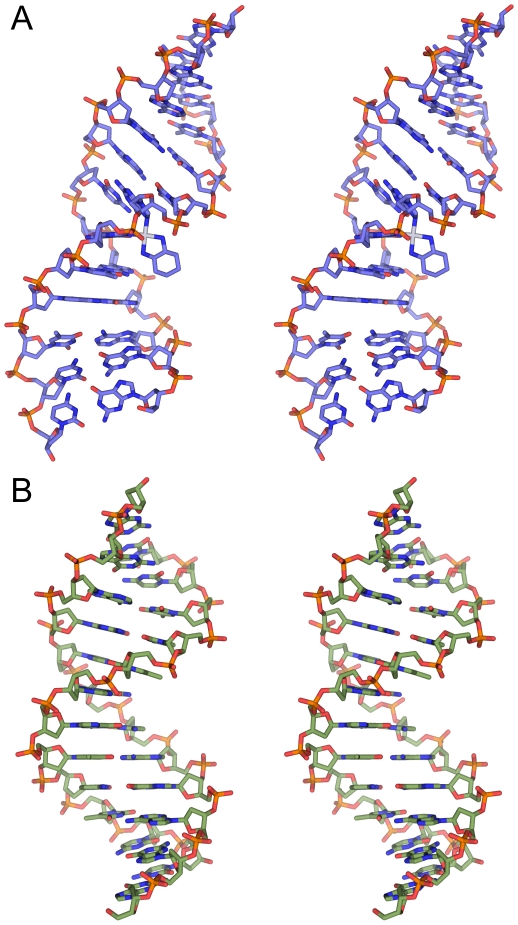
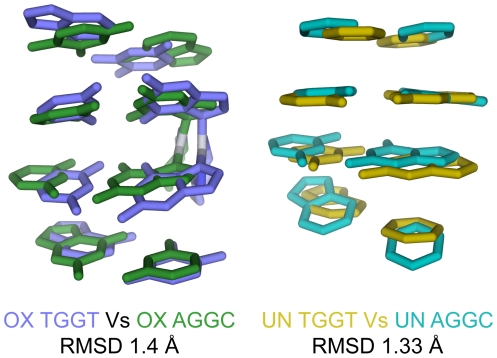
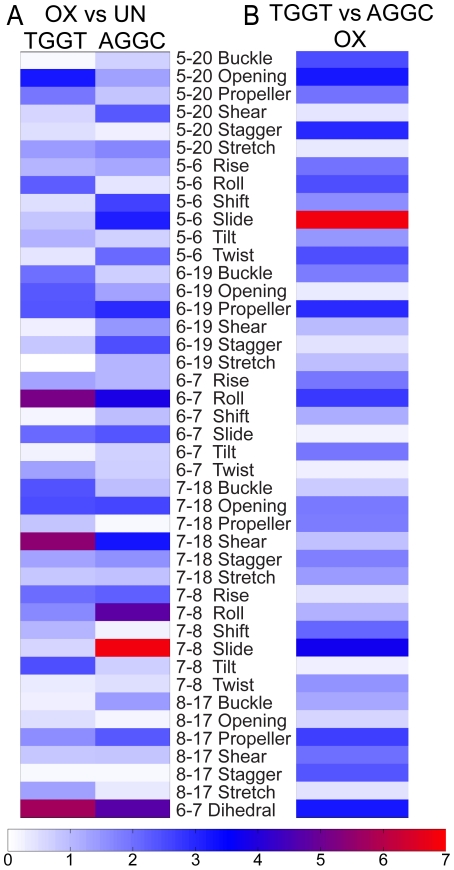
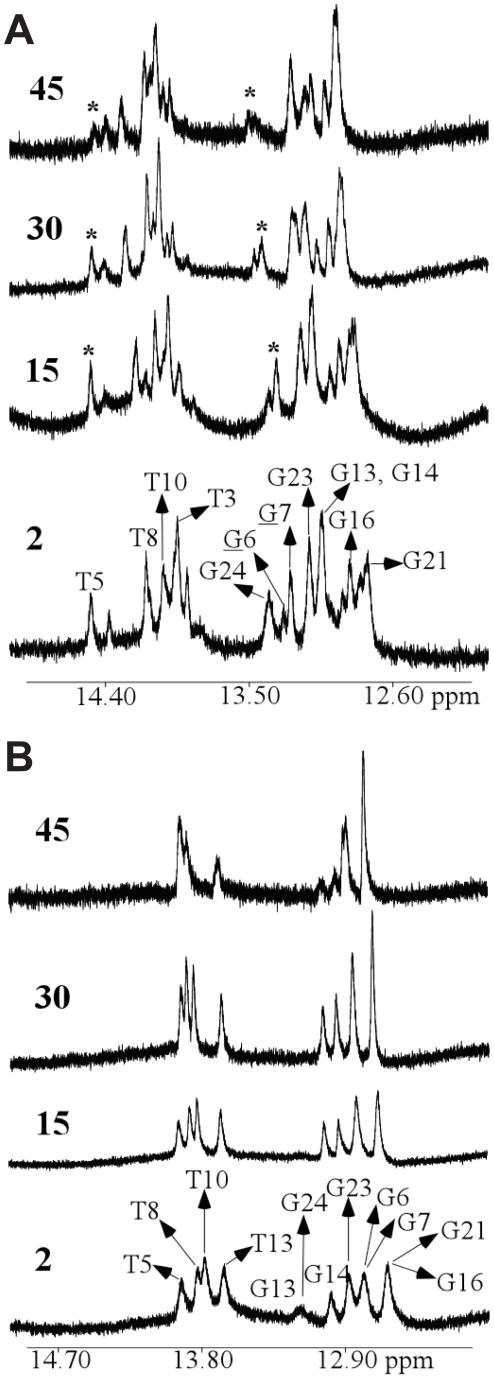
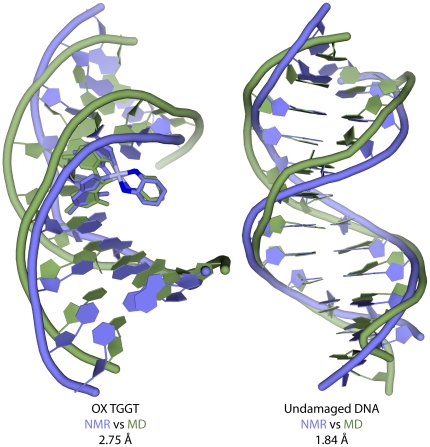
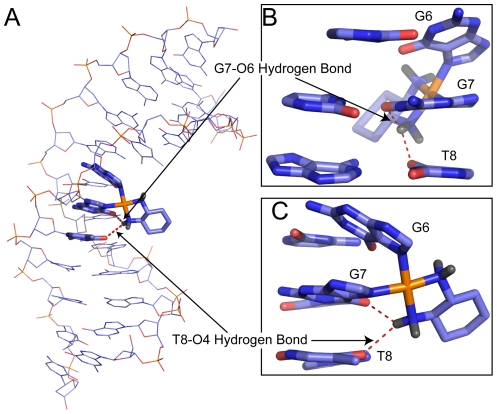
The differences in efficacy and molecular mechanisms of platinum anti-cancer drugs cisplatin (CP) and oxaliplatin (OX) are thought to be partially due to the differences in the DNA conformations of the CP and OX adducts that form on adjacent guanines on DNA, which in turn influence the binding of damage-recognition proteins that control downstream effects of the adducts. Here we report a comprehensive comparison of the structural distortion of DNA caused by CP and OX adducts in the TGGT sequence context using nuclear magnetic resonance (NMR) spectroscopy and molecular dynamics (MD) simulations. When compared to our previous studies in other sequence contexts, these structural studies help us understand the effect of the sequence context on the conformation of Pt-GG DNA adducts. We find that both the sequence context and the type of Pt-GG DNA adduct (CP vs. OX) play an important role in the conformation and the conformational dynamics of Pt-DNA adducts, possibly explaining their influence on the ability of many damage-recognition proteins to bind to Pt-DNA adducts.
顺铂(CP)和奥沙利铂(OX)这两种铂类抗癌药物在疗效和分子机制方面存在差异,据认为部分原因是它们在 DNA 上相邻鸟嘌呤上形成的加合物的 DNA 构象存在差异,而这反过来又会影响控制加合物下游效应的损伤识别蛋白的结合。在这里,我们使用核磁共振(NMR)光谱和分子动力学(MD)模拟方法,全面比较了 TGGT 序列环境中 CP 和 OX 加合物引起的 DNA 结构扭曲。与我们之前在其他序列环境中的研究相比,这些结构研究有助于我们理解序列环境对 Pt-GG DNA 加合物构象的影响。我们发现,序列环境和 Pt-GG DNA 加合物的类型(CP 与 OX)都对 Pt-DNA 加合物的构象和构象动力学起着重要作用,这可能解释了它们对许多损伤识别蛋白结合 Pt-DNA 加合物能力的影响。