Division of Biological Sciences, University of Missouri, Columbia, Missouri, United States of America.
PLoS One. 2011;6(8):e23405. doi: 10.1371/journal.pone.0023405. Epub 2011 Aug 8.
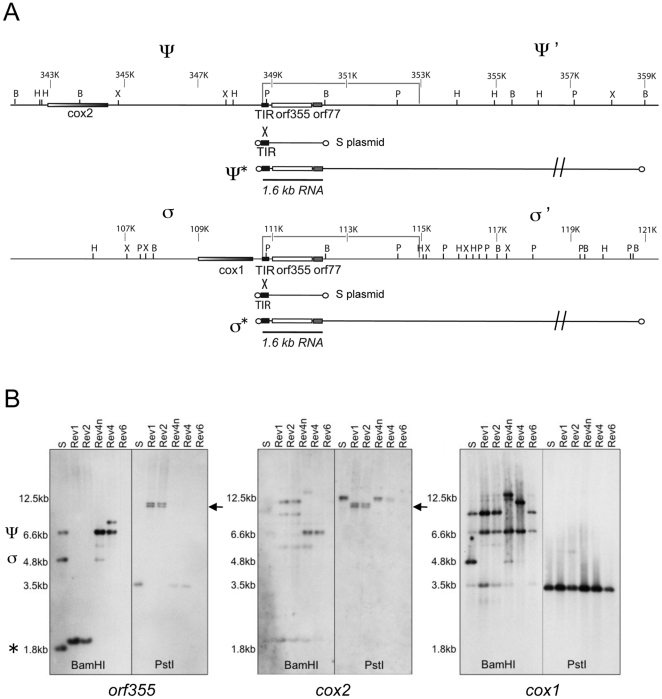
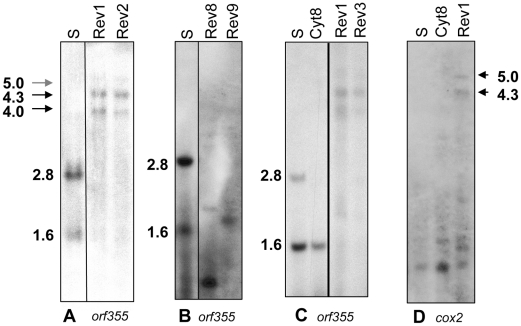
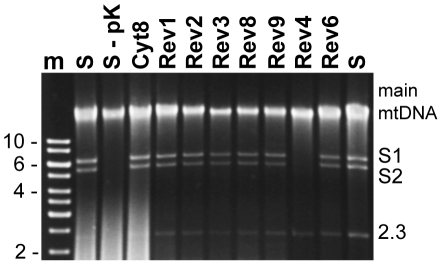
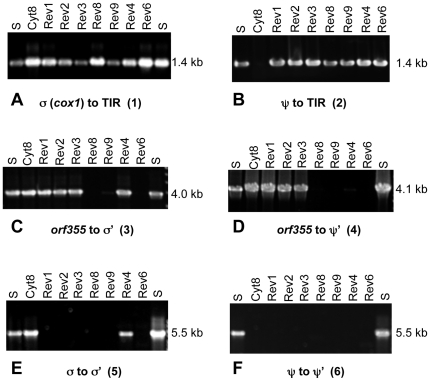
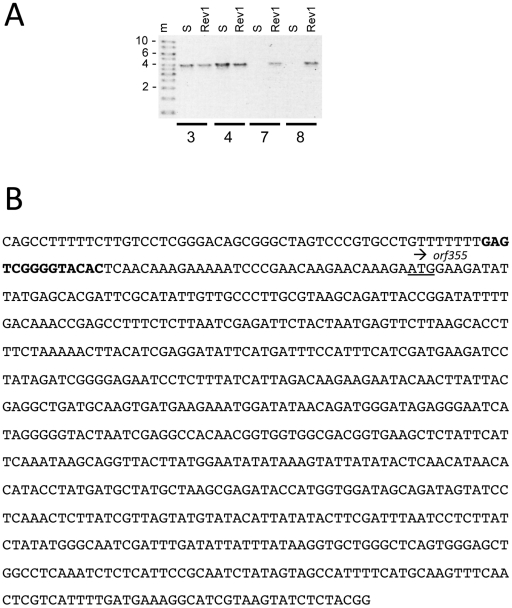
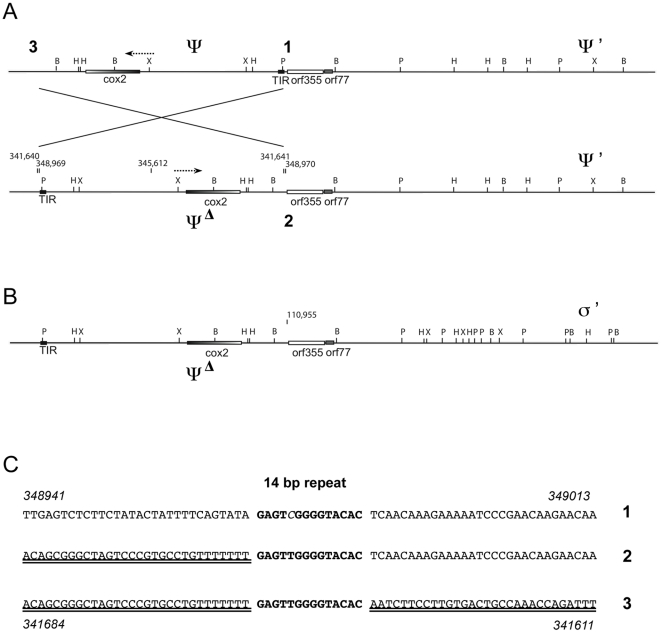
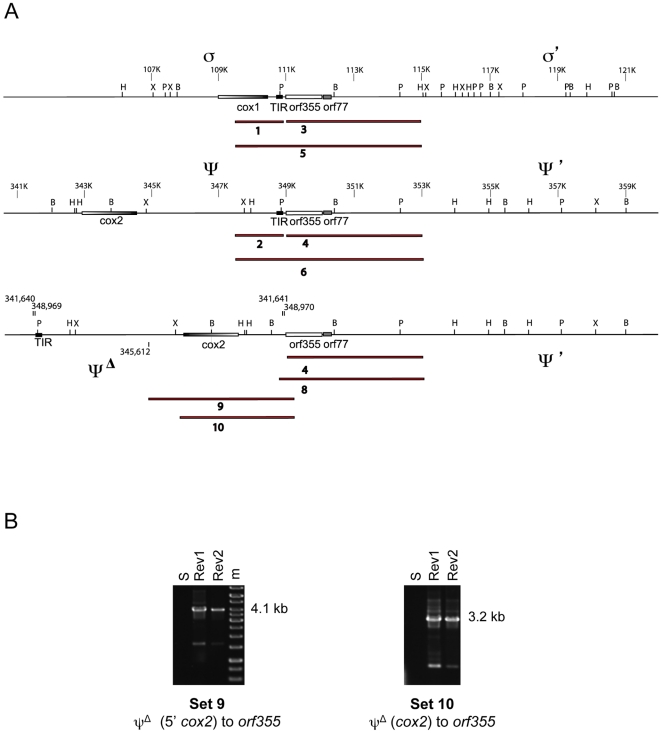
Cytoplasmic male sterility (CMS) in plants is usually associated with the expression of specific chimeric regions within rearranged mitochondrial genomes. Maize CMS-S plants express high amounts of a 1.6-kb mitochondrial RNA during microspore maturation, which is associated with the observed pollen abortion. This transcript carries two chimeric open reading frames, orf355 and orf77, both unique to CMS-S. CMS-S mitochondria also contain free linear DNA plasmids bearing terminal inverted repeats (TIRs). These TIRs recombine with TIR-homologous sequences that precede orf355/orf77 within the main mitochondrial genome to produce linear ends. Transcription of the 1.6-kb RNA is initiated from a promoter within the TIRs only when they are at linear ends. Reversions of CMS-S to fertility occur in certain nuclear backgrounds and are usually associated with loss of the S plasmids and/or the sterility-associated region. We describe an unusual set of independently recovered revertants from a single maternal lineage that retain both the S plasmids and an intact orf355/orf77 region but which do not produce the 1.6-kb RNA. A 7.3-kb inversion resulting from illegitimate recombination between 14-bp microrepeats has separated the genomic TIR sequences from the CMS-associated region. Although RNAs containing orf355/orf77 can still be detected in the revertants, they are not highly expressed during pollen development and they are no longer initiated from the TIR promoter at a protein-stabilized linear end. They appear instead to be co-transcribed with cytochrome oxidase subunit 2. The 7.3-kb inversion was not detected in CMS-S or in other fertile revertants. Therefore, this inversion appears to be a de novo mutation that has continued to sort out within a single maternal lineage, giving rise to fertile progeny in successive generations.
植物细胞质雄性不育(CMS)通常与重组线粒体基因组中特定嵌合区域的表达有关。玉米 CMS-S 植株在小孢子成熟过程中表达大量 1.6kb 的线粒体 RNA,这与观察到的花粉败育有关。该转录本携带两个嵌合开放阅读框orf355 和 orf77,两者均为 CMS-S 所特有。CMS-S 线粒体还包含带有末端反向重复(TIR)的游离线性 DNA 质粒。这些 TIR 与位于主要线粒体基因组中 orf355/orf77 之前的 TIR 同源序列重组,产生线性末端。只有当 TIR 处于线性末端时,1.6kb RNA 的转录才从 TIR 内的启动子开始。CMS-S 向育性的恢复发生在某些核背景下,通常与 S 质粒和/或不育相关区域的丢失有关。我们描述了来自单一母系的一组异常独立恢复体,它们保留了 S 质粒和完整的 orf355/orf77 区域,但不产生 1.6kb RNA。由于 14 个碱基对微重复之间的非法重组,导致 7.3kb 的倒位,将基因组 TIR 序列与 CMS 相关区域分离。尽管在恢复体中仍能检测到含有 orf355/orf77 的 RNA,但它们在花粉发育过程中表达不高,并且不再从 TIR 启动子在蛋白质稳定的线性末端开始。它们似乎与细胞色素氧化酶亚基 2 一起转录。在 CMS-S 或其他可育恢复体中未检测到 7.3kb 倒位。因此,这种倒位似乎是一种新的突变,它在单个母系内继续分离,导致后代产生可育后代。