Department of Molecular Genetics, Graduate School of Medicine, Kyoto University, Kyoto, Japan.
PLoS One. 2011;6(8):e23663. doi: 10.1371/journal.pone.0023663. Epub 2011 Aug 15.
Spermatogonial stem cells (SSCs) have the unique ability to undergo self-renewal division. However, these cells are morphologically indistinguishable from committed spermatogonia, which have limited mitotic activity. To establish a system for SSC purification, we analyzed the expression of SSC markers CD9 and epithelial cell adhesion molecule (EPCAM), both of which are also expressed on embryonic stem (ES) cells. We examined the correlation between their expression patterns and SSC activities.
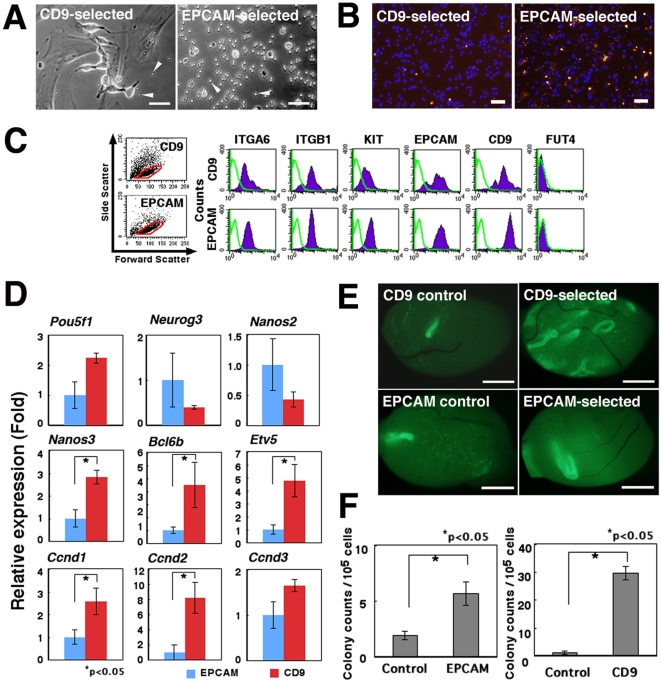
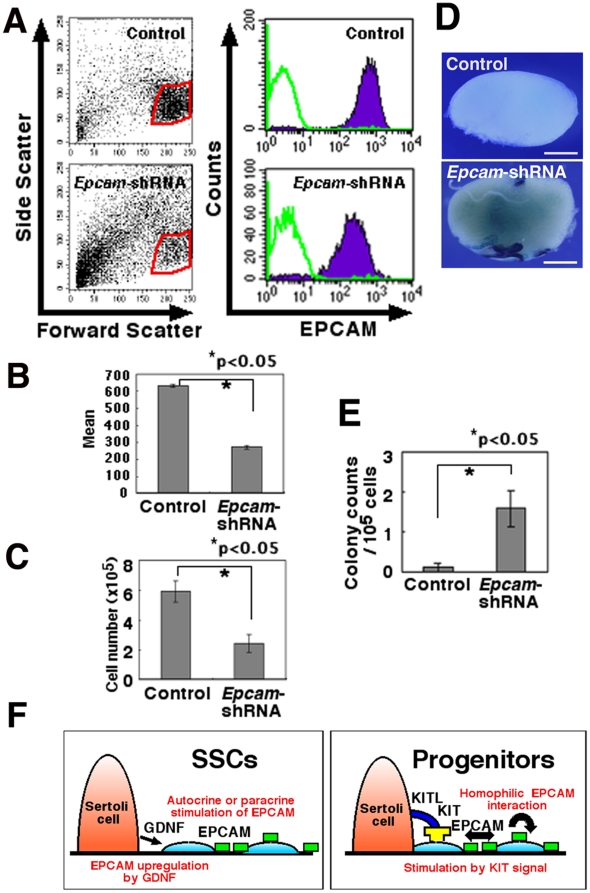
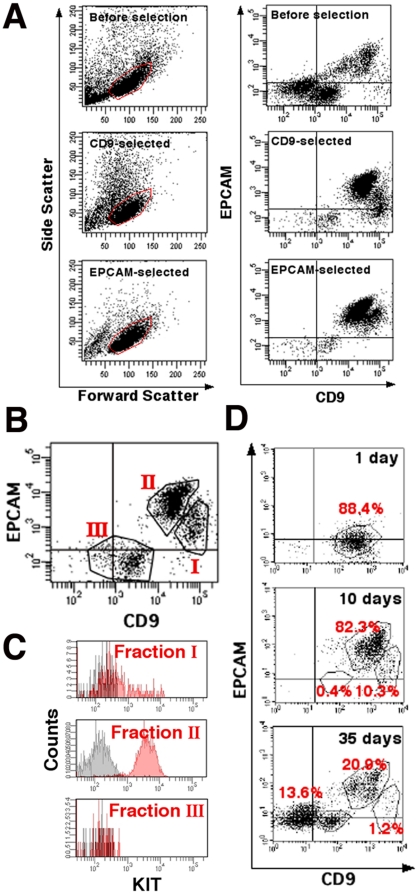
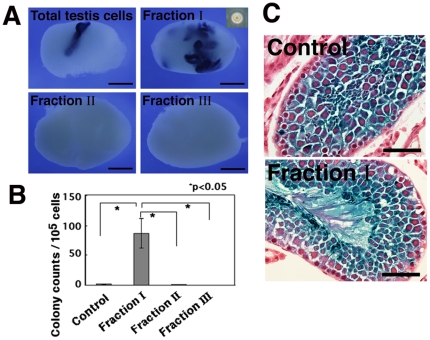
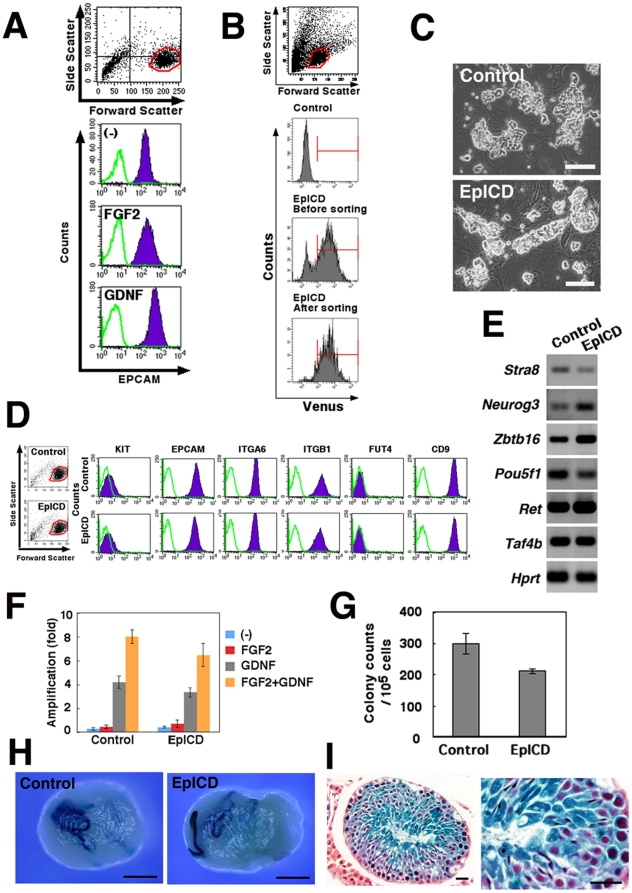
By magnetic cell sorting, we found that EPCAM-selected mouse germ cells have limited clonogenic potential in vitro. Moreover, these cells showed stronger expression of progenitor markers than CD9-selected cells, which are significantly more enriched in SSCs. Fluorescence-activated cell sorting of CD9-selected cells indicated a significantly higher frequency of SSCs among the CD9(+)EPCAM(low/-) population than among the CD9(+)EPCAM(+) population. Overexpression of the active form of EPCAM in germline stem (GS) cell cultures did not significantly influence SSC activity, whereas EPCAM suppression by short hairpin RNA compromised GS cell proliferation and increased the concentration of SSCs, as revealed by germ cell transplantation.
CONCLUSIONS/SIGNIFICANCE: These results show that SSCs are the most concentrated in CD9(+)EPCAM(low/-) population and also suggest that EPCAM plays an important role in progenitor cell amplification in the mouse spermatogenic system. The establishment of a method to distinguish progenitor spermatogonia from SSCs will be useful for developing an improved purification strategy for SSCs from testis cells.
精原干细胞(SSC)具有自我更新分裂的独特能力。然而,这些细胞在形态上与已定向的精原细胞无法区分,后者具有有限的有丝分裂活性。为了建立 SSC 纯化系统,我们分析了 SSC 标志物 CD9 和上皮细胞黏附分子(EPCAM)的表达,这两种标志物也在胚胎干细胞(ES)中表达。我们研究了它们的表达模式与 SSC 活性之间的相关性。
通过磁性细胞分选,我们发现 EPCAM 分选的小鼠生殖细胞在体外的克隆形成能力有限。此外,这些细胞表现出比 CD9 分选细胞更强的祖细胞标志物表达,而 CD9 分选细胞则显著富集 SSC。CD9 分选细胞的荧光激活细胞分选表明,CD9(+)EPCAM(low/-)群体中的 SSC 频率明显高于 CD9(+)EPCAM(+)群体。生殖系干细胞(GS)细胞培养中 EPCAM 活性形式的过表达对 SSC 活性没有显著影响,而短发夹 RNA 对 EPCAM 的抑制则损害了 GS 细胞的增殖,并增加了 SSC 的浓度,这一点通过生殖细胞移植得到了证实。
结论/意义:这些结果表明,SSC 最集中在 CD9(+)EPCAM(low/-)群体中,并且还表明 EPCAM 在小鼠精子发生系统中祖细胞扩增中起着重要作用。建立一种区分祖细胞精原细胞与 SSC 的方法将有助于从睾丸细胞中开发出改进的 SSC 纯化策略。