Department of Veterinary Physiology & Pharmacology, Texas A&M University, College Station, TX 77843, USA.
BMC Cancer. 2011 Aug 24;11:371. doi: 10.1186/1471-2407-11-371.
Betulinic acid (BA) inhibits growth of several cancer cell lines and tumors and the effects of BA have been attributed to its mitochondriotoxicity and inhibition of multiple pro-oncogenic factors. Previous studies show that BA induces proteasome-dependent degradation of specificity protein (Sp) transcription factors Sp1, Sp3 and Sp4 in prostate cancer cells and this study focused on the mechanism of action of BA in colon cancer cells.
The effects of BA on colon cancer cell proliferation and apoptosis and tumor growth in vivo were determined using standardized assays. The effects of BA on Sp proteins and Sp-regulated gene products were analyzed by western blots, and real time PCR was used to determine microRNA-27a (miR-27a) and ZBTB10 mRNA expression.
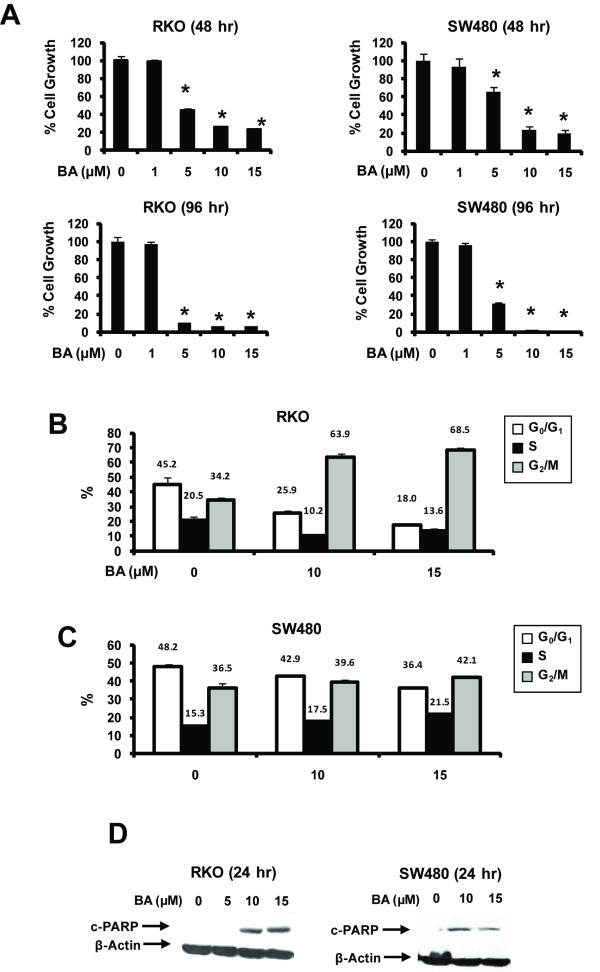
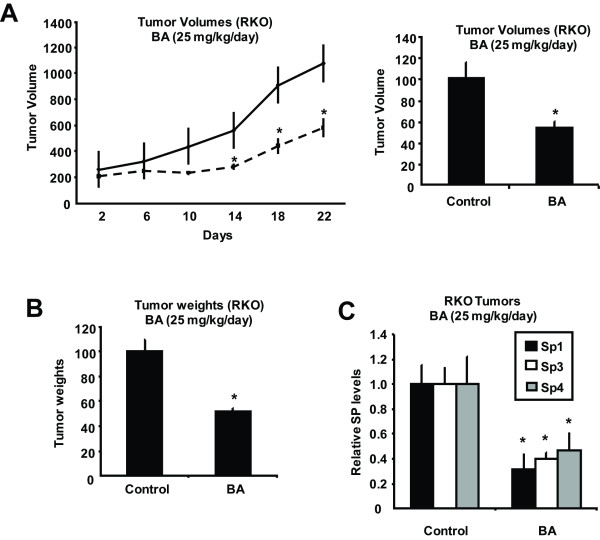
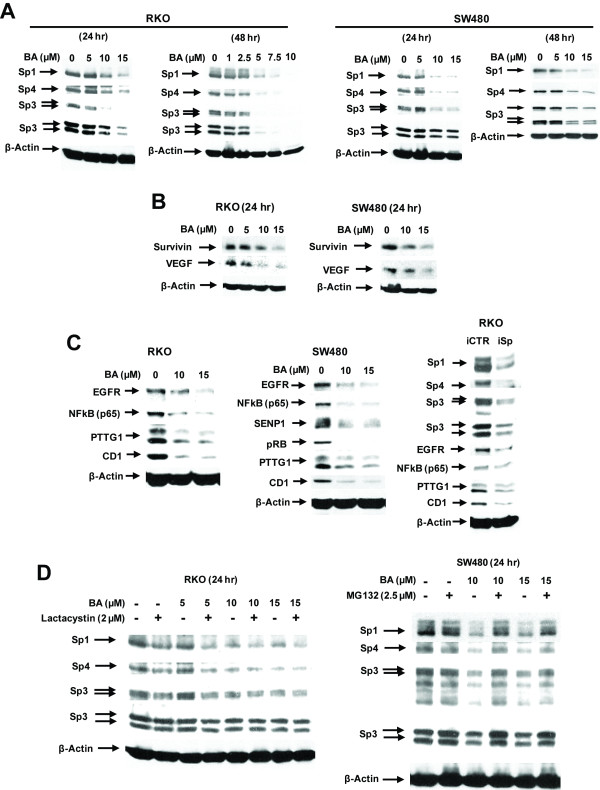
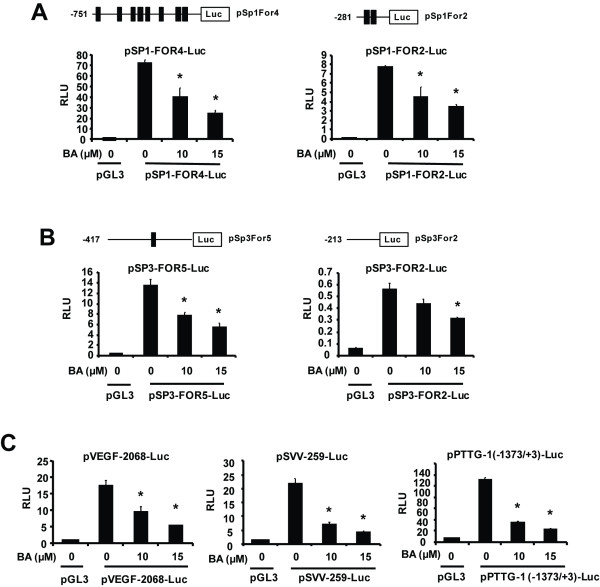
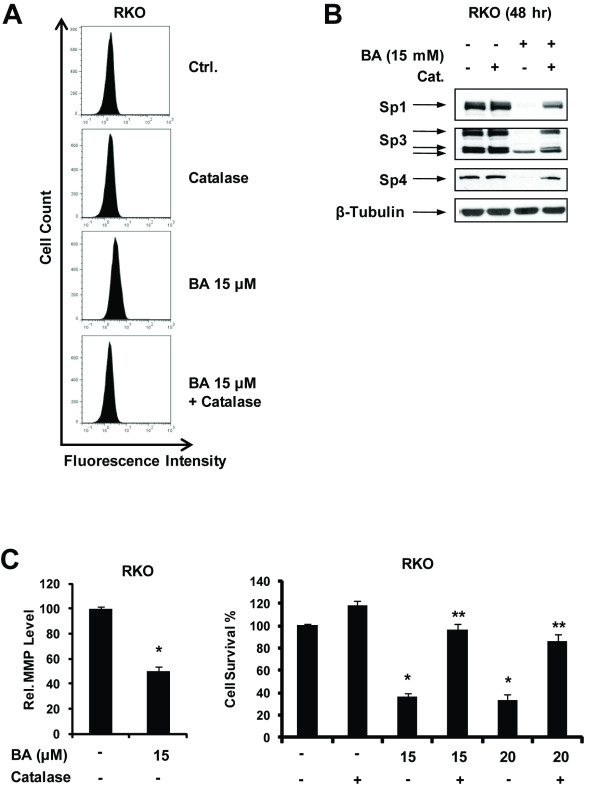
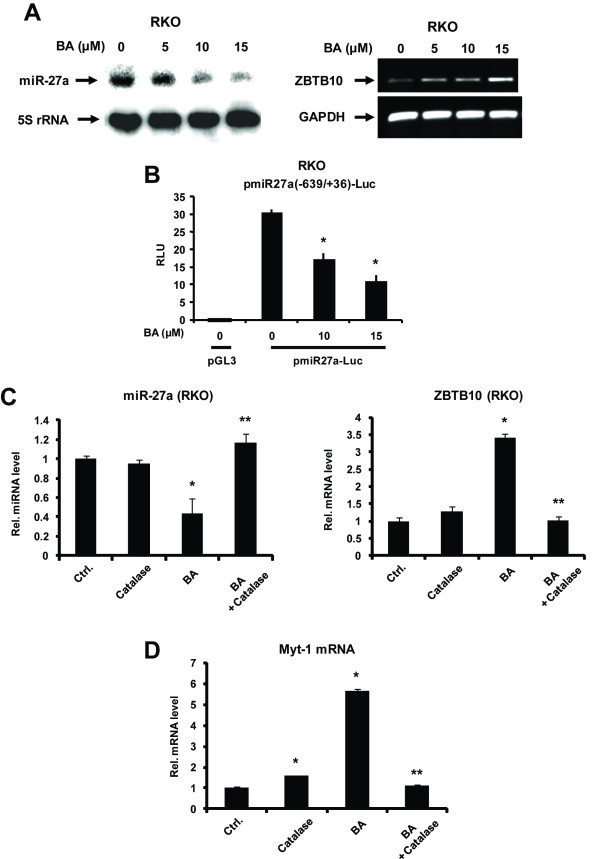
BA inhibited growth and induced apoptosis in RKO and SW480 colon cancer cells and inhibited tumor growth in athymic nude mice bearing RKO cells as xenograft. BA also decreased expression of Sp1, Sp3 and Sp4 transcription factors which are overexpressed in colon cancer cells and decreased levels of several Sp-regulated genes including survivin, vascular endothelial growth factor, p65 sub-unit of NFκB, epidermal growth factor receptor, cyclin D1, and pituitary tumor transforming gene-1. The mechanism of action of BA was dependent on cell context, since BA induced proteasome-dependent and proteasome-independent downregulation of Sp1, Sp3 and Sp4 in SW480 and RKO cells, respectively. In RKO cells, the mechanism of BA-induced repression of Sp1, Sp3 and Sp4 was due to induction of reactive oxygen species (ROS), ROS-mediated repression of microRNA-27a, and induction of the Sp repressor gene ZBTB10.
These results suggest that the anticancer activity of BA in colon cancer cells is due, in part, to downregulation of Sp1, Sp3 and Sp4 transcription factors; however, the mechanism of this response is cell context-dependent.
白桦酸(BA)抑制了几种癌细胞系和肿瘤的生长,BA 的作用归因于其线粒体毒性和对多种致癌因子的抑制作用。先前的研究表明,BA 诱导前列腺癌细胞中特异性蛋白(Sp)转录因子 Sp1、Sp3 和 Sp4 的蛋白酶体依赖性降解,本研究集中于 BA 在结肠癌中的作用机制。
使用标准化的检测方法确定 BA 对结肠癌细胞增殖、凋亡和体内肿瘤生长的影响。通过 Western blot 分析 BA 对 Sp 蛋白和 Sp 调节基因产物的影响,并用实时 PCR 测定 microRNA-27a(miR-27a)和 ZBTB10 mRNA 的表达。
BA 抑制了 RKO 和 SW480 结肠癌细胞的生长并诱导其凋亡,并抑制了荷瘤裸鼠 RKO 细胞的肿瘤生长。BA 还降低了 Sp1、Sp3 和 Sp4 转录因子在结肠癌细胞中的过表达,以及几种 Sp 调节基因的水平,包括 survivin、血管内皮生长因子、NFκB p65 亚基、表皮生长因子受体、细胞周期蛋白 D1 和垂体肿瘤转化基因 1。BA 的作用机制取决于细胞环境,因为 BA 分别诱导 SW480 和 RKO 细胞中 Sp1、Sp3 和 Sp4 的蛋白酶体依赖性和非依赖性下调。在 RKO 细胞中,BA 诱导 Sp1、Sp3 和 Sp4 抑制的机制是由于诱导活性氧(ROS)、ROS 介导的 miR-27a 抑制和 Sp 抑制基因 ZBTB10 的诱导。
这些结果表明,BA 在结肠癌中的抗癌活性部分归因于 Sp1、Sp3 和 Sp4 转录因子的下调;然而,这种反应的机制是细胞环境依赖性的。