College of Medicine, Texas A&M Health Science Center, Houston, TX 77030, USA.
BMC Cancer. 2012 Nov 30;12:564. doi: 10.1186/1471-2407-12-564.
Curcumin inhibits growth of several cancer cell lines, and studies in this laboratory in bladder and pancreatic cancer cells show that curcumin downregulates specificity protein (Sp) transcription factors Sp1, Sp3 and Sp4 and pro-oncogenic Sp-regulated genes. In this study, we investigated the anticancer activity of curcumin and several synthetic cyclohexanone and piperidine analogs in colon cancer cells.
The effects of curcumin and synthetic analogs on colon cancer cell proliferation and apoptosis were determined using standardized assays. The changes in Sp proteins and Sp-regulated gene products were analysed by western blots, and real time PCR was used to determine microRNA-27a (miR-27a), miR-20a, miR-17-5p and ZBTB10 and ZBTB4 mRNA expression.
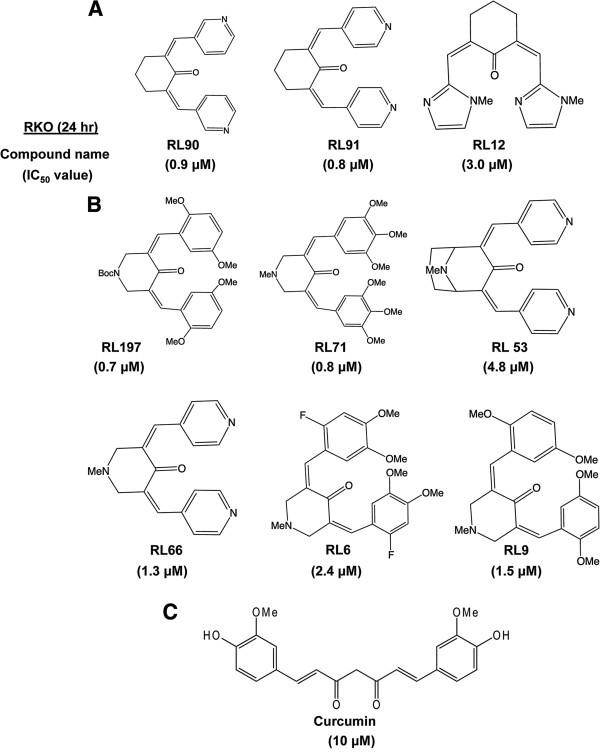
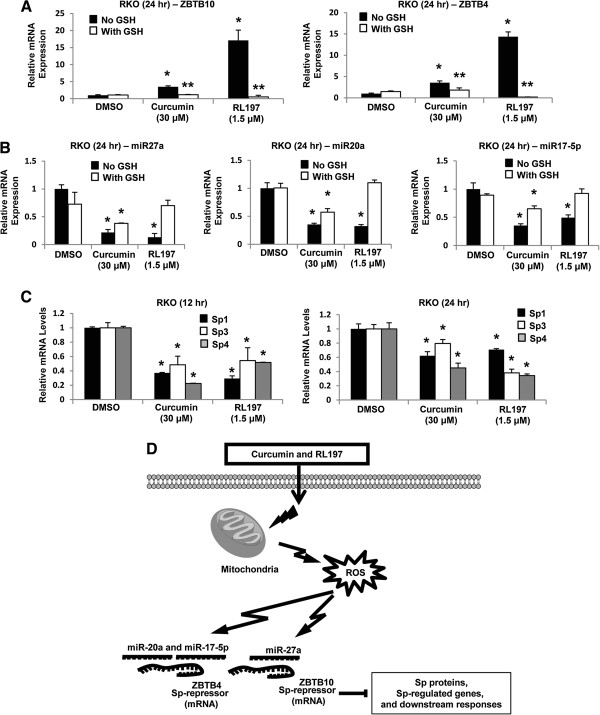
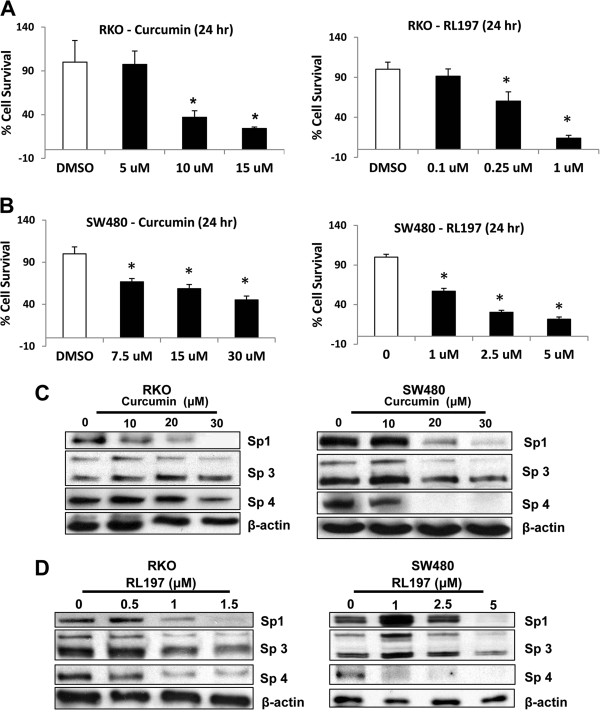
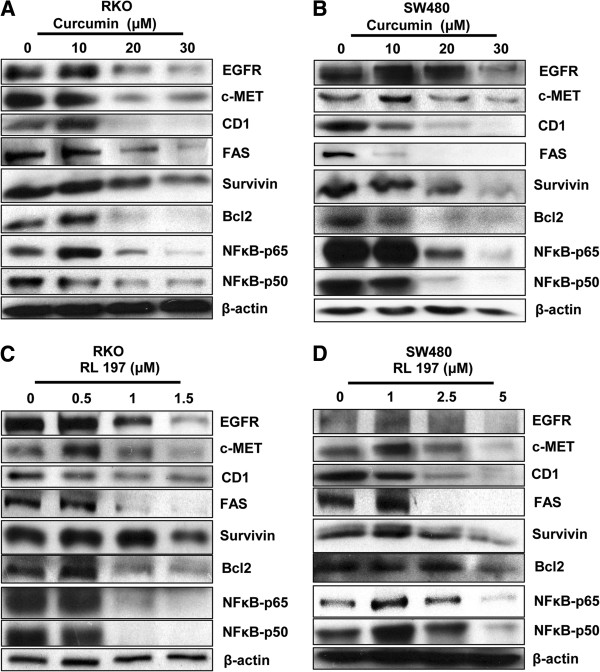
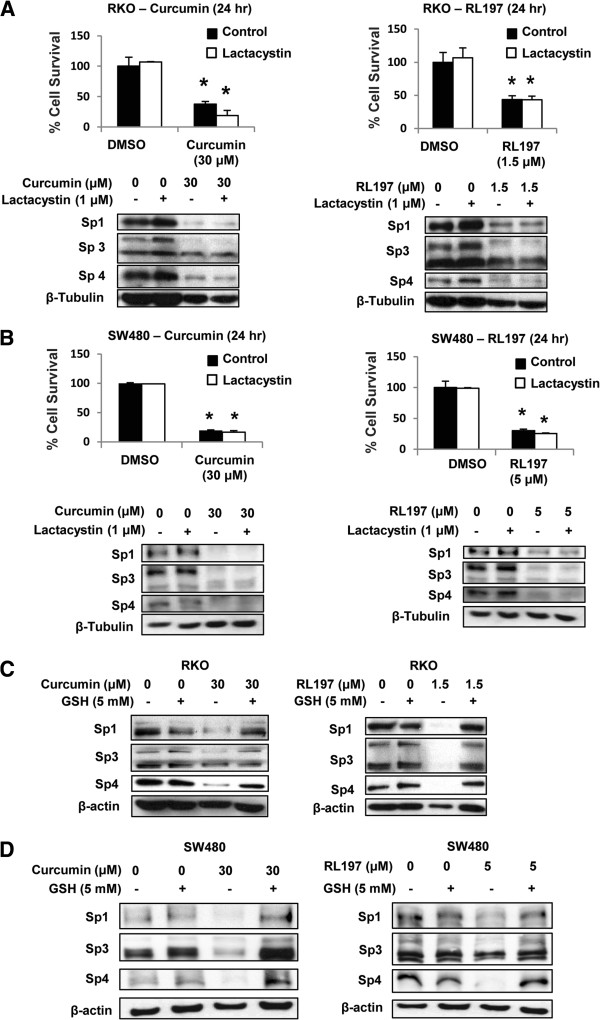
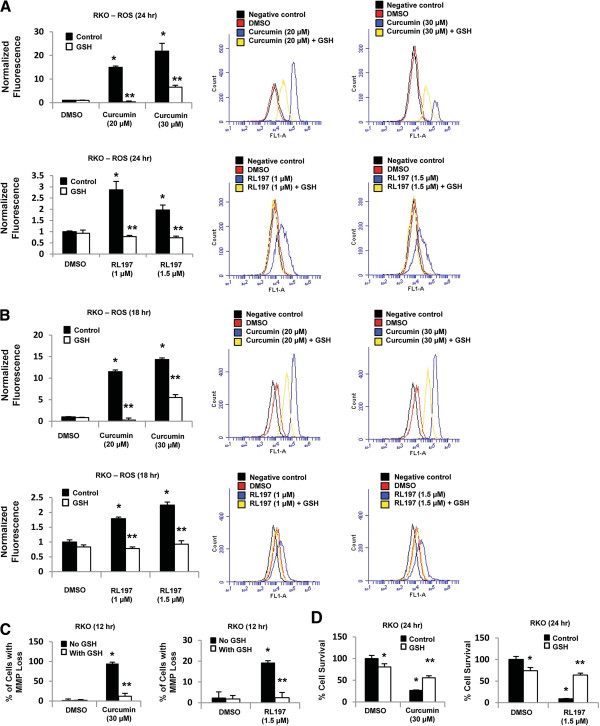
The IC50 (half-maximal) values for growth inhibition (24 hr) of colon cancer cells by curcumin and synthetic cyclohexanone and piperidine analogs of curcumin varied from 10 μM for curcumin to 0.7 μM for the most active synthetic piperidine analog RL197, which was used along with curcumin as model agents in this study. Curcumin and RL197 inhibited RKO and SW480 colon cancer cell growth and induced apoptosis, and this was accompanied by downregulation of specificity protein (Sp) transcription factors Sp1, Sp3 and Sp4 and Sp-regulated genes including the epidermal growth factor receptor (EGFR), hepatocyte growth factor receptor (c-MET), survivin, bcl-2, cyclin D1 and NFκB (p65 and p50). Curcumin and RL197 also induced reactive oxygen species (ROS), and cotreatment with the antioxidant glutathione significantly attenuated curcumin- and RL197-induced growth inhibition and downregulation of Sp1, Sp3, Sp4 and Sp-regulated genes. The mechanism of curcumin-/RL197-induced repression of Sp transcription factors was ROS-dependent and due to induction of the Sp repressors ZBTB10 and ZBTB4 and downregulation of microRNAs (miR)-27a, miR-20a and miR-17-5p that regulate these repressors.
These results identify a new and highly potent curcumin derivative and demonstrate that in cells where curcumin and RL197 induce ROS, an important underlying mechanism of action involves perturbation of miR-ZBTB10/ZBTB4, resulting in the induction of these repressors which downregulate Sp transcription factors and Sp-regulated genes.
姜黄素抑制多种癌细胞系的生长,本实验室在膀胱癌和胰腺癌细胞中的研究表明,姜黄素下调特异性蛋白(Sp)转录因子 Sp1、Sp3 和 Sp4 以及致癌性 Sp 调节基因。在这项研究中,我们研究了姜黄素和几种合成环己酮和哌啶类似物在结肠癌细胞中的抗癌活性。
使用标准测定法确定姜黄素和合成类似物对结肠癌细胞增殖和凋亡的影响。通过 Western blot 分析 Sp 蛋白和 Sp 调节基因产物的变化,实时 PCR 用于确定 microRNA-27a (miR-27a)、miR-20a、miR-17-5p 和 ZBTB10 和 ZBTB4 mRNA 表达。
姜黄素和合成环己酮和哌啶类似物对结肠癌细胞生长的抑制作用(24 小时)的 IC50(半最大)值范围为 10 μM 用于姜黄素至 0.7 μM 用于最活跃的合成哌啶类似物 RL197,RL197 与姜黄素一起用作本研究中的模型试剂。姜黄素和 RL197 抑制 RKO 和 SW480 结肠癌细胞的生长并诱导细胞凋亡,这伴随着特异性蛋白(Sp)转录因子 Sp1、Sp3 和 Sp4 以及 Sp 调节基因的下调,包括表皮生长因子受体(EGFR)、肝细胞生长因子受体(c-MET)、存活素、bcl-2、细胞周期蛋白 D1 和 NFκB(p65 和 p50)。姜黄素和 RL197 还诱导活性氧(ROS),抗氧化剂谷胱甘肽的共处理显着减弱了姜黄素和 RL197 诱导的生长抑制和 Sp1、Sp3、Sp4 和 Sp 调节基因的下调。姜黄素/RL197 诱导 Sp 转录因子抑制的机制是 ROS 依赖性的,并且是由于诱导 Sp 抑制剂 ZBTB10 和 ZBTB4 以及下调调节这些抑制剂的 microRNAs (miR)-27a、miR-20a 和 miR-17-5p 所致。
这些结果确定了一种新型且高效的姜黄素衍生物,并表明在姜黄素和 RL197 诱导 ROS 的细胞中,一种重要的潜在作用机制涉及扰乱 miR-ZBTB10/ZBTB4,导致这些抑制剂的诱导,从而下调 Sp 转录因子和 Sp 调节基因。