Dalla Lana School of Public Health, University of Toronto, Health Sciences Building, Ste 400, 155 College St, Toronto, ON, M5T 3M7, Canada.
Environ Health. 2011 Aug 25;10:74. doi: 10.1186/1476-069X-10-74.
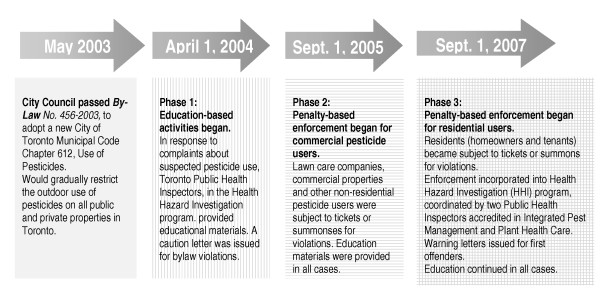
Pesticide use on urban lawns and gardens contributes to environmental contamination and human exposure. Municipal policies to restrict use and educate households on viable alternatives deserve study. We describe the development and implementation of a cosmetic/non-essential pesticide bylaw by a municipal health department in Toronto, Ontario, Canada and assess changes in resident practices associated with bylaw implementation.
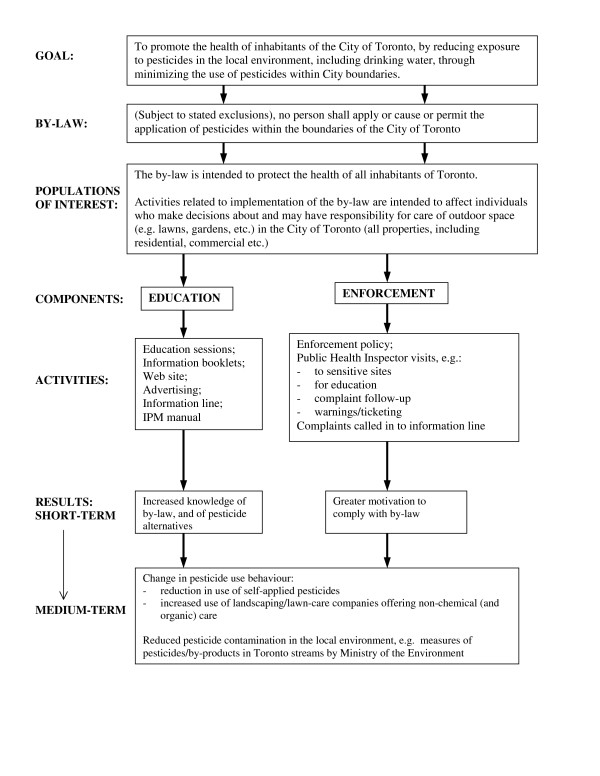
Implementation indicators built on a logic model and were elaborated through key informant interviews. Bylaw impacts on awareness and practice changes were documented through telephone surveys administered seasonally pre, during and post implementation (2003-2008). Multivariable logistic regression models assessed associations of demographic variables and gardening season with respondent awareness and practices.
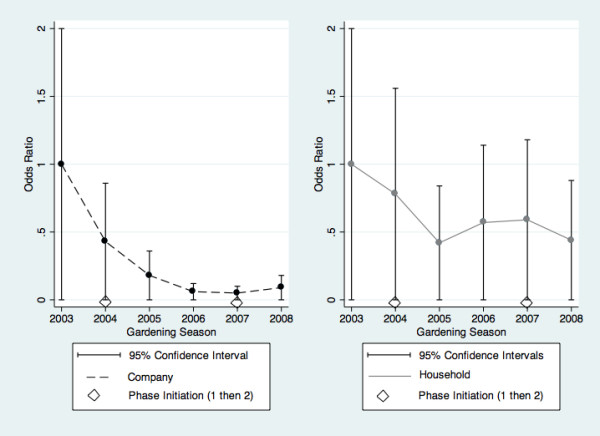
Implementation indicators documented multiple municipal health department activities and public involvement in complaints from commencement of the educational phase. During the enforcement phases only 40 warning letters and 7 convictions were needed. The number of lawn care companies increased. Among survey respondents, awareness of the bylaw and the Natural Lawn campaign reached 69% and 76% respectively by 2008. Substantial decreases in the proportion of households applying pesticides (25 to 11%) or hiring lawn care companies for application (15 to 5%) occurred. Parallel absolute increases in use of natural lawn care methods occurred among households themselves (21%) and companies they contracted (7%).
Bylaws or ordinances implemented through education and enforcement are a viable policy option for reducing urban cosmetic pesticide use.
城市草坪和花园使用农药会造成环境污染和人体暴露。市政政策限制使用农药并教育家庭使用可行的替代品,值得研究。我们描述了加拿大安大略省多伦多市卫生部门制定和实施化妆品/非必要农药法规的情况,并评估了与法规实施相关的居民做法的变化。
实施指标建立在一个逻辑模型的基础上,并通过关键知情人访谈进行了详细说明。通过在实施前、实施中和实施后(2003-2008 年)季节性进行电话调查,记录了法规对意识和实践变化的影响。多变量逻辑回归模型评估了人口统计学变量和园艺季节与受访者意识和实践的关联。
实施指标记录了多个市卫生部门的活动和公众参与投诉的情况,从教育阶段开始。在执法阶段,只需要发出 40 封警告信和 7 份定罪书。草坪护理公司的数量增加了。在调查受访者中,到 2008 年,对该法规和“天然草坪运动”的认识分别达到 69%和 76%。申请使用农药的家庭比例(从 25%降至 11%)或聘请草坪护理公司进行申请的比例(从 15%降至 5%)大幅下降。家庭自身(21%)和他们签订合同的公司(7%)使用天然草坪护理方法的绝对数量也有所增加。
通过教育和执法实施的法规或条例是减少城市化妆品农药使用的可行政策选择。