Fishberg Department of Neuroscience and Friedman Brain Institute, Mount Sinai School of Medicine, One Gustave L. Levy Place, Box 1065, New York, NY 10029, USA.
Neuron. 2011 Aug 25;71(4):656-70. doi: 10.1016/j.neuron.2011.06.007.
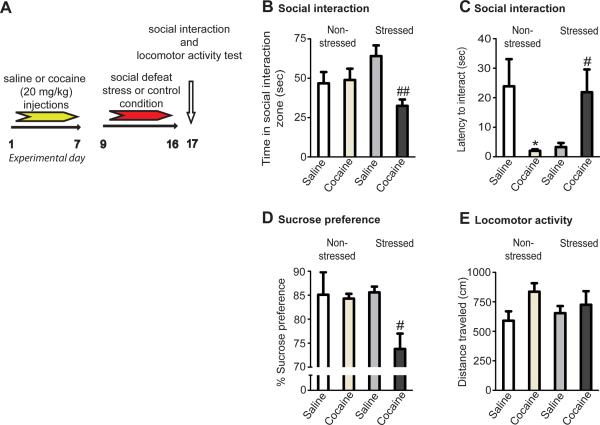
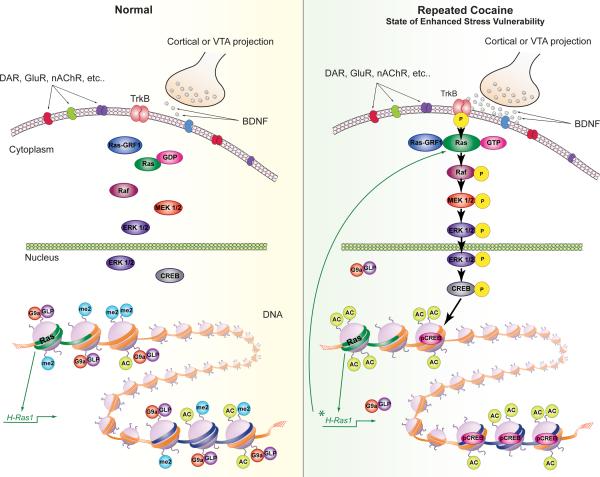
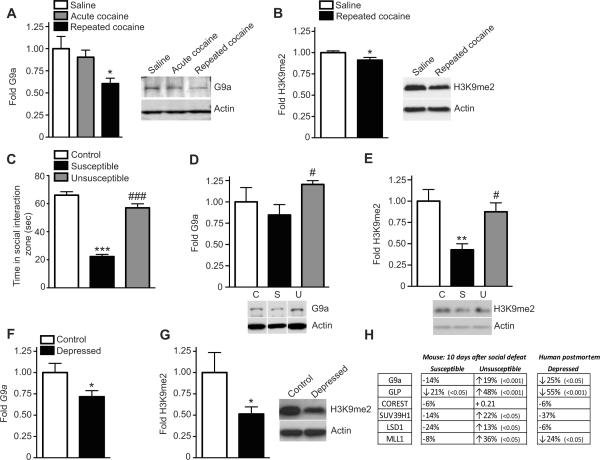
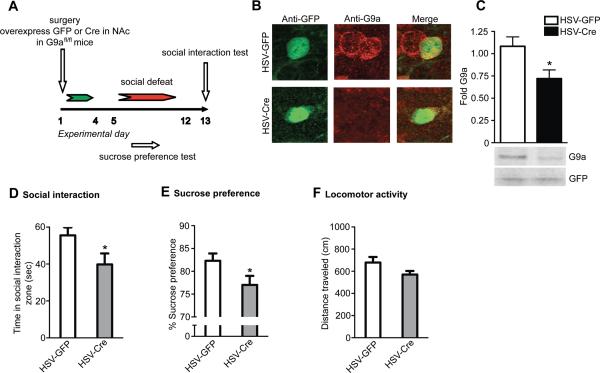
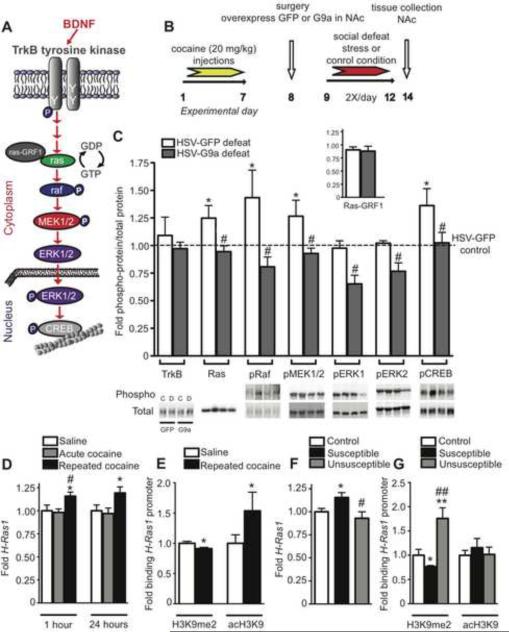
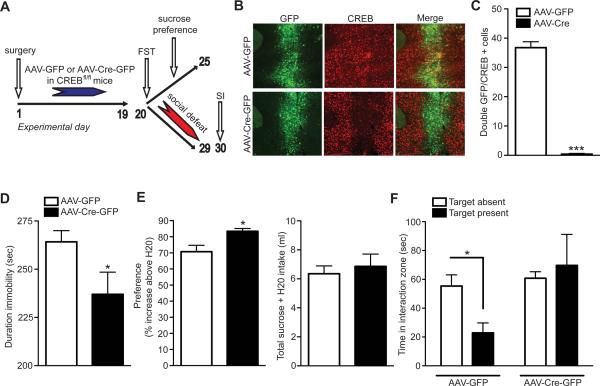
Substance abuse increases an individual's vulnerability to stress-related illnesses, which is presumably mediated by drug-induced neural adaptations that alter subsequent responses to stress. Here, we identify repressive histone methylation in nucleus accumbens (NAc), an important brain reward region, as a key mechanism linking cocaine exposure to increased stress vulnerability. Repeated cocaine administration prior to subchronic social defeat stress potentiated depressive-like behaviors in mice through decreased levels of histone H3 lysine 9 dimethylation in NAc. Cre-mediated reduction of the histone methyltransferase, G9a, in NAc promoted increased susceptibility to social stress, similar to that observed with repeated cocaine. Conversely, G9a overexpression in NAc after repeated cocaine protected mice from the consequences of subsequent stress. This resilience was mediated, in part, through repression of BDNF-TrkB-CREB signaling, which was induced after repeated cocaine or stress. Identifying such common regulatory mechanisms may aid in the development of new therapies for addiction and depression.
物质滥用会增加个体对与应激相关疾病的易感性,这可能是药物引起的神经适应性改变导致对后续应激反应的改变所致。在这里,我们将可卡因暴露与增加的应激易感性联系起来的关键机制确定为伏隔核(NAc)中抑制性组蛋白甲基化,NAc 是大脑重要的奖励区域。在亚慢性社交挫败应激之前重复给予可卡因通过降低 NAc 中组蛋白 H3 赖氨酸 9 二甲基化水平增强了小鼠的抑郁样行为。在 NAc 中通过 Cre 介导减少组蛋白甲基转移酶 G9a 会促进对社交应激的易感性增加,类似于重复给予可卡因所观察到的那样。相反,在重复给予可卡因后在 NAc 中过表达 G9a 可保护小鼠免受后续应激的影响。这种恢复能力部分是通过抑制 BDNF-TrkB-CREB 信号传导介导的,该信号在重复给予可卡因或应激后被诱导。鉴定出这些共同的调节机制可能有助于开发治疗成瘾和抑郁症的新疗法。