Department of Neurology, 1st Faculty of Medicine, Charles University and General Teaching Hospital, Prague.
Med Sci Monit. 2011 Sep;17(9):CR491-7. doi: 10.12659/msm.881935.
Obstructive sleep apnea (OSA) is a condition contributing to oxidative stress. The aim of this study was to ascertain if there is any connection between OSA and novel oxidative stress-related markers. Matrix metalloproteinases 2 and 9 (MMP-2, MMP-9), high sensitive C-reactive protein (hsCRP), pregnancy-associated plasma protein-A (PAPP-A), soluble receptors for advanced glycation end-products (sRAGE), zinc (Zn) and copper (Cu) were measured. Further biochemical markers were evaluated.
MATERIAL/METHODS: Fifty-one men suspected for OSA indicated for night polygraphy were included. Apnea/hypopnea index (AHI), oxygen desaturation index (ODI), mean blood hemoglobin oxygen saturation (SpO2) and time of blood hemoglobin oxygen saturation below 90% (SpO2 <90%) were measured. Morning venous blood samples were taken.
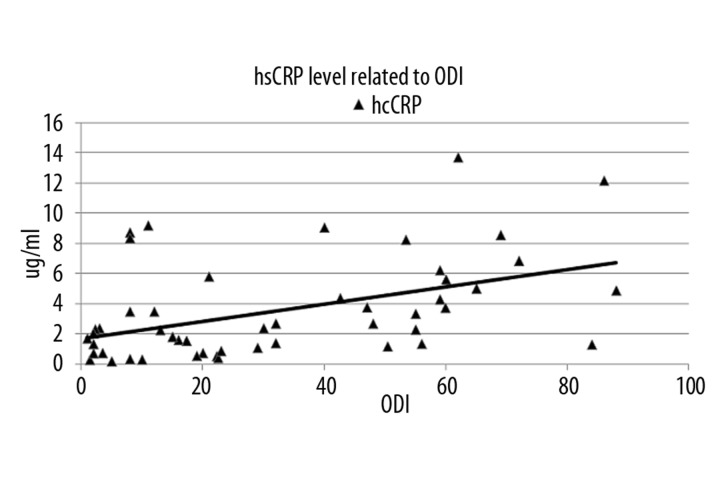
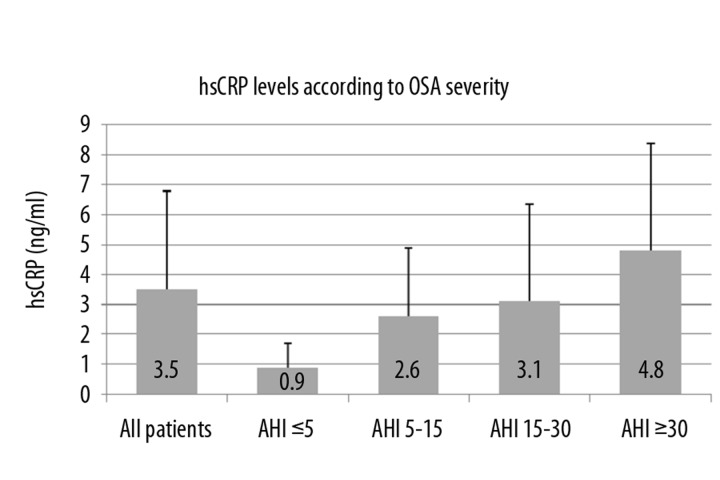
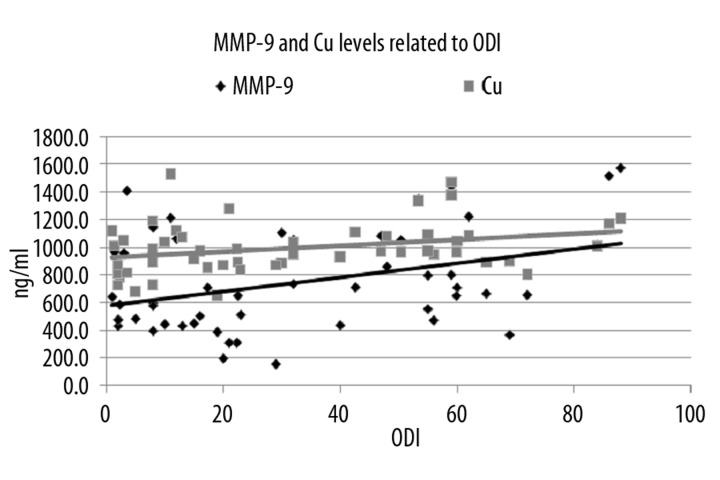
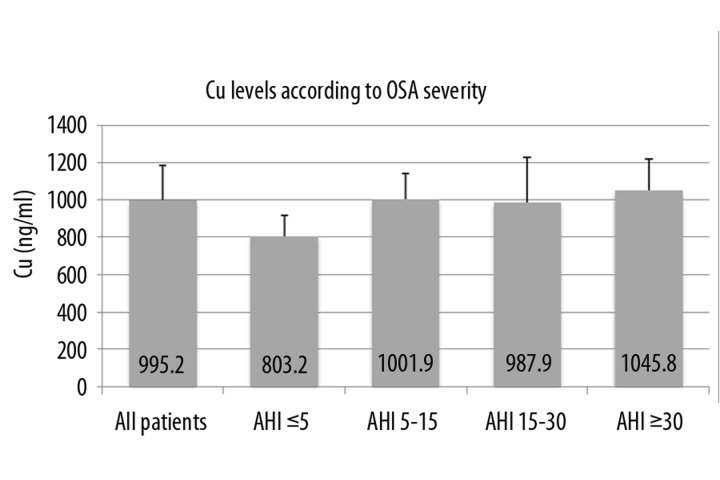
For body mass index (BMI) we found strong positive correlation with levels of Cu, MMP-9, hsCRP and fibrinogen, and negative correlation with sRAGE. Concerning ventilation parameters, we found positive correlation of ODI and SpO2 <90% with markers MMP-9 and hsCRP. sRAGE level correlated with AHI and ODI negatively. SpO2 correlated negatively with Cu, MMP-9, hsCRP and fibrinogen. There was no correlation between ventilation parameters and markers MMP-2, PAPP-A and Zn. Compared to severity of OSA, there was significant difference in levels of hsCRP and Cu between patients with AHI ≤5 and AHI ≥30 independent of BMI.
MMP-9, hsCRP, sRAGE and Cu seem to be strong predictors of oxidative stress in OSA patients. The strong correlation between oxidative stress-related markers and OSA is elucidated by connection of these to BMI, which is probably a primary condition of oxidative stress, but OSA is an additive condition.
阻塞性睡眠呼吸暂停(OSA)是导致氧化应激的一种病症。本研究旨在确定 OSA 是否与新型氧化应激相关标志物有关。我们测量了基质金属蛋白酶 2 和 9(MMP-2、MMP-9)、高敏 C 反应蛋白(hsCRP)、妊娠相关血浆蛋白 A(PAPP-A)、晚期糖基化终产物可溶性受体(sRAGE)、锌(Zn)和铜(Cu)。还评估了其他生化标志物。
材料/方法:纳入了 51 名疑似 OSA 并接受夜间多导睡眠图检查的男性。测量了呼吸暂停/低通气指数(AHI)、氧减指数(ODI)、平均血血红蛋白氧饱和度(SpO2)和血血红蛋白氧饱和度低于 90%的时间(SpO2<90%)。采集了清晨静脉血样。
对于体重指数(BMI),我们发现其与 Cu、MMP-9、hsCRP 和纤维蛋白原水平呈强正相关,与 sRAGE 呈负相关。关于通气参数,我们发现 ODI 和 SpO2<90%与 MMP-9 和 hsCRP 标志物呈正相关。sRAGE 水平与 AHI 和 ODI 呈负相关。SpO2 与 Cu、MMP-9、hsCRP 和纤维蛋白原呈负相关。通气参数与 MMP-2、PAPP-A 和 Zn 标志物之间无相关性。与 OSA 严重程度相比,AHI≤5 和 AHI≥30 的患者之间 hsCRP 和 Cu 的水平存在显著差异,与 BMI 无关。
MMP-9、hsCRP、sRAGE 和 Cu 似乎是 OSA 患者氧化应激的强预测因子。氧化应激相关标志物与 OSA 之间的强相关性通过与 BMI 的连接得到阐明,BMI 可能是氧化应激的主要条件,但 OSA 是附加条件。