Division of Basic and Translational Research, Department of Surgery, University of Minnesota, Minneapolis, Minnesota, USA.
Gastroenterology. 2011 Dec;141(6):2210-2217.e2. doi: 10.1053/j.gastro.2011.08.033. Epub 2011 Aug 27.
BACKGROUND & AIMS: The role of trypsinogen activation in the pathogenesis of acute pancreatitis (AP) has not been clearly established.
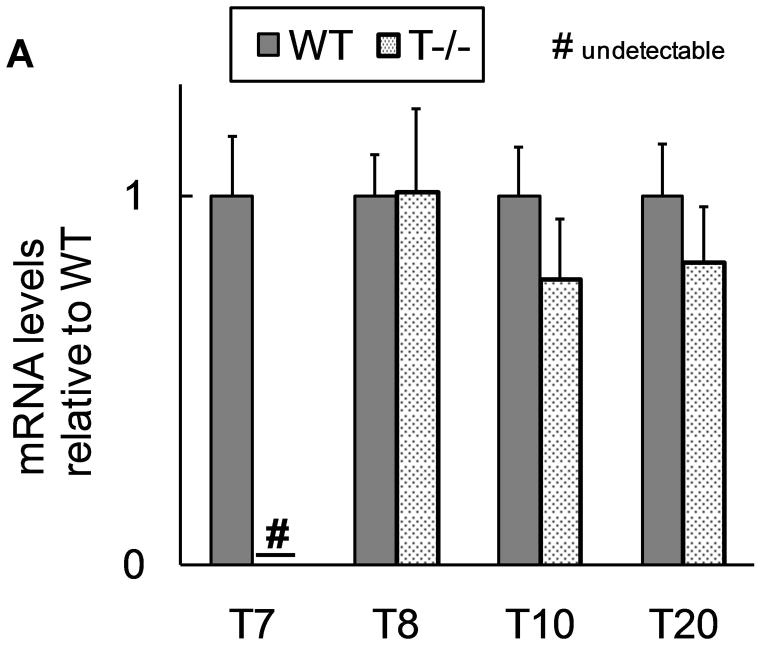
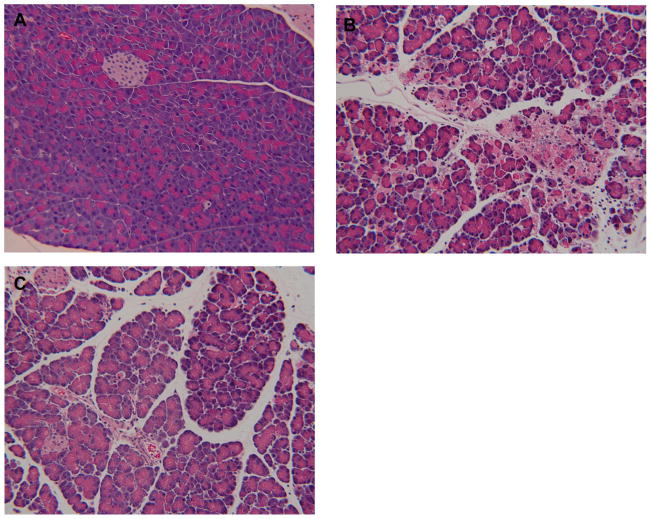
We generated and characterized mice lacking trypsinogen isoform 7 (T7) gene (T(-/-)). The effects of pathologic activation of trypsinogen were studied in these mice during induction of AP with cerulein. Acinar cell death, tissue damage, early intra-acinar activation of the transcription factor nuclear factor κB (NF-κB), and local and systemic inflammation were compared between T(-/-) and wild-type mice with AP.
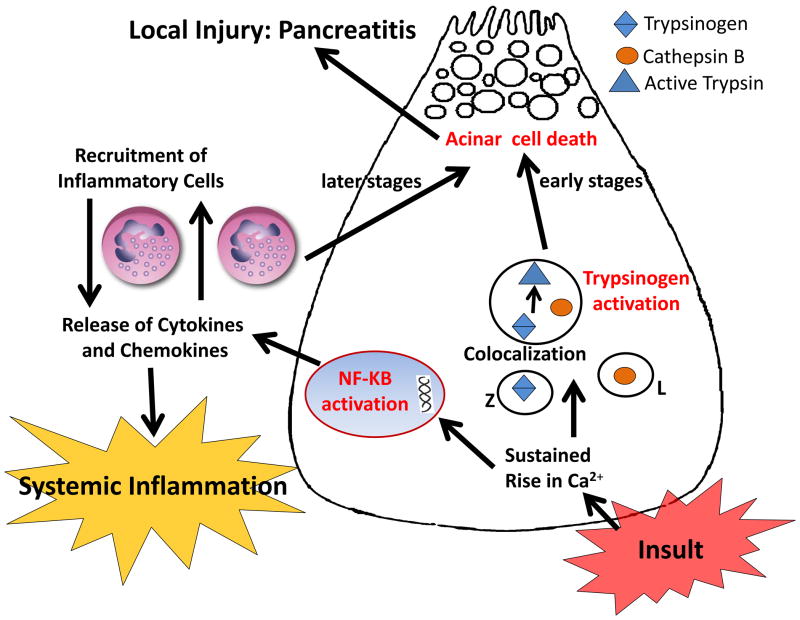
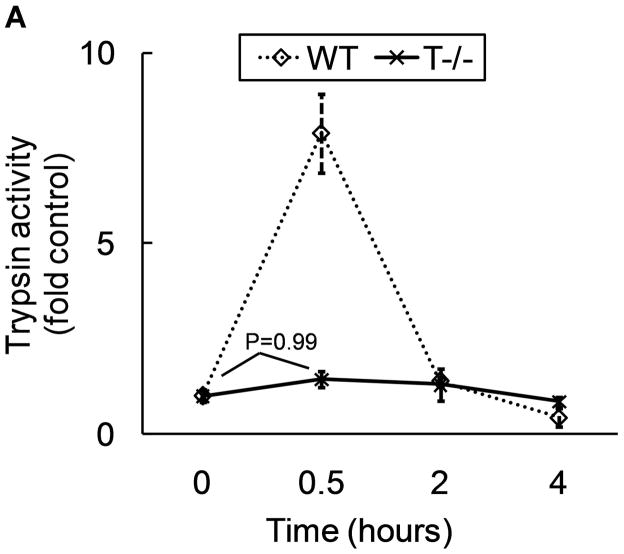
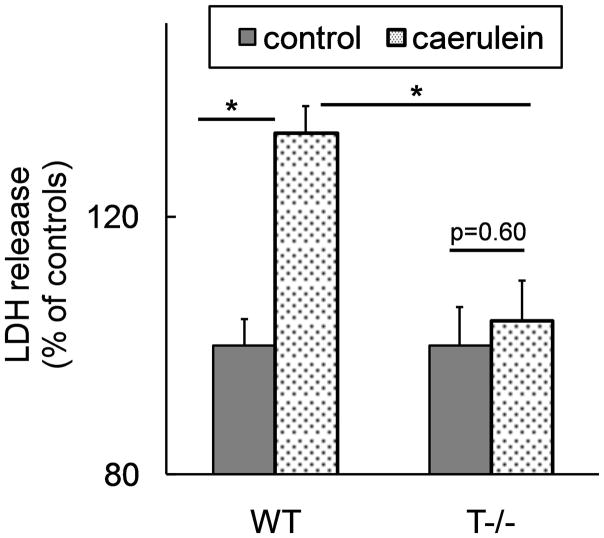
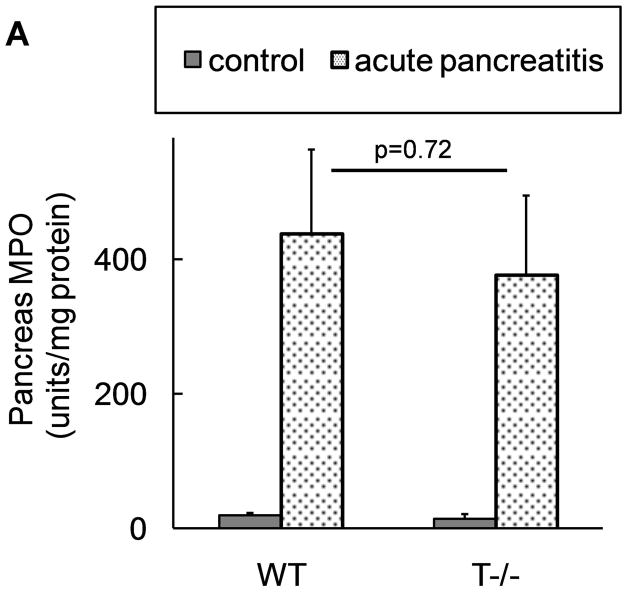
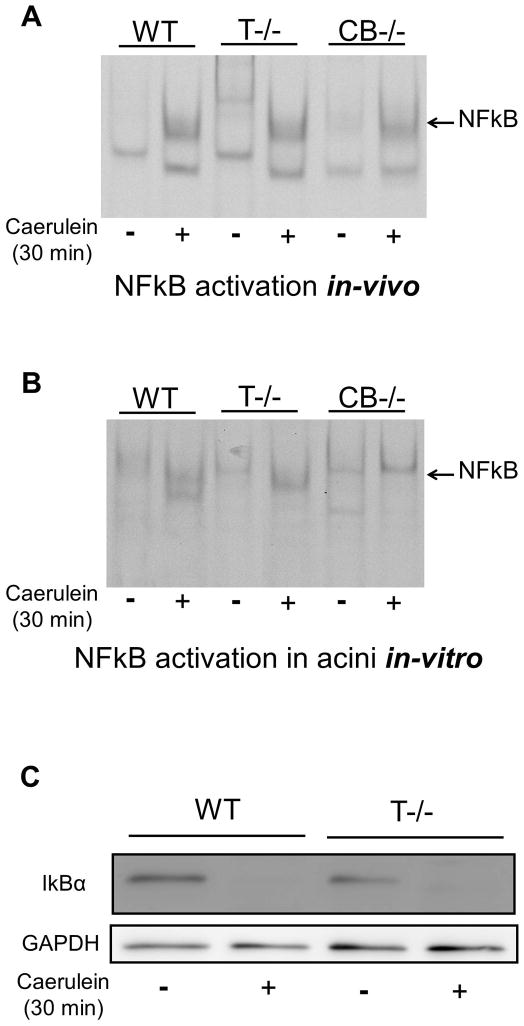
Deletion of T7 reduced the total trypsinogen content by 60% but did not affect physiologic function. T(-/-) mice lacked pathologic activation of trypsinogen, which occurs within acinar cells during early stages of AP progression. Absence of trypsinogen activation in T(-/-) mice led to near complete inhibition of acinar cell death in vitro and a 50% reduction in acinar necrosis during AP progression. However, T(-/-) mice had similar degrees of local and systemic inflammation during AP progression and comparable levels of intra-acinar NF-κB activation, which was previously shown to occur concurrently with trypsinogen activation during early stages of pancreatitis.
T7 is activated during pathogenesis of AP in mice. Intra-acinar trypsinogen activation leads to acinar death during early stages of pancreatitis, which accounts for 50% of the pancreatic damage in AP. However, progression of local and systemic inflammation in AP does not require trypsinogen activation. NF-κB is activated early in acinar cells, independently of trypsinogen activation, and might be responsible for progression of AP.
胰蛋白酶原激活在急性胰腺炎(AP)发病机制中的作用尚未明确。
我们生成并鉴定了缺乏胰蛋白酶原同工酶 7(T7)基因(T(-/-))的小鼠。通过胆胰管结扎法诱导 AP,研究这些小鼠中胰蛋白酶原病理性激活的作用。比较 T(-/-)和野生型 AP 小鼠的腺泡细胞死亡、组织损伤、核转录因子κB(NF-κB)的早期腺泡内激活以及局部和全身炎症。
T7 的缺失使总胰蛋白酶原含量减少 60%,但不影响生理功能。T(-/-)小鼠缺乏胰蛋白酶原的病理性激活,这种激活发生在 AP 进展的早期阶段腺泡细胞内。T(-/-)小鼠中胰蛋白酶原激活的缺失导致体外腺泡细胞死亡几乎完全抑制,AP 进展过程中腺泡坏死减少 50%。然而,T(-/-)小鼠在 AP 进展过程中具有相似程度的局部和全身炎症,以及类似的腺泡内 NF-κB 激活水平,先前的研究表明 NF-κB 激活与胰腺炎早期的胰蛋白酶原激活同时发生。
T7 在小鼠 AP 的发病机制中被激活。腺泡内胰蛋白酶原的激活导致胰腺炎早期的腺泡死亡,占 AP 胰腺损伤的 50%。然而,AP 局部和全身炎症的进展不需要胰蛋白酶原激活。NF-κB 早期在腺泡细胞中被激活,与胰蛋白酶原激活无关,可能是 AP 进展的原因。