Department of Histology, Microbiology and Medical Biotechnologies, University of Padova, via A. Gabelli 63, 35121, Italy.
Biochem Pharmacol. 2011 Nov 1;82(9):1234-49. doi: 10.1016/j.bcp.2011.07.090. Epub 2011 Aug 23.
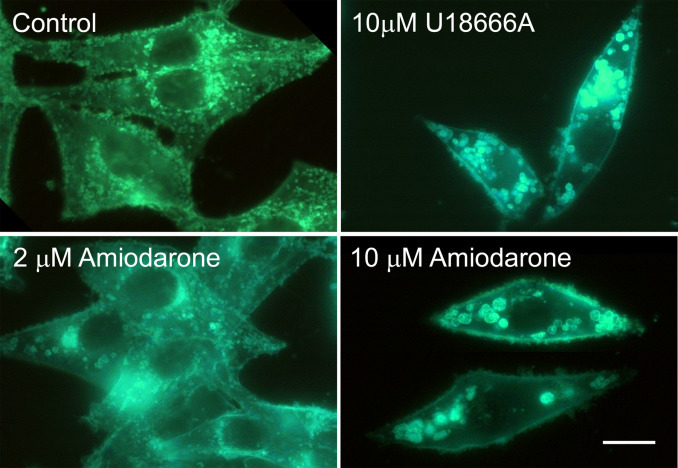
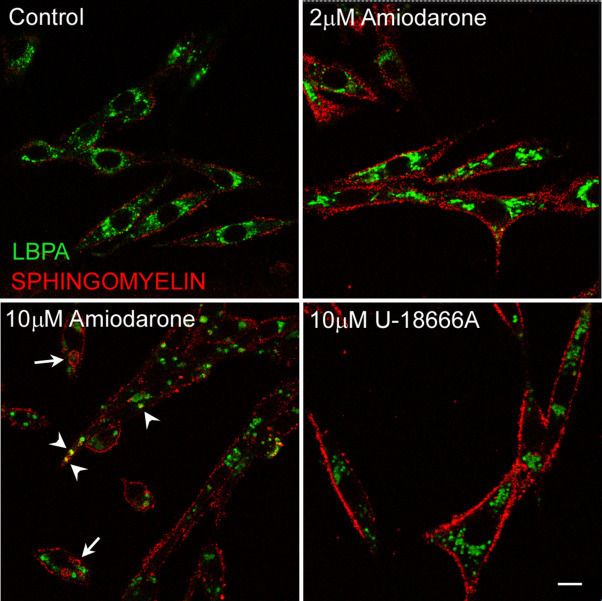
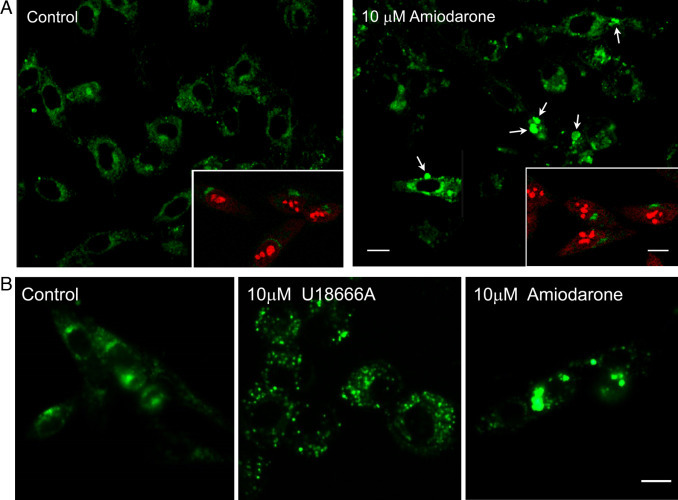
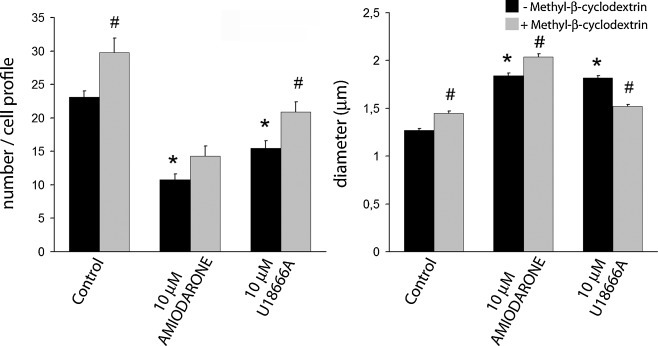
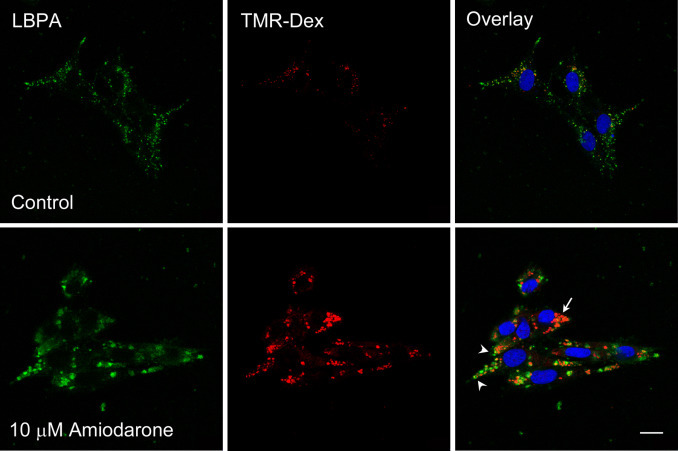
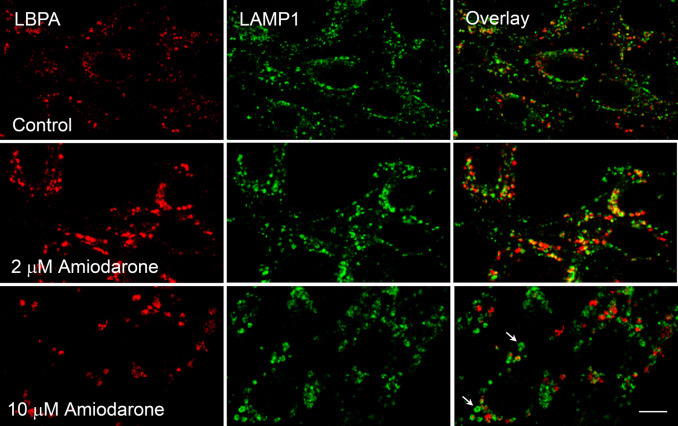
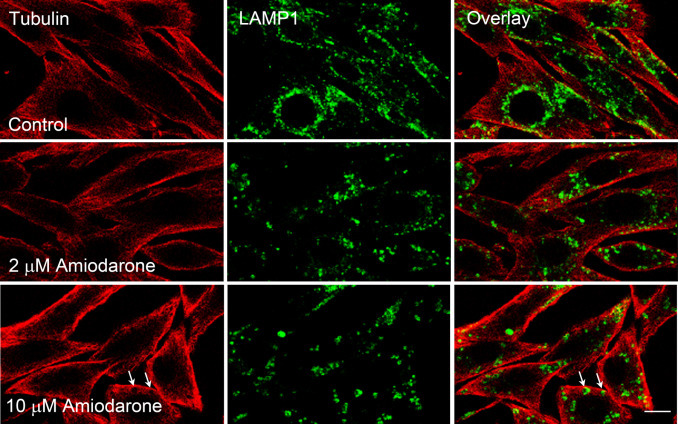
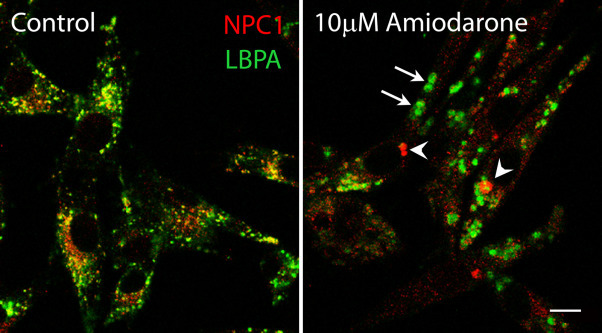
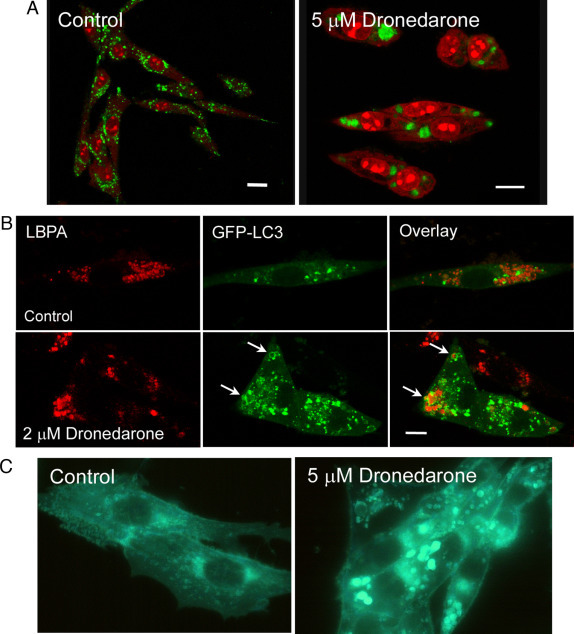
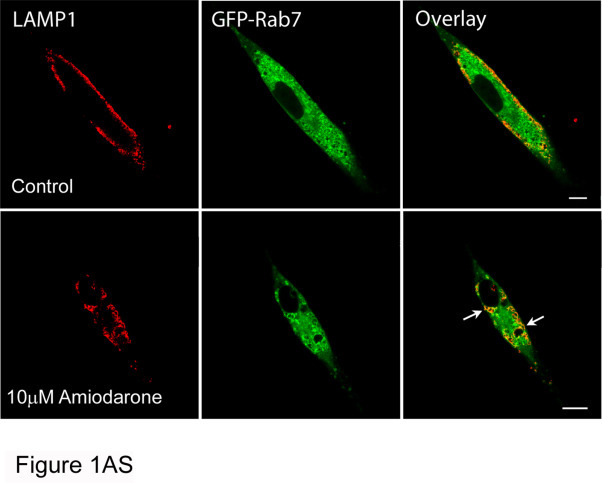
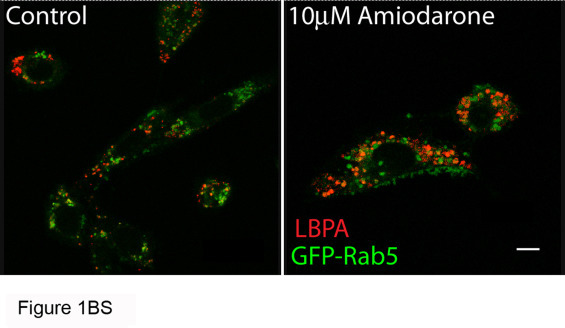
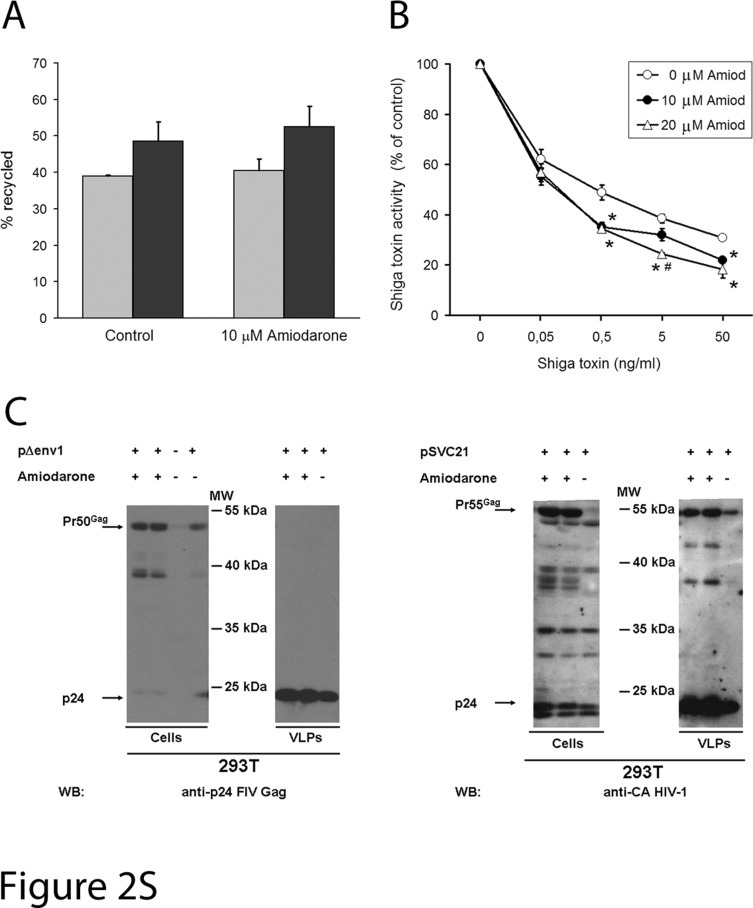
Patients treated with amiodarone accumulate lysobisphosphatidic acid (LBPA), also known as bis(monoacylglycero)phosphate, in airway secretions and develop in different tissues vacuoles and inclusion bodies thought to originate from endosomes. To clarify the origin of these changes, we studied in vitro the effects of amiodarone on endosomal activities like transferrin recycling, Shiga toxin processing, ESCRT-dependent lentivirus budding, fluid phase endocytosis, proteolysis and exosome secretion. Furthermore, since the accumulation of LBPA might point to a broader disturbance in lipid homeostasis, we studied the effect of amiodarone on the distribution of LBPA, unesterified cholesterol, sphingomyelin and glycosphyngolipids. Amiodarone analogues were also studied, including the recently developed derivative dronedarone. We found that amiodarone does not affect early endosomal activities, like transferrin recycling, Shiga toxin processing and lentivirus budding. Amiodarone, instead, interferes with late compartments of the endocytic pathway, blocking the progression of fluid phase endocytosis and causing fusion of organelles, collapse of lumenal structures, accumulation of undegraded substrates and amassing of different types of lipids. Not all late endocytic compartments are affected, since exosome secretion is spared. These changes recall the Niemann-Pick type-C phenotype (NPC), but originate by a different mechanism, since, differently from NPC, they are not alleviated by cholesterol removal. Studies with analogues indicate that basic pKa and high water-solubility at acidic pH are crucial requirements for the interference with late endosomes/lysosomes and that, in this respect, dronedarone is at least as potent as amiodarone. These findings may have relevance in fields unrelated to rhythm control.
患者在接受胺碘酮治疗后,气道分泌物中会积累溶酶体双磷脂酸(LBPA),也称为双(单酰基甘油)磷酸,并且在不同组织中形成空泡和包含体,这些空泡和包含体被认为起源于内体。为了阐明这些变化的起源,我们研究了胺碘酮对内体活性的体外影响,如转铁蛋白再循环、志贺毒素处理、ESCRT 依赖性慢病毒出芽、液相等分子内吞、蛋白水解和外泌体分泌。此外,由于 LBPA 的积累可能表明脂质动态平衡受到更广泛的干扰,我们研究了胺碘酮对 LBPA、未酯化胆固醇、鞘磷脂和糖鞘脂分布的影响。还研究了胺碘酮类似物,包括最近开发的衍生物决奈达隆。我们发现胺碘酮不会影响早期内体活性,如转铁蛋白再循环、志贺毒素处理和慢病毒出芽。相反,胺碘酮干扰了内吞途径的晚期隔室,阻断了液相等分子内吞的进展,并导致细胞器融合、管腔结构塌陷、未降解底物的积累以及不同类型脂质的堆积。并非所有晚期内体隔室都受到影响,因为外泌体分泌不受影响。这些变化让人联想到尼曼-匹克 C 型(NPC)表型,但起源于不同的机制,因为与 NPC 不同,它们不会因胆固醇去除而得到缓解。类似物的研究表明,碱性 pKa 和在酸性 pH 下的高水溶性是干扰晚期内体/溶酶体的关键要求,并且在这方面,决奈达隆与胺碘酮一样有效。这些发现可能与节律控制无关的领域有关。