Letourneau Susan M, Mitchell Teresa V
Brandeis University, 415 South Street, Waltham, MA 02453, USA.
Perception. 2011;40(5):563-75. doi: 10.1068/p6858.
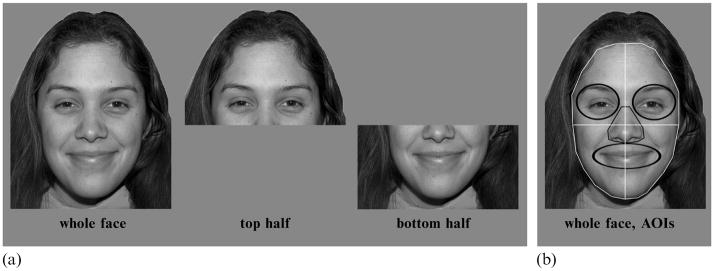
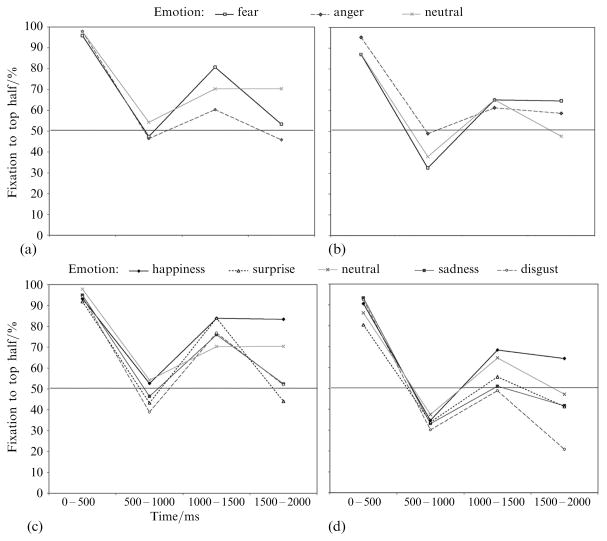
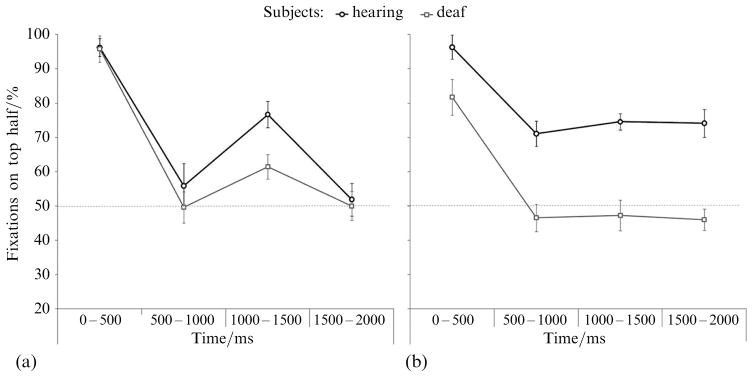
Deaf individuals rely on facial expressions for emotional, social, and linguistic cues. In order to test the hypothesis that specialized experience with faces can alter typically observed gaze patterns, twelve hearing adults and twelve deaf, early-users of American Sign Language judged the emotion and identity of expressive faces (including whole faces, and isolated top and bottom halves), while accuracy and fixations were recorded. Both groups recognized individuals more accurately from top than bottom halves, and emotional expressions from bottom than top halves. Hearing adults directed the majority of fixations to the top halves of faces in both tasks, but fixated the bottom half slightly more often when judging emotion than identity. In contrast, deaf adults often split fixations evenly between the top and bottom halves regardless of task demands. These results suggest that deaf adults have habitual fixation patterns that may maximize their ability to gather information from expressive faces.
聋人依靠面部表情来获取情感、社交和语言线索。为了检验面部专门经验可以改变通常观察到的注视模式这一假设,12名听力正常的成年人以及12名早期使用美国手语的聋人对富有表情的面部(包括完整面部以及单独的上半部分和下半部分)的情绪和身份进行判断,同时记录准确率和注视情况。两组在识别个体时,从上半部分比从下半部分更准确,而识别情绪表情时,从下半部分比从上半部分更准确。听力正常的成年人在两项任务中,大部分注视都集中在面部的上半部分,但在判断情绪时比判断身份时,更多地注视下半部分。相比之下,聋人成年人无论任务要求如何,通常在上半部分和下半部分之间平均分配注视。这些结果表明,聋人成年人具有习惯性注视模式,这可能会最大限度地提高他们从富有表情的面部获取信息的能力。