Department of Anesthesiology and Perioperative Medicine, The University of Texas MD Anderson Cancer Center, Houston, TX 77030, USA.
J Neurochem. 2011 Nov;119(3):594-603. doi: 10.1111/j.1471-4159.2011.07456.x. Epub 2011 Sep 21.
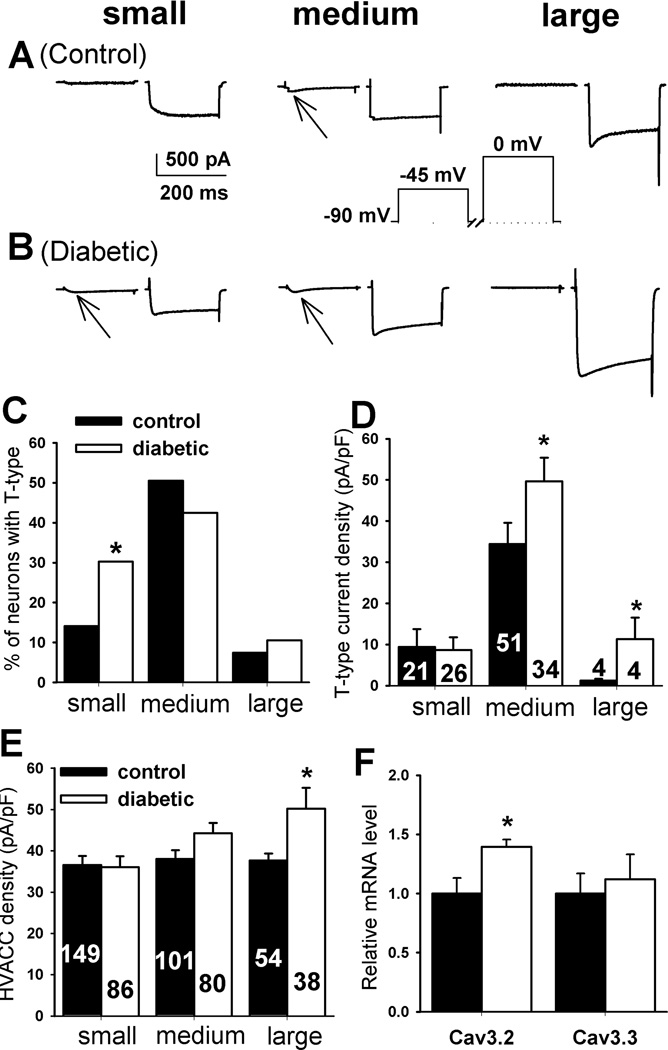
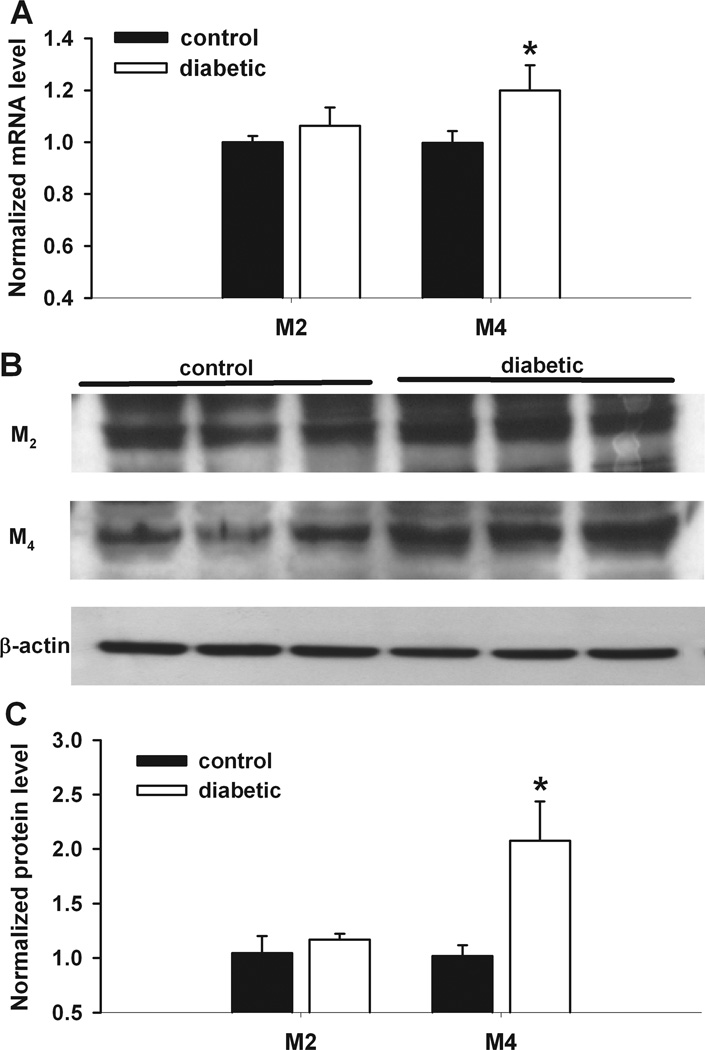
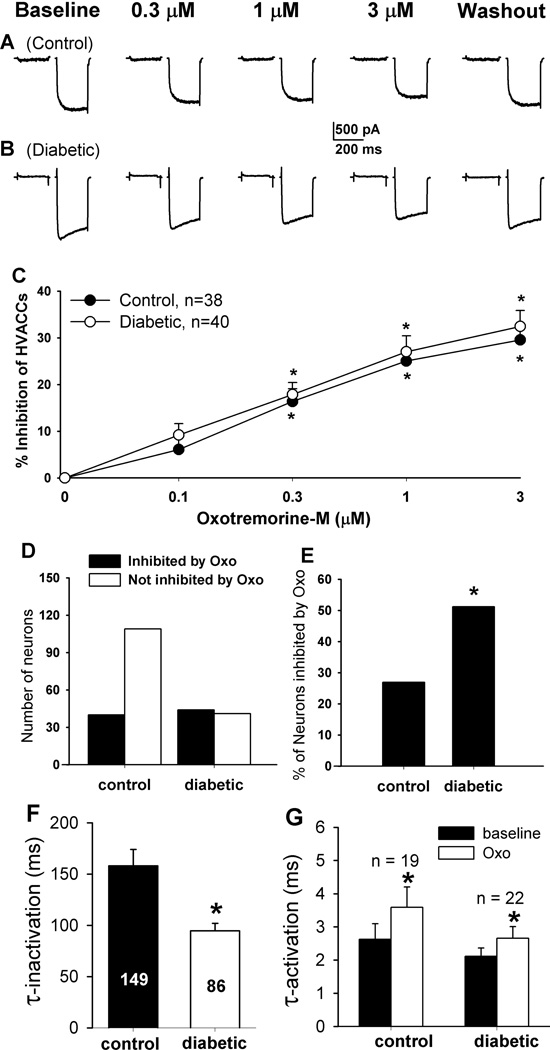
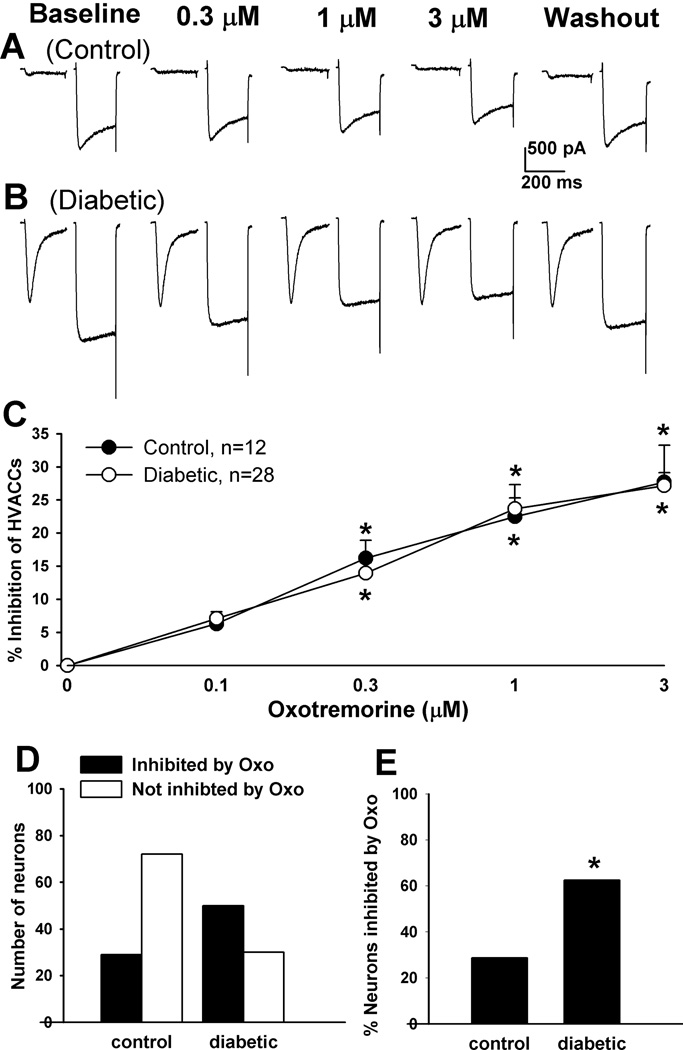
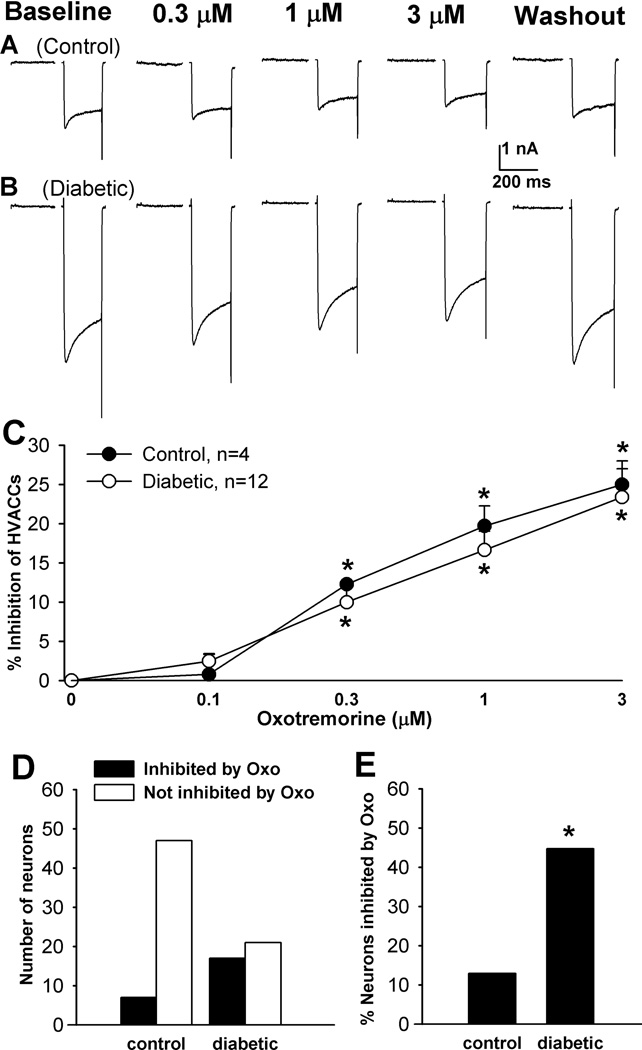
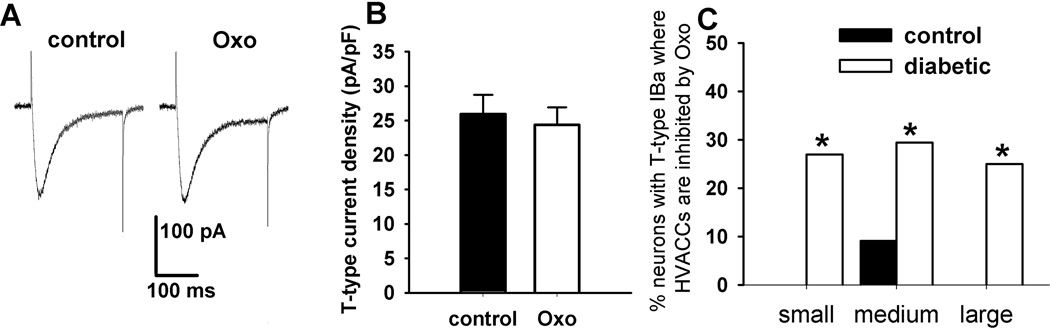
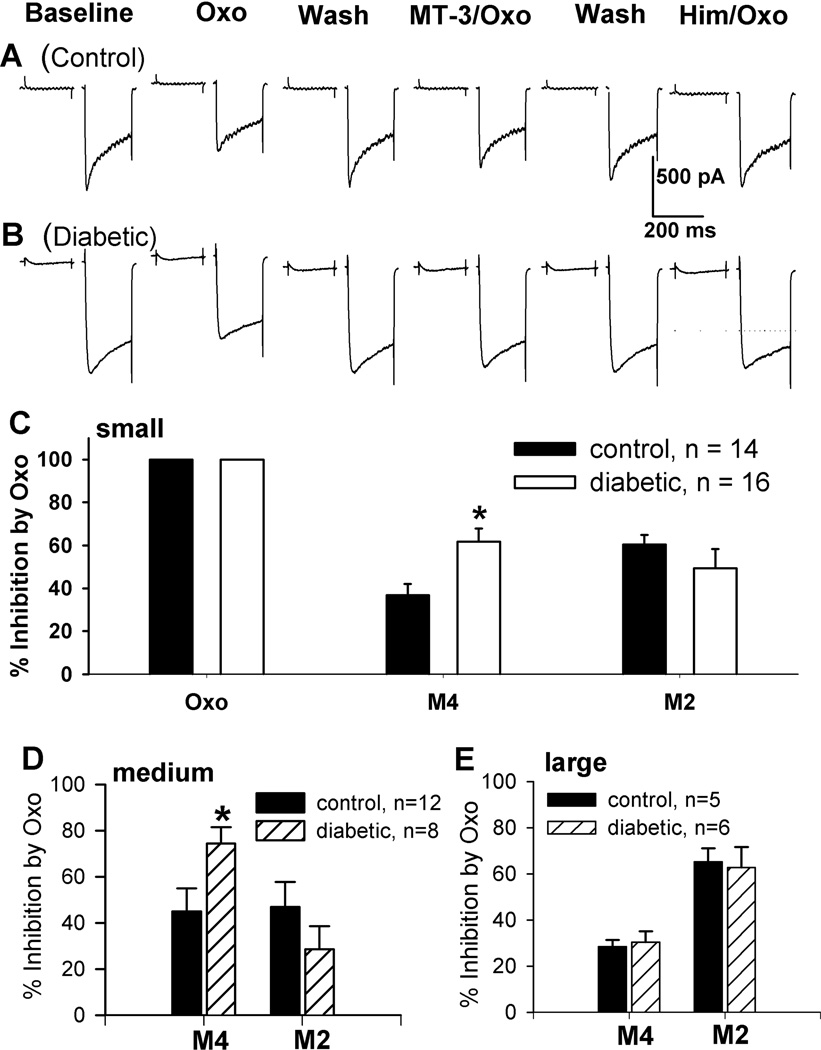
Painful neuropathy is one of the most serious complications of diabetes and remains difficult to treat. The muscarinic acetylcholine receptor (mAChR) agonists have a profound analgesic effect on painful diabetic neuropathy. Here we determined changes in T-type and high voltage-activated Ca(2+) channels (HVACCs) and their regulation by mAChRs in dorsal root ganglion (DRG) neurons in a rat model of diabetic neuropathy. The HVACC currents in large neurons, T-type currents in medium and large neurons, the percentage of small DRG neurons with T-type currents, and the Cav3.2 mRNA level were significantly increased in diabetic rats compared with those in control rats. The mAChR agonist oxotremorine-M significantly inhibited HVACCs in a greater proportion of DRG neurons with and without T-type currents in diabetic than in control rats. In contrast, oxotremorine-M had no effect on HVACCs in small and large neurons with T-type currents and in most medium neurons with T-type currents from control rats. The M(2) and M(4) antagonist himbacine abolished the effect of oxotremorine-M on HVACCs in both groups. The selective M(4) antagonist muscarinic toxin-3 caused a greater attenuation of the effect of oxotremorine-M on HVACCs in small and medium DRG neurons in diabetic than in control rats. Additionally, the mRNA and protein levels of M(4), but not M(2), in the DRG were significantly greater in diabetic than in control rats. Our findings suggest that diabetic neuropathy potentiates the activity of T-type and HVACCs in primary sensory neurons. M(4) mAChRs are up-regulated in DRG neurons and probably account for increased muscarinic analgesic effects in diabetic neuropathic pain.
痛性神经病变是糖尿病最严重的并发症之一,目前仍难以治疗。毒蕈碱型乙酰胆碱受体(mAChR)激动剂对痛性糖尿病神经病变具有显著的镇痛作用。在这里,我们在糖尿病神经病变大鼠模型中确定了背根神经节(DRG)神经元中 T 型和高电压激活钙(Ca 2+)通道(HVACCs)的变化及其对 mAChR 的调节。与对照组大鼠相比,糖尿病大鼠的大神经元中的 HVACC 电流、中大和大神经元中的 T 型电流、具有 T 型电流的小 DRG 神经元的百分比以及 Cav3.2 mRNA 水平均显著增加。与对照组大鼠相比,mAChR 激动剂 Oxotremorine-M 显著抑制了糖尿病大鼠中具有和不具有 T 型电流的 DRG 神经元中更大比例的 HVACC。相比之下,Oxotremorine-M 对具有 T 型电流的小和大神经元以及来自对照组大鼠的大多数具有 T 型电流的中神经元中的 HVACC 没有影响。M2 和 M4 拮抗剂海巴因消除了 Oxotremorine-M 对两组 HVACC 的作用。选择性 M4 拮抗剂 muscarinic toxin-3 引起 Oxotremorine-M 对糖尿病大鼠小和中 DRG 神经元中 HVACC 作用的衰减程度大于对照组大鼠。此外,DRG 中的 M4,但不是 M2,mRNA 和蛋白水平在糖尿病大鼠中明显高于对照组大鼠。我们的研究结果表明,糖尿病神经病变增强了初级感觉神经元中 T 型和 HVACCs 的活性。M4 mAChR 在 DRG 神经元中上调,可能是糖尿病神经病理性疼痛中增加的毒蕈碱镇痛作用的原因。