Rezeli Melinda, Végvári Akos, Fehniger Thomas E, Laurell Thomas, Marko-Varga György
Div, Clinical Protein Science & Imaging, Biomedical Center, Dept, of Measurement Technology and Industrial Electrical Engineering, Lund University, BMC C13, SE-221 84 Lund, Sweden.
J Clin Bioinforma. 2011 Feb 8;1(1):7. doi: 10.1186/2043-9113-1-7.
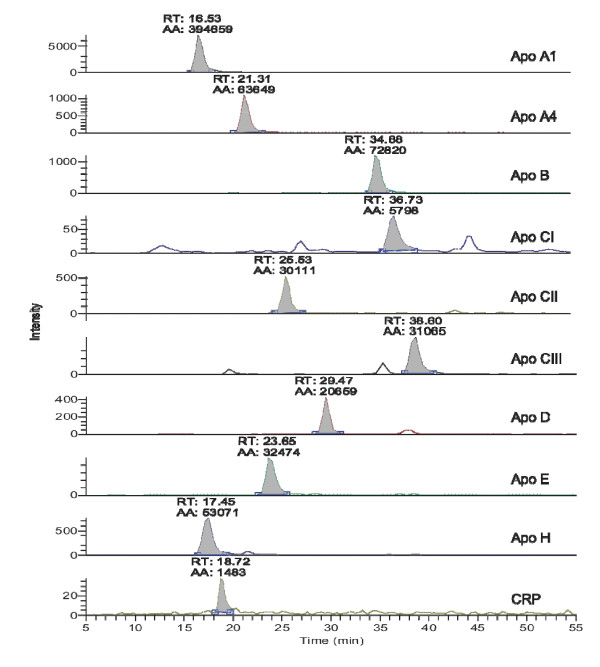
A perspective overview is given describing the current development of multiplex mass spectrometry assay technology platforms utilized for high throughput clinical sample analysis. The development of targeted therapies with novel personalized medicine drugs will require new tools for monitoring efficacy and outcome that will rely on both the quantification of disease progression related biomarkers as well as the measurement of disease specific pathway/signaling proteins.The bioinformatics developments play a key central role in the area of clinical proteomics where targeted peptide expressions in health and disease are investigated in small-, medium- and large-scaled clinical studies.An outline is presented describing applications of the selected reaction monitoring (SRM) mass spectrometry assay principle. This assay form enables the simultaneous description of multiple protein biomarkers and is an area under a fast and progressive development throughout the community. The Human Proteome Organization, HUPO, recently launched the Human Proteome Project (HPP) that will map the organization of proteins on specific chromosomes, on a chromosome-by-chromosome basis utilizing the SRM technology platform. Specific examples of an SRM-multiplex quantitative assay platform dedicated to the cardiovascular disease area, screening Apo A1, Apo A4, Apo B, Apo CI, Apo CII, Apo CIII, Apo D, Apo E, Apo H, and CRP biomarkers used in daily diagnosis routines in clinical hospitals globally, are presented. We also provide data on prostate cancer studies that have identified a variety of PSA isoforms characterized by high-resolution separation interfaced to mass spectrometry.
本文给出了一个前瞻性概述,描述了用于高通量临床样本分析的多重质谱检测技术平台的当前发展情况。新型个性化药物靶向治疗的发展将需要新的工具来监测疗效和结果,这将依赖于对疾病进展相关生物标志物的定量以及对疾病特异性通路/信号蛋白的测量。生物信息学的发展在临床蛋白质组学领域发挥着关键核心作用,在小、中、大规模临床研究中对健康和疾病状态下的靶向肽表达进行研究。本文概述了选择反应监测(SRM)质谱检测原理的应用。这种检测形式能够同时描述多种蛋白质生物标志物,并且是整个领域快速发展的一个方向。人类蛋白质组组织(HUPO)最近启动了人类蛋白质组计划(HPP),该计划将利用SRM技术平台,逐个染色体地绘制特定染色体上蛋白质的组织图谱。文中给出了一个专门用于心血管疾病领域的SRM多重定量检测平台的具体示例,该平台可筛查全球临床医院日常诊断中使用的载脂蛋白A1、载脂蛋白A4、载脂蛋白B、载脂蛋白CI、载脂蛋白CII、载脂蛋白CIII、载脂蛋白D、载脂蛋白E、载脂蛋白H和C反应蛋白等生物标志物。我们还提供了前列腺癌研究的数据,这些研究通过与质谱联用的高分辨率分离技术鉴定出了多种前列腺特异性抗原(PSA)异构体。