Beijing Key Laboratory of Viticulture and Enology, Institute of Botany, Chinese Academy of Sciences, Beijing, People's Republic of China.
PLoS One. 2011;6(8):e23033. doi: 10.1371/journal.pone.0023033. Epub 2011 Aug 26.
The electron transport chain, Rubisco and stomatal conductance are important in photosynthesis. Little is known about their combined responses to heat treatment at different temperatures and following recovery in grapevines (Vitis spp.) which are often grown in climates with high temperatures.
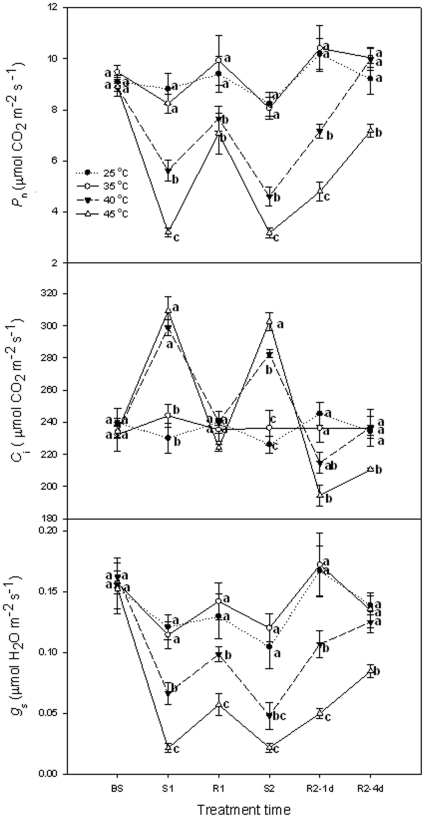
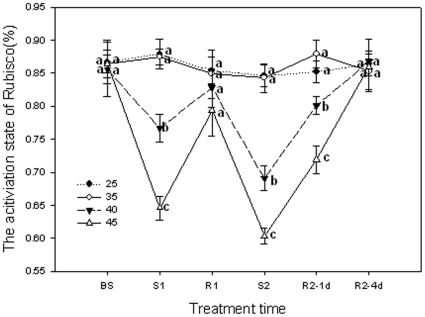
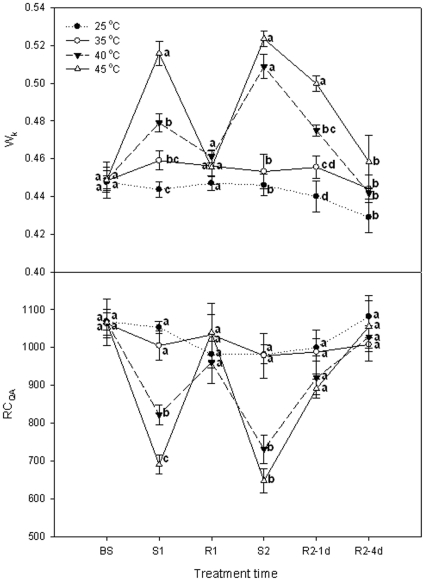
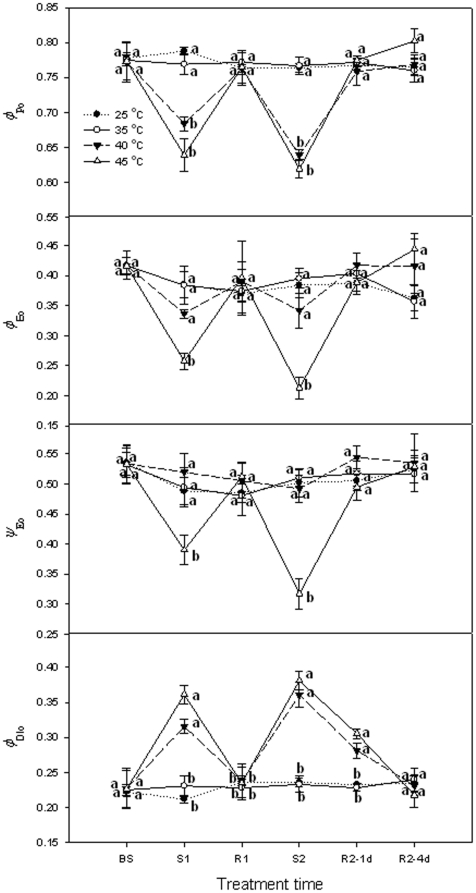
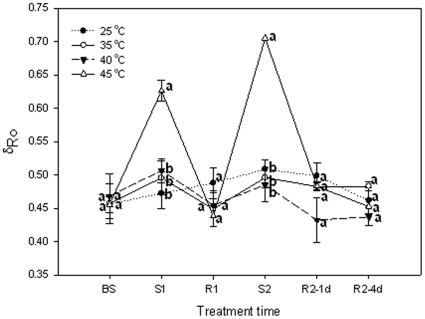
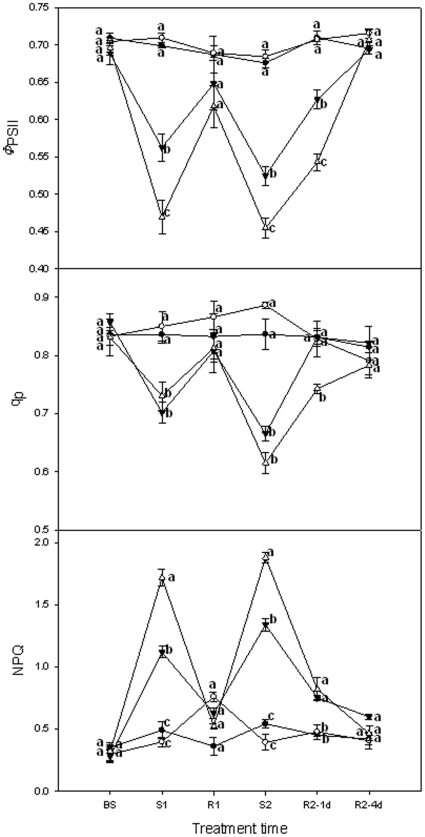
METHODOLOGY/FINDINGS: The electron transport function of photosystem II, the activation state of Rubisco and the influence of stomatal behavior were investigated in grapevine leaves during heat treatments and following recovery. High temperature treatments included 35, 40 and 45°C, with 25°C as the control and recovery temperature. Heat treatment at 35°C did not significantly (P>0.05) inhibit net photosynthetic rate (P(n)). However, with treatments at 40 and 45°C, P(n) was decreased, accompanied by an increase in substomatal CO(2) concentration (C(i)), decreases in stomatal conductance (g(s)) and the activation state of Rubisco, and inhibition of the donor side and the reaction center of PSII. The acceptor side of PSII was inhibited at 45°C but not at 40°C. When grape leaves recovered following heat treatment, P(n), g(s) and the activation state of Rubisco also increased, and the donor side and the reaction center of PSII recovered. The increase in P(n) during the recovery period following the second 45°C stress was slower than that following the 40°C stress, and these increases corresponded to the donor side of PSII and the activation state of Rubisco.
Heat treatment at 35°C did not significantly (P>0.05) influence photosynthesis. The decrease of P(n) in grape leaves exposed to more severe heat stress (40 or 45°C) was mainly attributed to three factors: the activation state of Rubisco, the donor side and the reaction center of PSII. However, the increase of P(n) in grape leaves following heat stress was also associated with a stomatal response. The acceptor side of PSII in grape leaves was responsive but less sensitive to heat stress.
电子传递链、Rubisco 和气孔导度在光合作用中很重要。然而,对于经常在高温气候下种植的葡萄(Vitis spp.)来说,它们在不同温度下受热处理以及随后恢复时的这些因素的综合反应,目前知之甚少。
方法/发现:在葡萄叶片受热处理及随后恢复过程中,研究了光合作用系统 II 的电子传递功能、Rubisco 的激活状态以及气孔行为的影响。高温处理包括 35、40 和 45°C,以 25°C 作为对照和恢复温度。35°C 的热处理并没有显著(P>0.05)抑制净光合速率(P(n))。然而,在 40 和 45°C 的处理下,P(n)下降,伴随着亚细胞 CO2 浓度(C(i))的增加、气孔导度(g(s))和 Rubisco 的激活状态的下降,以及 PSII 的供体侧和反应中心的抑制。在 45°C 时 PSII 的受体侧受到抑制,但在 40°C 时没有。在热处理后恢复时,P(n)、g(s)和 Rubisco 的激活状态也增加,PSII 的供体侧和反应中心也恢复。第二次 45°C 胁迫后恢复期间 P(n)的增加比 40°C 胁迫后恢复期间的增加要慢,而这些增加与 PSII 的供体侧和 Rubisco 的激活状态相对应。
35°C 的热处理对光合作用没有显著(P>0.05)影响。暴露在更严重热胁迫(40 或 45°C)下的葡萄叶片中 P(n)的降低主要归因于三个因素:Rubisco 的激活状态、PSII 的供体侧和反应中心。然而,葡萄叶片在受热胁迫后 P(n)的增加也与气孔反应有关。PSII 的受体侧在葡萄叶片中是有反应的,但对热胁迫的敏感性较低。