Lin Zheng-He, Chen Li-Song, Chen Rong-Bing, Zhang Fang-Zhou, Jiang Huan-Xin, Tang Ning
Institute of Horticultural Plant Physiology, Biochemistry and Molecular Biology, Fujian Agriculture and Forestry University, Fuzhou, 350002, PR China.
BMC Plant Biol. 2009 Apr 21;9:43. doi: 10.1186/1471-2229-9-43.
Although the effects of P deficiency on tea (Camellia sinensis (L.) O. Kuntze) growth, P uptake and utilization as well as leaf gas exchange and Chl a fluorescence have been investigated, very little is known about the effects of P deficiency on photosynthetic electron transport, photosynthetic enzymes and carbohydrates of tea leaves. In this study, own-rooted 10-month-old tea trees were supplied three times weekly for 17 weeks with 500 mL of nutrient solution at a P concentration of 0, 40, 80, 160, 400 or 1000 microM. This objective of this study was to determine how P deficiency affects CO2 assimilation, Rubisco, carbohydrates and photosynthetic electron transport in tea leaves to understand the mechanism by which P deficiency leads to a decrease in CO2 assimilation.
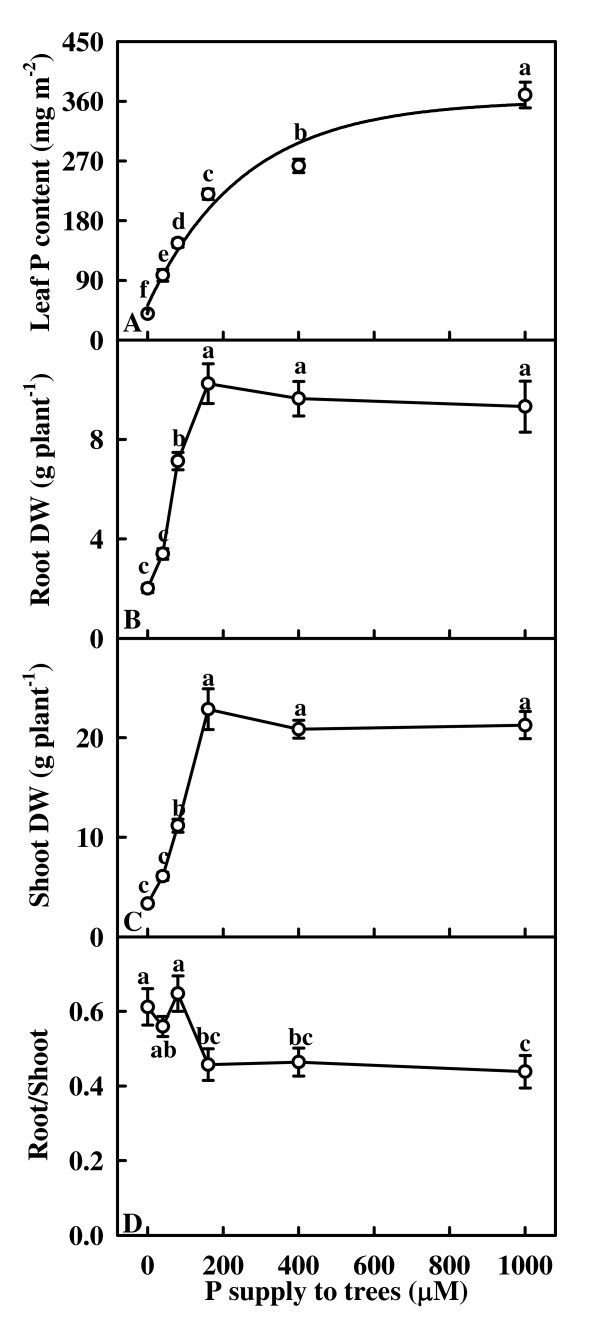
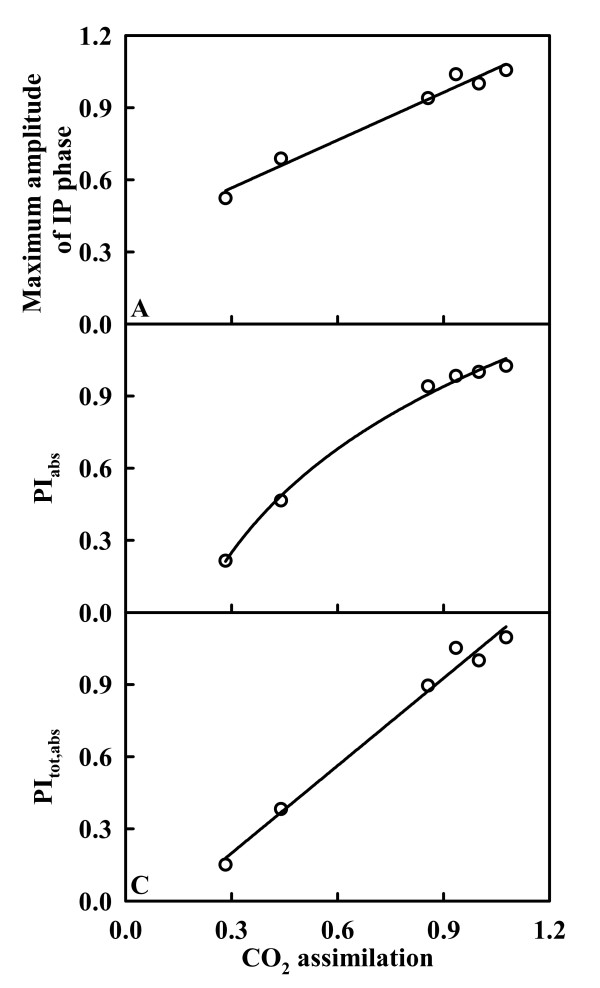
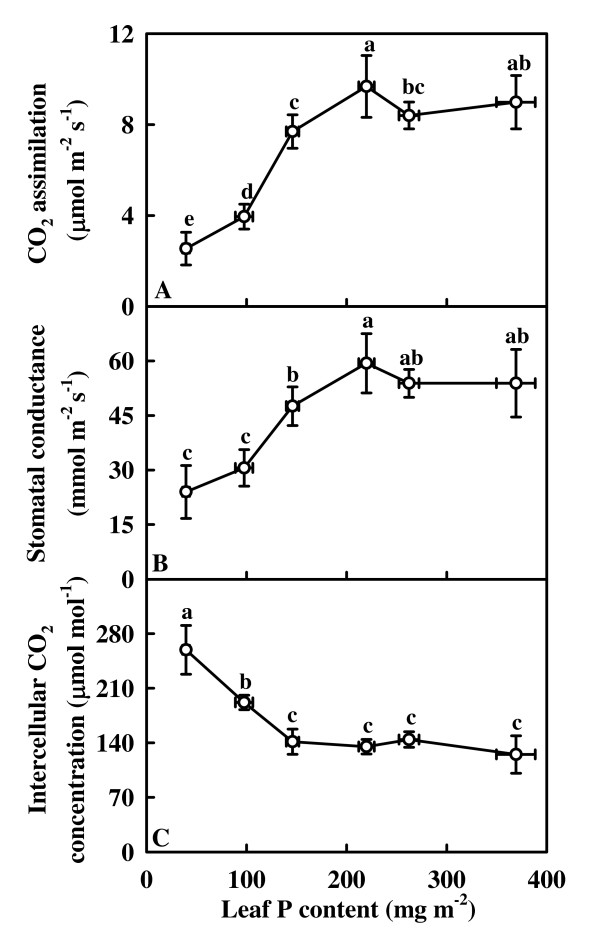
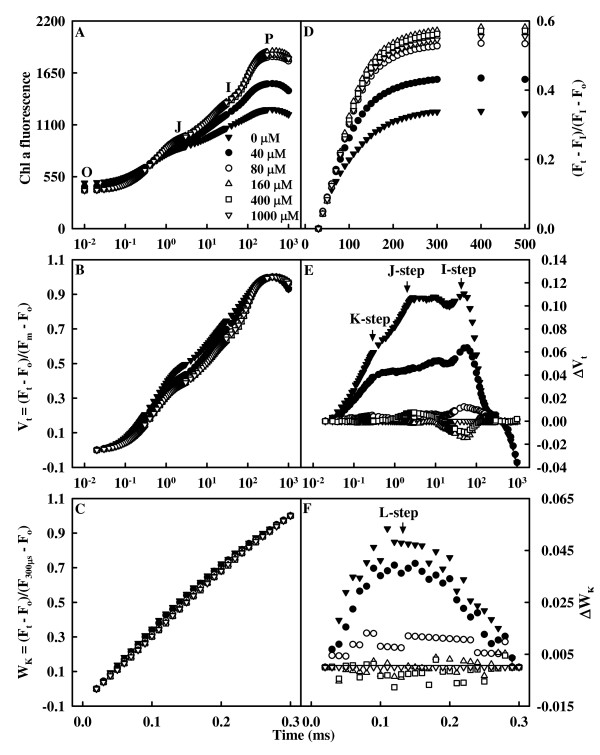
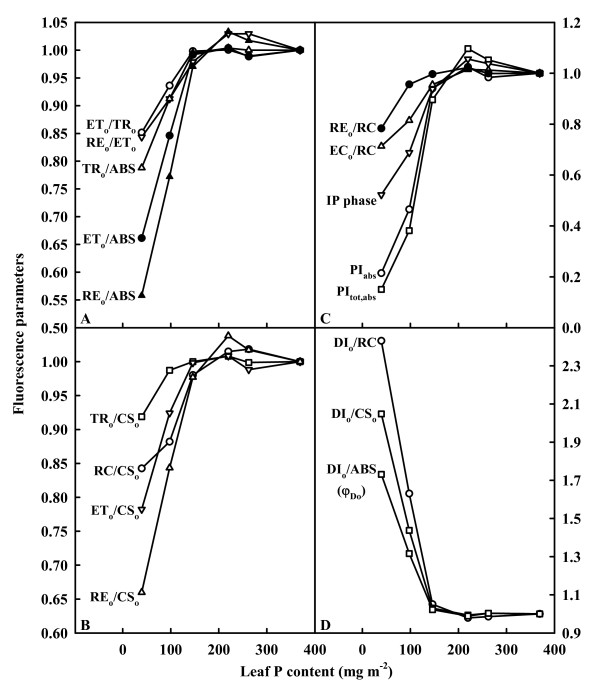
Both root and shoot dry weight increased as P supply increased from 0 to 160 microM, then remained unchanged. P-deficient leaves from 0 to 80 muM P-treated trees showed decreased CO2 assimilation and stomatal conductance, but increased intercellular CO2 concentration. Both initial and total Rubisco activity, contents of Chl and total soluble protein in P-deficient leaves decreased to a lesser extent than CO2 assimilation. Contents of sucrose and starch were decreased in P-deficient leaves, whereas contents of glucose and fructose did not change significantly except for a significant increase in the lowest P leaves. OJIP transients from P-deficient leaves displayed a rise at the O-step and a depression at the P-step, accompanied by two new steps at about 150 mus (L-step) and at about 300 mus (K-step). RC/CSo, TRo/ABS (or Fv/Fm), ETo/ABS, REo/ABS, maximum amplitude of IP phase, PIabs and PItot, abs were decreased in P-deficient leaves, while VJ, VI and dissipated energy were increased.
P deficiency decreased photosynthetic electron transport capacity by impairing the whole electron transport chain from the PSII donor side up to the PSI, thus decreasing ATP content which limits RuBP regeneration, and hence, the rate of CO2 assimilation. Energy dissipation is enhanced to protect P-deficient leaves from photo-oxidative damage in high light.
尽管已对磷缺乏对茶树(Camellia sinensis (L.) O. Kuntze)生长、磷吸收与利用以及叶片气体交换和叶绿素a荧光的影响进行了研究,但关于磷缺乏对茶叶光合电子传递、光合酶和碳水化合物的影响却知之甚少。在本研究中,对10个月大的自根茶树每周供应3次500 mL磷浓度分别为0、40、80、160、400或1000微摩尔的营养液,持续17周。本研究的目的是确定磷缺乏如何影响茶叶中的二氧化碳同化、核酮糖-1,5-二磷酸羧化酶(Rubisco)、碳水化合物和光合电子传递,以了解磷缺乏导致二氧化碳同化减少的机制。
随着磷供应从0增加到160微摩尔,根和地上部干重均增加,之后保持不变。用0至80微摩尔磷处理的茶树的缺磷叶片表现出二氧化碳同化和气孔导度降低,但胞间二氧化碳浓度增加。缺磷叶片中的初始和总Rubisco活性、叶绿素含量和总可溶性蛋白含量下降幅度小于二氧化碳同化。缺磷叶片中蔗糖和淀粉含量降低,而葡萄糖和果糖含量除最低磷处理的叶片显著增加外,无显著变化。缺磷叶片的OJIP瞬态在O点上升,在P点下降,同时在约150微秒(L点)和约300微秒(K点)出现两个新步骤。缺磷叶片中反应中心/吸收的光能(RC/CSo)、光化学猝灭系数(TRo/ABS,或Fv/Fm)、电子传递量子产额(ETo/ABS)、相对电子传递速率(REo/ABS)、IP相最大振幅、光化学性能指数(PIabs)和总性能指数(PItot, abs)降低,而VJ、VI和耗散能量增加。
磷缺乏通过损害从光系统II供体侧到光系统I的整个电子传递链,降低了光合电子传递能力,从而降低了三磷酸腺苷(ATP)含量,这限制了核酮糖-1,5-二磷酸(RuBP)再生,进而降低了二氧化碳同化速率。在高光条件下,能量耗散增强,以保护缺磷叶片免受光氧化损伤。