Adrienne Cormican, Manigandan Chockalingam
Occupational Therapy Discipline, School of Health Sciences, National University of Ireland, Galway, Ireland.
J Neurosci Rural Pract. 2011 Jul;2(2):141-9. doi: 10.4103/0976-3147.83579.
Hand splinting after stroke is a common practice despite inadequate evidence. This warrants a better understanding of the therapists' splinting practice, to develop clinically meaningful treatment options.
The study examined the nature and prevalence of the factors associated with therapists' hand splinting practice and their perceived splinting efficacy.
A cross-sectional national survey of hand-splinting practice among inpatient occupational therapists (OTs) in Ireland.
Sixty-two therapists participated in this national survey.
A number of factors were analyzed to explore their relationship with therapists' perception of splint efficacy using Spearman's rank order correlation.
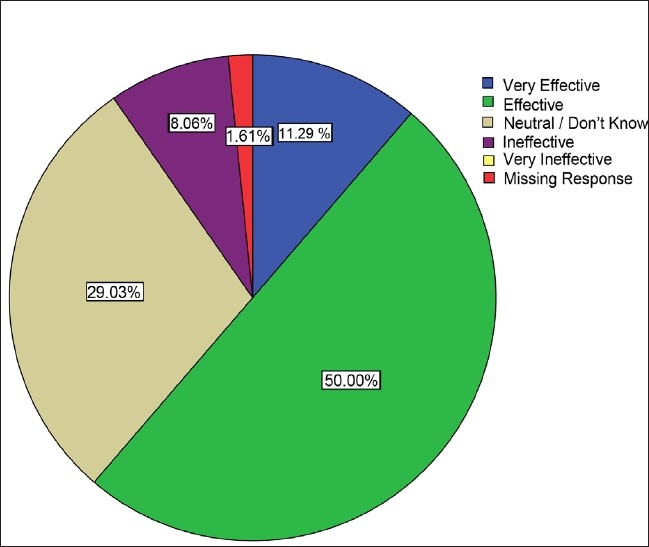
53(85.5%) out of 62 survey respondents prescribed splints to their clients at the time of taking the survey. To reduce spasticity, to correct contractures and thus increase range of motion (ROM) were the commonly used splinting goals. These were the goals that were significantly associated with the therapists' splinting efficacy too.
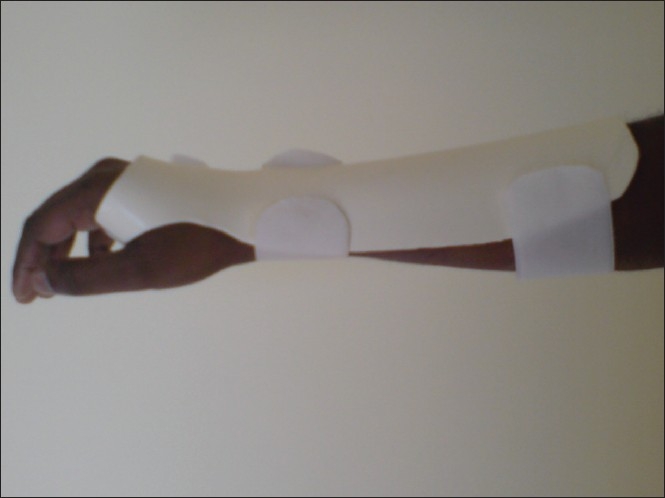
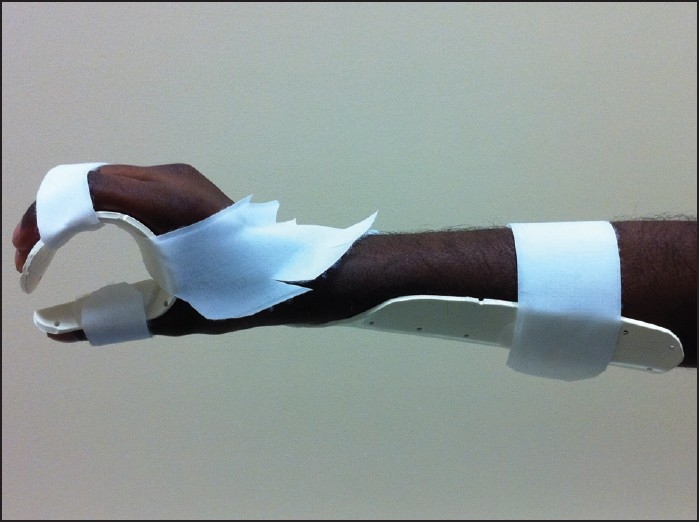
Hand-splint prescription following stroke was found to be a common practice among OTs who perceive splints to be quite effective. A custom-made, volar forearm-based wrist-hand splint is the preferred splint among therapists to achieve a number of clinical aims such as improving ROM, stretching soft tissue contractures and reducing spasticity in the upper extremity. A wide variety of splinting regimens is currently practiced, reflecting the lack of a universally accepted and comprehensive practice guideline to regulate therapy. Methodologically valid clinical trials evaluating the efficacy of therapist-preferred splints in achieving their favored outcomes are needed. Development of common, universally accepted therapeutic guidelines based on comprehensive scientific review of such studies is thus needed.
尽管证据不足,但中风后手夹板固定仍是一种常见的治疗方法。这就需要更好地了解治疗师的夹板固定做法,以制定具有临床意义的治疗方案。
本研究调查了与治疗师手部夹板固定做法相关的因素的性质和普遍性,以及他们对夹板固定效果的认知。
对爱尔兰住院职业治疗师(OT)手部夹板固定做法进行的全国性横断面调查。
62名治疗师参与了这项全国性调查。
分析了一些因素,使用Spearman等级相关来探讨它们与治疗师对夹板效果认知之间的关系。
62名调查受访者中有53名(85.5%)在接受调查时为其客户开具了夹板。减少痉挛、纠正挛缩从而增加关节活动范围(ROM)是常用夹板固定目标。这些目标也与治疗师的夹板固定效果显著相关。
中风后手夹板处方在认为夹板相当有效的职业治疗师中是一种常见做法。定制的、基于掌侧前臂的腕手夹板是治疗师实现多项临床目标(如改善ROM、拉伸软组织挛缩和减少上肢痉挛)的首选夹板。目前采用了各种各样的夹板固定方案,这反映出缺乏普遍接受的全面实践指南来规范治疗。需要进行方法学上有效的临床试验,以评估治疗师首选夹板实现其预期效果的疗效。因此,需要基于对此类研究的全面科学审查制定通用的、被普遍接受的治疗指南。