Division of Hematology and Oncology, Department of Medicine, College of Medicine, University of Florida, Gainesville, FL 32610-0278, USA.
J Oncol. 2012;2012:128608. doi: 10.1155/2012/128608. Epub 2011 Sep 5.
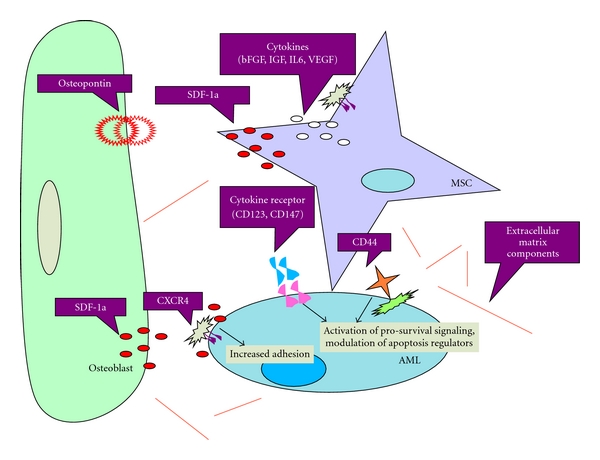
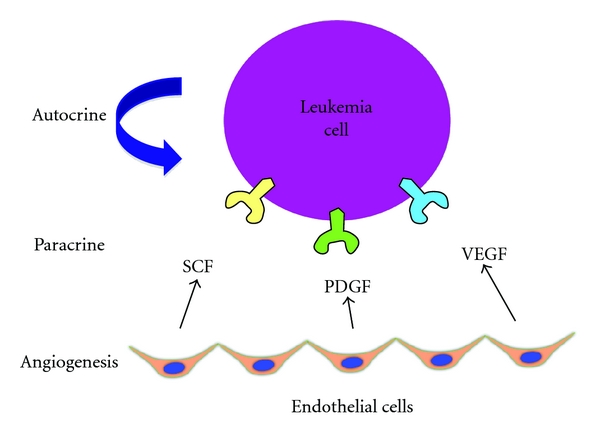
Acute myeloid leukemia (AML) arises from neoplastic transformation of hematopoietic stem and progenitor cells, and relapsed disease remains one of the greater challenges in treating this hematologic malignancy. This paper focuses on angiogenic aspects of AML including the significance and prognostic value of bone marrow microvessel density and circulating cytokine levels. We show three general mechanisms whereby AML exploits angiogenic pathways, including direct induction of angiogenesis, paracrine regulation, and autocrine stimulation. We also present early evidence that leukemia cells contribute directly to vascular endothelia. Novel treatment strategies are proposed, and a review of relevant antiangiogenic clinical trials is presented. By understanding how blood vessels can serve as a reservoir for refractory and relapsed AML, new diagnostics and promising treatment strategies can be developed.
急性髓系白血病(AML)源于造血干细胞和祖细胞的肿瘤性转化,而复发性疾病仍然是治疗这种血液恶性肿瘤的重大挑战之一。本文重点介绍 AML 的血管生成方面,包括骨髓微血管密度和循环细胞因子水平的意义和预后价值。我们展示了 AML 利用血管生成途径的三种一般机制,包括直接诱导血管生成、旁分泌调节和自分泌刺激。我们还提供了早期证据表明白血病细胞直接有助于血管内皮。提出了新的治疗策略,并对相关抗血管生成临床试验进行了综述。通过了解血管如何成为耐药和复发 AML 的储库,可以开发新的诊断和有前途的治疗策略。