• 文献检索
  • 文档翻译
  • 深度研究
  • 学术资讯
  • Suppr Zotero 插件Zotero 插件
  • 邀请有礼
  • 套餐&价格
  • 历史记录
应用&插件
Suppr Zotero 插件Zotero 插件浏览器插件Mac 客户端Windows 客户端微信小程序
定价
高级版会员购买积分包购买API积分包
服务
文献检索文档翻译深度研究API 文档MCP 服务
关于我们
关于 Suppr公司介绍联系我们用户协议隐私条款
关注我们

Suppr 超能文献

核心技术专利:CN118964589B侵权必究
粤ICP备2023148730 号-1Suppr @ 2026

文献检索

告别复杂PubMed语法,用中文像聊天一样搜索,搜遍4000万医学文献。AI智能推荐,让科研检索更轻松。

立即免费搜索

文件翻译

保留排版,准确专业,支持PDF/Word/PPT等文件格式,支持 12+语言互译。

免费翻译文档

深度研究

AI帮你快速写综述,25分钟生成高质量综述,智能提取关键信息,辅助科研写作。

立即免费体验

2009 年 H1N1 流感大流行的传播特征:8 个南半球国家的比较。

Transmission characteristics of the 2009 H1N1 influenza pandemic: comparison of 8 Southern hemisphere countries.

机构信息

MRC Centre for Outbreak Analysis and Modelling, Department of Infectious Disease Epidemiology, School of Public Health, Imperial College London, London, United Kingdom.

出版信息

PLoS Pathog. 2011 Sep;7(9):e1002225. doi: 10.1371/journal.ppat.1002225. Epub 2011 Sep 1.

DOI:10.1371/journal.ppat.1002225
PMID:21909272
原文链接:https://pmc.ncbi.nlm.nih.gov/articles/PMC3164643/
Abstract

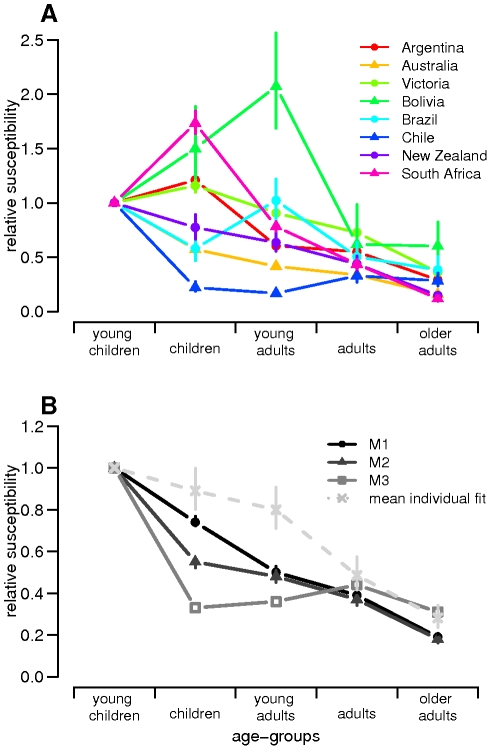
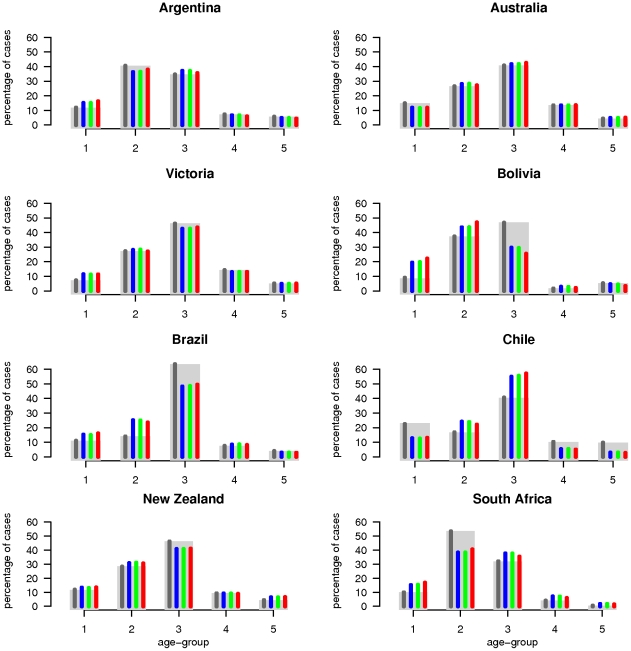
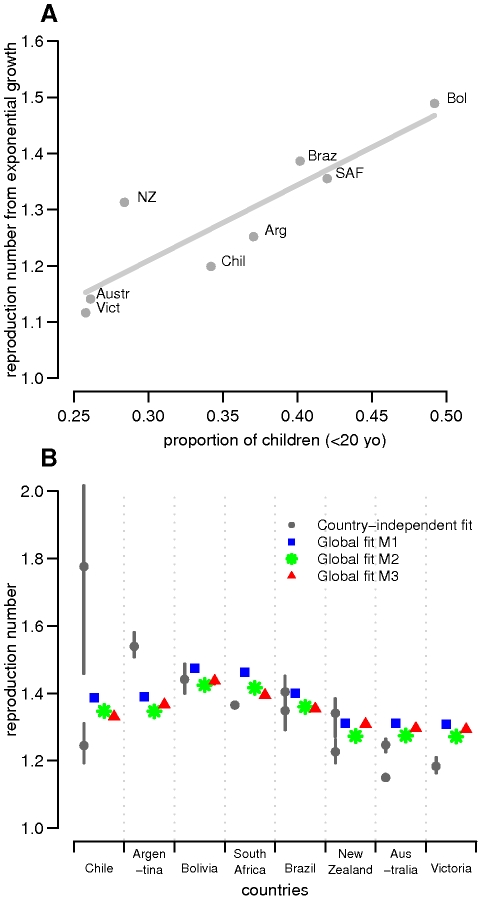
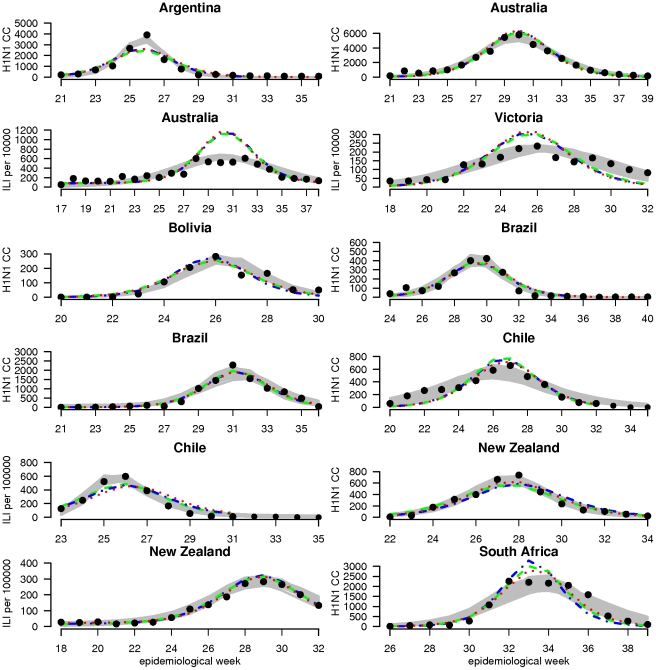
While in Northern hemisphere countries, the pandemic H1N1 virus (H1N1pdm) was introduced outside of the typical influenza season, Southern hemisphere countries experienced a single wave of transmission during their 2009 winter season. This provides a unique opportunity to compare the spread of a single virus in different countries and study the factors influencing its transmission. Here, we estimate and compare transmission characteristics of H1N1pdm for eight Southern hemisphere countries/states: Argentina, Australia, Bolivia, Brazil, Chile, New Zealand, South Africa and Victoria (Australia). Weekly incidence of cases and age-distribution of cumulative cases were extracted from public reports of countries' surveillance systems. Estimates of the reproduction numbers, R(0), empirically derived from the country-epidemics' early exponential phase, were positively associated with the proportion of children in the populations (p = 0.004). To explore the role of demography in explaining differences in transmission intensity, we then fitted a dynamic age-structured model of influenza transmission to available incidence data for each country independently, and for all the countries simultaneously. Posterior median estimates of R₀ ranged 1.2-1.8 for the country-specific fits, and 1.29-1.47 for the global fits. Corresponding estimates for overall attack-rate were in the range 20-50%. All model fits indicated a significant decrease in susceptibility to infection with age. These results confirm the transmissibility of the 2009 H1N1 pandemic virus was relatively low compared with past pandemics. The pattern of age-dependent susceptibility found confirms that older populations had substantial--though partial--pre-existing immunity, presumably due to exposure to heterologous influenza strains. Our analysis indicates that between-country-differences in transmission were at least partly due to differences in population demography.

摘要

在北半球国家,大流行性 H1N1 病毒(H1N1pdm)在典型流感季节之外传入,而南半球国家在 2009 年冬季经历了一波单一的传播。这为比较不同国家中单一病毒的传播并研究影响其传播的因素提供了独特的机会。在这里,我们估计并比较了 8 个南半球国家/地区(阿根廷、澳大利亚、玻利维亚、巴西、智利、新西兰、南非和维多利亚州(澳大利亚))的 H1N1pdm 传播特征。从各国监测系统的公共报告中提取了病例的每周发病率和累计病例的年龄分布。从国家疫情的早期指数阶段得出的经验繁殖数 R(0)估计值与人口中儿童的比例呈正相关(p=0.004)。为了探索人口统计学在解释传播强度差异方面的作用,我们随后针对每个国家独立地拟合了流感传播的动态年龄结构模型,并针对所有国家同时进行了拟合。国家特定拟合的 R₀后验中位数估计值范围为 1.2-1.8,全球拟合的 R₀后验中位数估计值范围为 1.29-1.47。总体攻击率的相应估计值在 20-50%之间。所有模型拟合均表明,随着年龄的增长,感染的易感性显著下降。这些结果证实,与过去的大流行相比,2009 年 H1N1 大流行性病毒的传播能力相对较低。发现的年龄依赖性易感性模式证实,老年人群具有大量(尽管是部分)先前存在的异源流感株免疫力,这可能是由于接触了异源流感株。我们的分析表明,国家之间传播的差异至少部分是由于人口统计学差异造成的。
https://cdn.ncbi.nlm.nih.gov/pmc/blobs/8e6d/3164643/b181495fa41b/ppat.1002225.g004.jpg
https://cdn.ncbi.nlm.nih.gov/pmc/blobs/8e6d/3164643/075dfcbbd0e1/ppat.1002225.g001.jpg
https://cdn.ncbi.nlm.nih.gov/pmc/blobs/8e6d/3164643/ddd0d74d7e19/ppat.1002225.g002.jpg
https://cdn.ncbi.nlm.nih.gov/pmc/blobs/8e6d/3164643/744b2542c794/ppat.1002225.g003.jpg
https://cdn.ncbi.nlm.nih.gov/pmc/blobs/8e6d/3164643/b181495fa41b/ppat.1002225.g004.jpg
https://cdn.ncbi.nlm.nih.gov/pmc/blobs/8e6d/3164643/075dfcbbd0e1/ppat.1002225.g001.jpg
https://cdn.ncbi.nlm.nih.gov/pmc/blobs/8e6d/3164643/ddd0d74d7e19/ppat.1002225.g002.jpg
https://cdn.ncbi.nlm.nih.gov/pmc/blobs/8e6d/3164643/744b2542c794/ppat.1002225.g003.jpg
https://cdn.ncbi.nlm.nih.gov/pmc/blobs/8e6d/3164643/b181495fa41b/ppat.1002225.g004.jpg

相似文献

1
Transmission characteristics of the 2009 H1N1 influenza pandemic: comparison of 8 Southern hemisphere countries.2009 年 H1N1 流感大流行的传播特征:8 个南半球国家的比较。
PLoS Pathog. 2011 Sep;7(9):e1002225. doi: 10.1371/journal.ppat.1002225. Epub 2011 Sep 1.
2
Pandemic influenza A (H1N1) during winter influenza season in the southern hemisphere.南半球冬季流感季的甲型 H1N1 流感大流行。
Influenza Other Respir Viruses. 2010 Jul;4(4):187-97. doi: 10.1111/j.1750-2659.2010.00147.x.
3
Epidemiologic and virologic assessment of the 2009 influenza A (H1N1) pandemic on selected temperate countries in the Southern Hemisphere: Argentina, Australia, Chile, New Zealand and South Africa.南半球部分温带国家(阿根廷、澳大利亚、智利、新西兰和南非) 2009 年甲型 H1N1 流感大流行的流行病学和病毒学评估。
Influenza Other Respir Viruses. 2011 Nov;5(6):e487-98. doi: 10.1111/j.1750-2659.2011.00249.x. Epub 2011 Apr 20.
4
The influence of climatic conditions on the transmission dynamics of the 2009 A/H1N1 influenza pandemic in Chile.气候条件对智利 2009 年 A/H1N1 流感大流行传播动力学的影响。
BMC Infect Dis. 2012 Nov 13;12:298. doi: 10.1186/1471-2334-12-298.
5
On Temporal Patterns and Circulation of Influenza Virus Strains in Taiwan, 2008-2014: Implications of 2009 pH1N1 Pandemic.2008 - 2014年台湾地区流感病毒株的时间模式与传播:2009年甲型H1N1流感大流行的影响
PLoS One. 2016 May 3;11(5):e0154695. doi: 10.1371/journal.pone.0154695. eCollection 2016.
6
Heterogeneity in influenza seasonality and vaccine effectiveness in Australia, Chile, New Zealand and South Africa: early estimates of the 2019 influenza season.澳大利亚、智利、新西兰和南非的流感季节和疫苗有效性的异质性:2019 年流感季节的早期估计。
Euro Surveill. 2019 Nov;24(45). doi: 10.2807/1560-7917.ES.2019.24.45.1900645.
7
Transmissibility of 2009 pandemic influenza A(H1N1) in New Zealand: effective reproduction number and influence of age, ethnicity and importations.2009 年流感大流行 A(H1N1)在新西兰的传播:有效繁殖数以及年龄、种族和输入的影响。
Euro Surveill. 2010 Jun 17;15(24):19591.
8
Critical care services and 2009 H1N1 influenza in Australia and New Zealand.澳大利亚和新西兰的重症监护服务与2009年甲型H1N1流感
N Engl J Med. 2009 Nov 12;361(20):1925-34. doi: 10.1056/NEJMoa0908481. Epub 2009 Oct 8.
9
Decreased Influenza Activity During the COVID-19 Pandemic - United States, Australia, Chile, and South Africa, 2020.新冠疫情期间流感活动减少——美国、澳大利亚、智利和南非,2020 年。
MMWR Morb Mortal Wkly Rep. 2020 Sep 18;69(37):1305-1309. doi: 10.15585/mmwr.mm6937a6.
10
[Epidemiology of influenza A (H1N1) worldwide and in Spain].甲型H1N1流感在全球及西班牙的流行病学情况
Arch Bronconeumol. 2010 Mar;46 Suppl 2:3-12. doi: 10.1016/S0300-2896(10)70014-4.

引用本文的文献

1
Human behavior and disease dynamics.人类行为与疾病动态
Proc Natl Acad Sci U S A. 2024 Jan 2;121(1):e2317211120. doi: 10.1073/pnas.2317211120. Epub 2023 Dec 27.
2
Correlation of viral loads in disease transmission could affect early estimates of the reproduction number.病毒载量在疾病传播中的相关性可能会影响对繁殖数的早期估计。
J R Soc Interface. 2023 May;20(202):20220827. doi: 10.1098/rsif.2022.0827. Epub 2023 May 3.
3
Combinational Recommendation of Vaccinations, Mask-Wearing, and Home-Quarantine to Control Influenza in Megacities: An Agent-Based Modeling Study With Large-Scale Trajectory Data.

本文引用的文献

1
Epidemiologic and virologic assessment of the 2009 influenza A (H1N1) pandemic on selected temperate countries in the Southern Hemisphere: Argentina, Australia, Chile, New Zealand and South Africa.南半球部分温带国家(阿根廷、澳大利亚、智利、新西兰和南非) 2009 年甲型 H1N1 流感大流行的流行病学和病毒学评估。
Influenza Other Respir Viruses. 2011 Nov;5(6):e487-98. doi: 10.1111/j.1750-2659.2011.00249.x. Epub 2011 Apr 20.
2
Serological study of the 2009 pandemic due to influenza A H1N1 in the metropolitan French population.2009 年甲型 H1N1 流感大流行在法国大都市人群中的血清学研究。
Clin Microbiol Infect. 2012 Feb;18(2):177-83. doi: 10.1111/j.1469-0691.2011.03545.x. Epub 2011 Jun 2.
3
基于大轨迹数据的元胞自动机模型研究:组合推荐疫苗接种、戴口罩和居家隔离以控制特大城市流感
Front Public Health. 2022 May 26;10:883624. doi: 10.3389/fpubh.2022.883624. eCollection 2022.
4
Regional-based within-year seasonal variations in influenza-related health outcomes across mainland China: a systematic review and spatio-temporal analysis.中国大陆地区与流感相关的健康结局的基于区域的年内季节性变化:系统评价和时空分析。
BMC Med. 2022 Feb 10;20(1):58. doi: 10.1186/s12916-022-02269-5.
5
The impact of long-term non-pharmaceutical interventions on COVID-19 epidemic dynamics and control: the value and limitations of early models.长期非药物干预对 COVID-19 疫情动态和控制的影响:早期模型的价值和局限性。
Proc Biol Sci. 2021 Aug 25;288(1957):20210811. doi: 10.1098/rspb.2021.0811.
6
Estimating the number of averted illnesses and deaths as a result of vaccination against an influenza pandemic in nine low- and middle-income countries.估算九个低收入和中等收入国家因接种流感大流行疫苗而避免的疾病和死亡人数。
Vaccine. 2021 Jul 5;39(30):4219-4230. doi: 10.1016/j.vaccine.2021.05.006. Epub 2021 Jun 10.
7
Viral load and contact heterogeneity predict SARS-CoV-2 transmission and super-spreading events.病毒载量和接触异质性可预测 SARS-CoV-2 的传播和超级传播事件。
Elife. 2021 Feb 23;10:e63537. doi: 10.7554/eLife.63537.
8
Wrong person, place and time: viral load and contact network structure predict SARS-CoV-2 transmission and super-spreading events.错误的人、地点和时间:病毒载量与接触网络结构可预测新冠病毒传播及超级传播事件
medRxiv. 2020 Sep 28:2020.08.07.20169920. doi: 10.1101/2020.08.07.20169920.
9
Estimation of influenza and respiratory syncytial virus hospitalizations using sentinel surveillance data-La Paz, Bolivia. 2012-2017.利用哨点监测数据估算流感和呼吸道合胞病毒住院病例——玻利维亚拉巴斯,2012-2017 年。
Influenza Other Respir Viruses. 2019 Sep;13(5):477-483. doi: 10.1111/irv.12663. Epub 2019 Jun 17.
10
Increased infection severity in downstream cities in infectious disease transmission and tourists surveillance analysis.传染病传播和游客监测分析中下游城市感染严重程度增加。
J Theor Biol. 2019 Jun 7;470:20-29. doi: 10.1016/j.jtbi.2019.03.004. Epub 2019 Mar 6.
The seroprevalence of pandemic influenza H1N1 (2009) virus in China.
中国大流行性流感 H1N1(2009)病毒的血清流行率。
PLoS One. 2011 Apr 21;6(4):e17919. doi: 10.1371/journal.pone.0017919.
4
Challenges of global surveillance during an influenza pandemic.流感大流行期间全球监测所面临的挑战。
Public Health. 2011 May;125(5):247-56. doi: 10.1016/j.puhe.2010.12.007. Epub 2011 Apr 27.
5
Impact of pollution, climate, and sociodemographic factors on spatiotemporal dynamics of seasonal respiratory viruses.污染、气候和社会人口因素对季节性呼吸道病毒时空动态的影响。
Clin Transl Sci. 2011 Feb;4(1):48-54. doi: 10.1111/j.1752-8062.2010.00257.x.
6
Role of social networks in shaping disease transmission during a community outbreak of 2009 H1N1 pandemic influenza.社交网络在塑造 2009 年 H1N1 大流行流感社区爆发期间疾病传播中的作用。
Proc Natl Acad Sci U S A. 2011 Feb 15;108(7):2825-30. doi: 10.1073/pnas.1008895108. Epub 2011 Jan 31.
7
Absolute humidity and pandemic versus epidemic influenza.绝对湿度与大流行流感和流行性感冒。
Am J Epidemiol. 2011 Jan 15;173(2):127-35. doi: 10.1093/aje/kwq347. Epub 2010 Nov 16.
8
The dynamics of risk perceptions and precautionary behavior in response to 2009 (H1N1) pandemic influenza.对 2009 年(H1N1)大流行流感的风险认知和防范行为的动态变化。
BMC Infect Dis. 2010 Oct 14;10:296. doi: 10.1186/1471-2334-10-296.
9
H1N1pdm in the Americas.美洲的 H1N1pdm。
Epidemics. 2010 Sep;2(3):132-138. doi: 10.1016/j.epidem.2010.07.001.
10
Influenza A (H1N1) 2009 antibodies in residents of New South Wales, Australia, after the first pandemic wave in the 2009 southern hemisphere winter.2009 南半球冬季第一次大流行后,澳大利亚新南威尔士州居民中的甲型 H1N1 2009 流感抗体。
PLoS One. 2010 Sep 7;5(9):e12562. doi: 10.1371/journal.pone.0012562.