Goyal Ashish, Reeves Daniel B, Cardozo-Ojeda E Fabian, Schiffer Joshua T, Mayer Bryan T
Vaccine and Infectious Diseases Division, Fred Hutchinson Cancer Research Center.
Department of Medicine, University of Washington, Seattle.
medRxiv. 2020 Sep 28:2020.08.07.20169920. doi: 10.1101/2020.08.07.20169920.
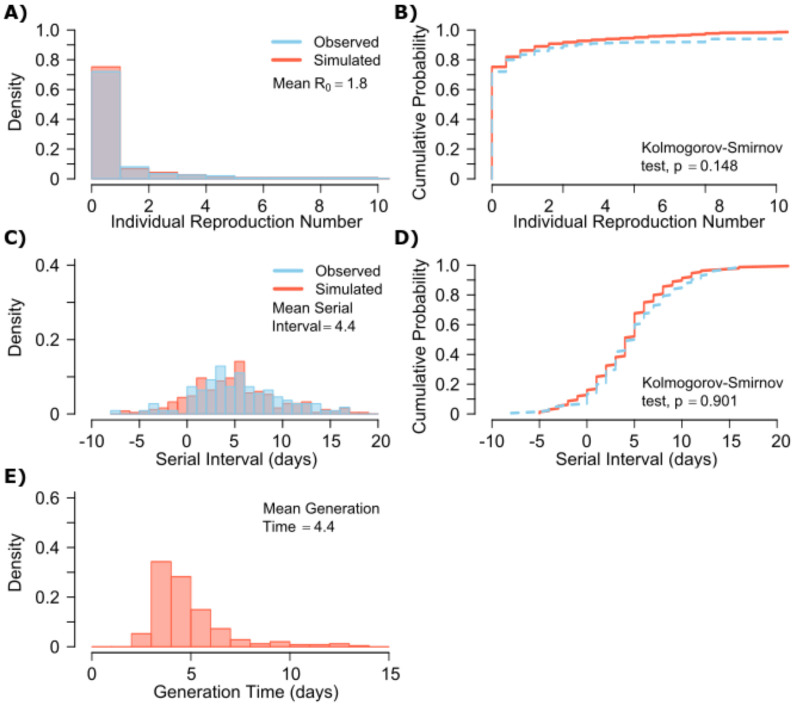
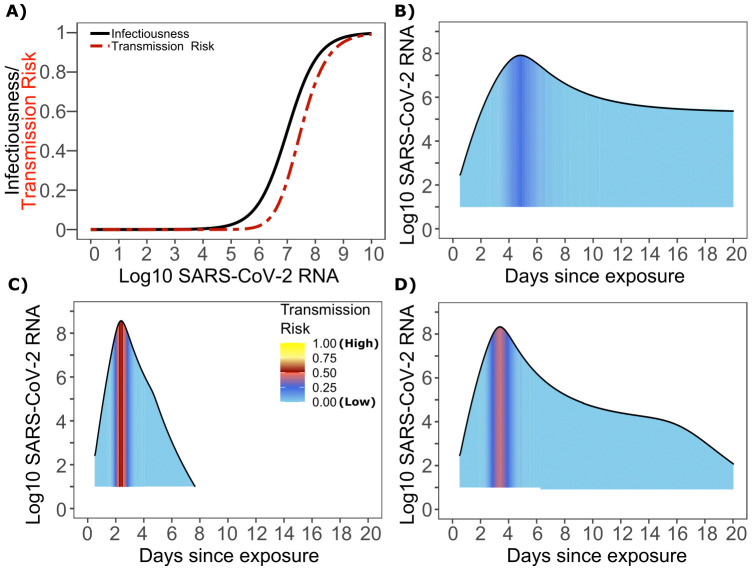
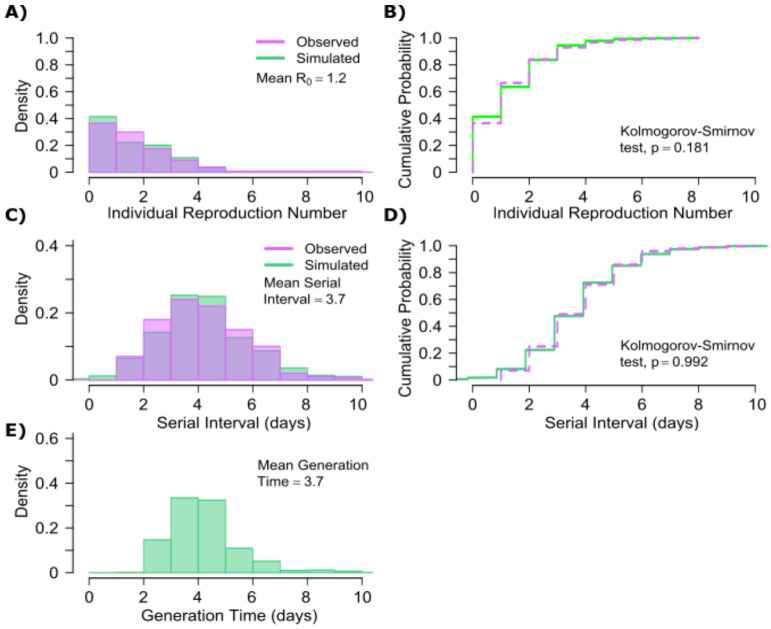
SARS-CoV-2 is difficult to contain because many transmissions occur during the pre-symptomatic phase of infection. Moreover, in contrast to influenza, while most SARS-CoV-2 infected people do not transmit the virus to anybody, a small percentage secondarily infect large numbers of people. We designed mathematical models of SARS-CoV-2 and influenza which link observed viral shedding patterns with key epidemiologic features of each virus, including distributions of the number of secondary cases attributed to each infected person (individual R0) and the duration between symptom onset in the transmitter and secondarily infected person (serial interval). We identify that people with SARS-CoV-2 or influenza infections are usually contagious for fewer than one day congruent with peak viral load several days after infection, and that transmission is unlikely below a certain viral load. SARS-CoV-2 super-spreader events with over 10 secondary infections occur when an infected person is briefly shedding at a very high viral load and has a high concurrent number of exposed contacts. The higher predisposition of SARS-CoV-2 towards super-spreading events is not due to its 1-2 additional weeks of viral shedding relative to influenza. Rather, a person infected with SARS-CoV-2 exposes more people within equivalent physical contact networks than a person infected with influenza, likely due to aerosolization of virus. Our results support policies that limit crowd size in indoor spaces and provide viral load benchmarks for infection control and therapeutic interventions intended to prevent secondary transmission.
严重急性呼吸综合征冠状病毒2(SARS-CoV-2)难以遏制,因为许多传播发生在感染的症状前阶段。此外,与流感不同的是,虽然大多数感染SARS-CoV-2的人不会将病毒传播给任何人,但一小部分人会继发感染大量人群。我们设计了SARS-CoV-2和流感的数学模型,将观察到的病毒脱落模式与每种病毒的关键流行病学特征联系起来,包括每个感染者导致的二代病例数(个体R0)分布以及传播者与继发感染者症状出现之间的持续时间(传播间隔)。我们发现,感染SARS-CoV-2或流感的人通常在感染后数天病毒载量达到峰值时具有传染性的时间不到一天,并且在低于一定病毒载量时不太可能发生传播。当感染者在病毒载量非常高时短暂排毒且同时有大量接触者时,就会发生有超过10例继发感染的SARS-CoV-2超级传播事件。SARS-CoV-2更易发生超级传播事件的原因不是其病毒脱落时间比流感多1至2周。相反,感染SARS-CoV-2的人在同等物理接触网络中比感染流感的人接触更多人,这可能是由于病毒的气溶胶化。我们的结果支持限制室内空间人群规模的政策,并为旨在预防继发传播的感染控制和治疗干预提供病毒载量基准。