State Key Laboratory of Earth Surface Processes and Resource Ecology, College of Life Sciences, Beijing Normal University, Beijing, China.
PLoS One. 2011;6(9):e24497. doi: 10.1371/journal.pone.0024497. Epub 2011 Sep 1.
Rhodiola dumulosa (Crassulaceae) is a perennial diploid species found in high-montane areas. It is distributed in fragmented populations across northern, central and northwestern China. In this study, we aimed to (i) measure the genetic diversity of this species and that of its populations; (ii) describe the genetic structure of these populations across the entire distribution range in China; and (iii) evaluate the extent of gene flow among the naturally fragmented populations.
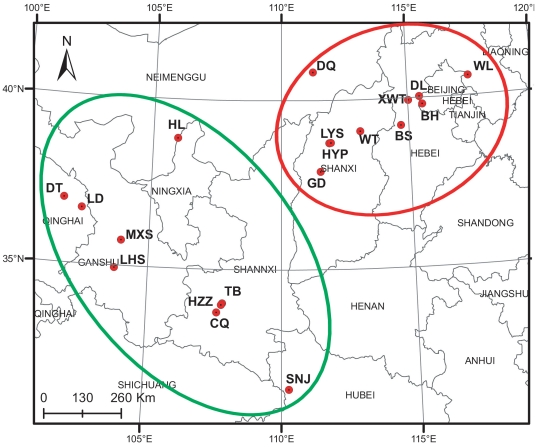
Samples from 1089 individuals within 35 populations of R. dumulosa were collected, covering as much of the entire distribution range of this species within China as possible. Population genetic diversity and structure were analyzed using AFLP molecular markers. Gene flow among populations was estimated according to the level of population differentiation.
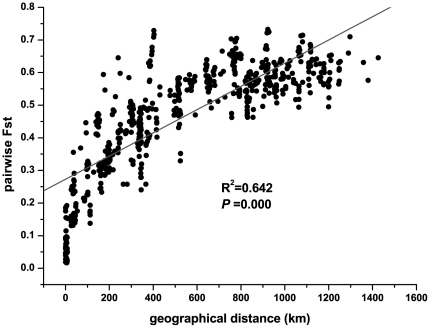
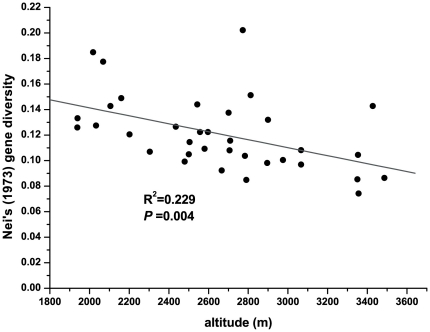
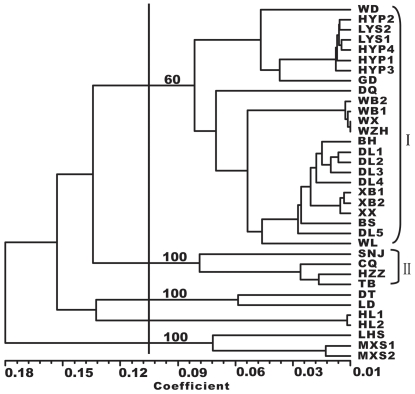
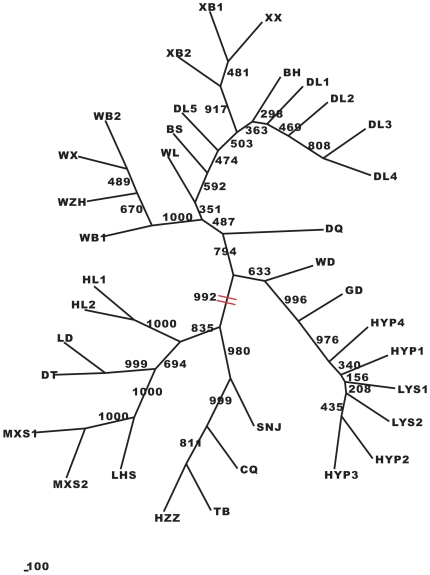
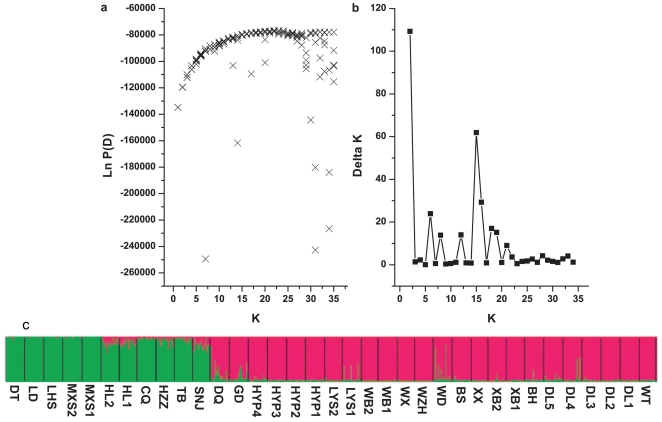
The total genetic diversity of R. dumulosa was high but decreased with increasing altitude. Population-structure analysis indicated that the most closely related populations were geographically restricted and occurred in close proximity to each other. A significant isolation-by-distance pattern, caused by the naturally fragmented population distribution, was observed. At least two distinct gene pools were found in the 35 sampled populations, one composed of populations in northern China and the other composed of populations in central and northwestern China. The calculation of Nei's gene diversity index revealed that the genetic diversity in the northern China pool (0.1972) was lower than that in the central and northwestern China pool (0.2216). The populations were significantly isolated, and gene flow was restricted throughout the entire distribution. However, gene flow among populations on the same mountain appears to be unrestricted, as indicated by the weak genetic isolation among these populations.
红景天(景天科)是一种分布于高山地区的多年生二倍体物种。它分布于中国北部、中部和西北部的呈碎片状的种群中。在这项研究中,我们旨在:(i)测量该物种及其种群的遗传多样性;(ii)描述该物种在中国整个分布范围内的种群遗传结构;(iii)评估自然碎片化种群之间的基因流动程度。
从中国境内分布的 35 个红景天种群的 1089 个个体中采集样本,尽可能覆盖该物种在中国境内的整个分布范围。使用 AFLP 分子标记分析种群遗传多样性和结构。根据种群分化程度估计种群间的基因流动。
红景天的总遗传多样性很高,但随着海拔的升高而降低。种群结构分析表明,最相关的种群在地理上受到限制,彼此相邻。观察到由自然碎片化的种群分布引起的显著的距离隔离模式。在 35 个采样种群中发现了至少两个不同的基因库,一个由中国北部的种群组成,另一个由中国中部和西北部的种群组成。计算 Nei 的基因多样性指数表明,中国北部种群的遗传多样性(0.1972)低于中国中部和西北部种群的遗传多样性(0.2216)。种群之间存在显著的隔离,基因流动受到限制,分布在整个范围内。然而,同一山脉上的种群之间的基因流动似乎不受限制,这些种群之间的遗传隔离较弱。