National Center for Genetic Engineering and Biotechnology (BIOTEC), National Science and Technology Development Agency, Klong Luang, Pathumthani, Thailand.
PLoS One. 2011;6(9):e24427. doi: 10.1371/journal.pone.0024427. Epub 2011 Sep 7.
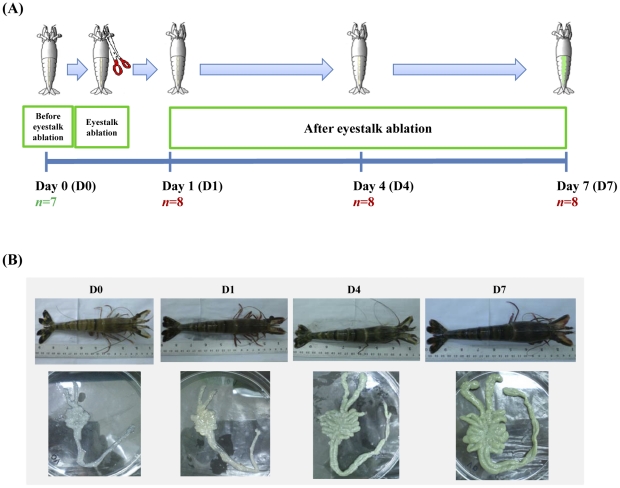
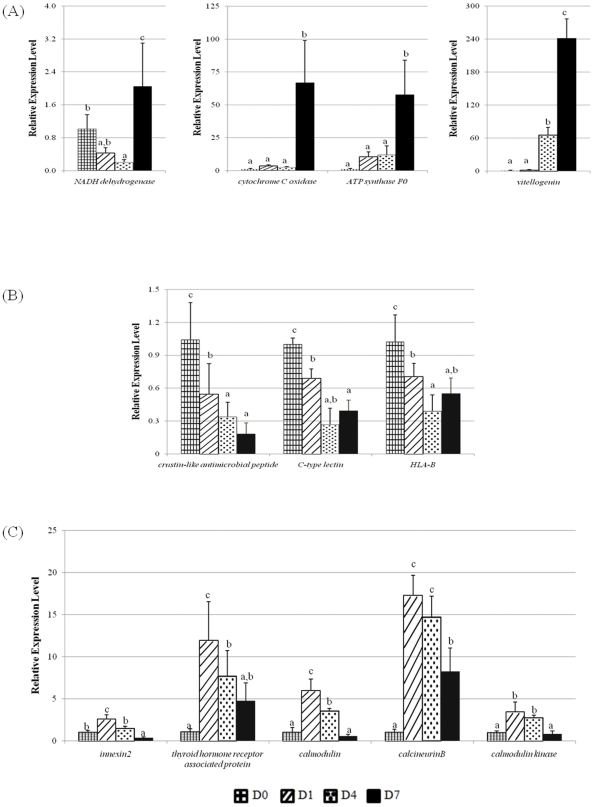
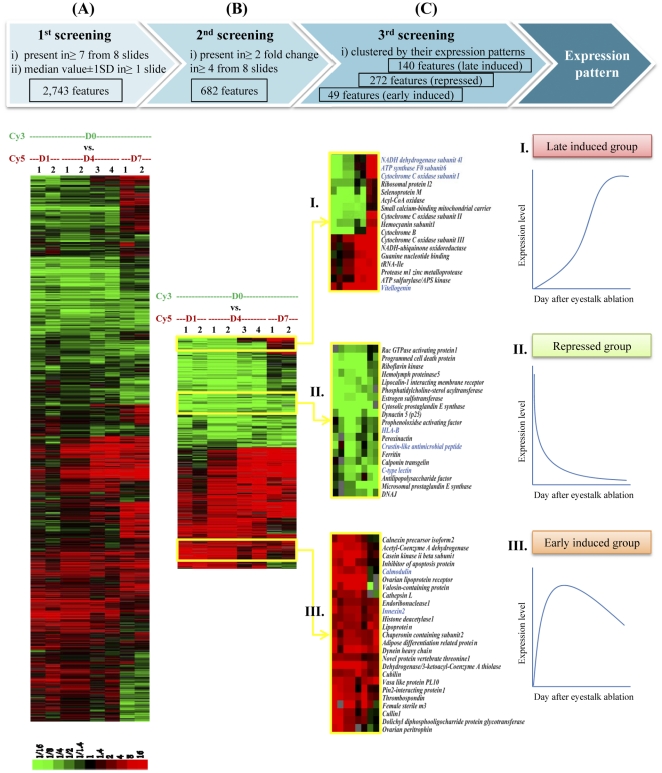
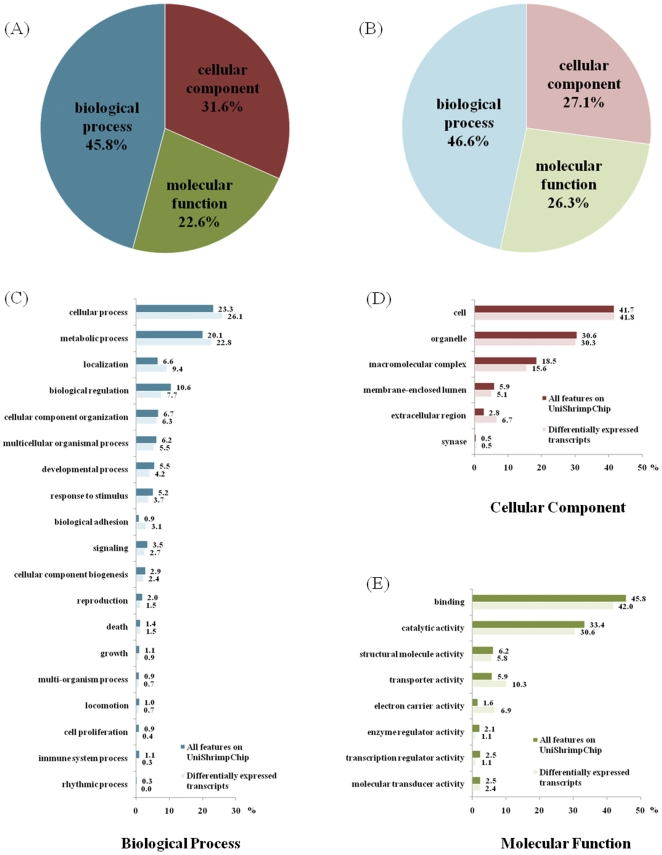
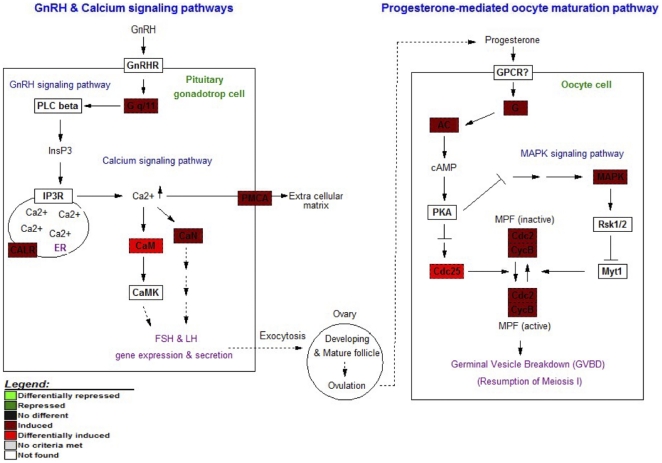
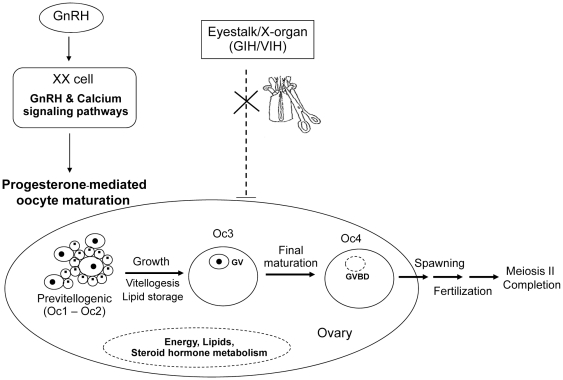
Eyestalk ablation is commonly practiced in crustacean to induce ovarian maturation in captivity. The molecular mechanism of the ablation has not been well understood, preventing a search for alternative measures to induce ovarian maturation in aquaculture. This is the first study to employ cDNA microarray to examine effects of eyestalk ablation at the transcriptomic level and pathway mapping analysis to identify potentially affected biological pathways in the black tiger shrimp (Penaeus monodon). Microarray analysis comparing between gene expression levels of ovaries from eyestalk-intact and eyestalk-ablated brooders revealed 682 differentially expressed transcripts. Based on Hierarchical clustering of gene expression patterns, Gene Ontology annotation, and relevant functions of these differentially expressed genes, several gene groups were further examined by pathway mapping analysis. Reverse-transcriptase quantitative PCR analysis for some representative transcripts confirmed microarray data. Known reproductive genes involved in vitellogenesis were dramatically increased during the ablation. Besides these transcripts expected to be induced by the ablation, transcripts whose functions involved in electron transfer mechanism, immune responses and calcium signal transduction were significantly altered following the ablation. Pathway mapping analysis revealed that the activation of gonadotropin-releasing hormone signaling, calcium signaling, and progesterone-mediated oocyte maturation pathways were putatively crucial to ovarian maturation induced by the ablation. These findings shed light on several possible molecular mechanisms of the eyestalk ablation effect and allow more focused investigation for an ultimate goal of finding alternative methods to replace the undesirable practice of the eyestalk ablation in the future.
眼柄切除通常在甲壳类动物中用于人工养殖中诱导卵巢成熟。但眼柄切除的分子机制尚未得到很好的理解,这阻碍了人们寻找替代措施来诱导水产养殖中的卵巢成熟。这是第一项使用 cDNA 微阵列在转录组水平上检查眼柄切除影响的研究,并进行途径映射分析以确定黑虎虾(Penaeus monodon)中受影响的潜在生物学途径。比较眼柄完整和眼柄切除亲虾卵巢之间基因表达水平的微阵列分析显示,有 682 个差异表达的转录本。基于基因表达模式的层次聚类、基因本体注释和这些差异表达基因的相关功能,通过途径映射分析进一步研究了几个基因群。一些代表性转录本的逆转录定量 PCR 分析证实了微阵列数据。参与卵黄发生的已知生殖基因在切除过程中显著增加。除了这些预期被切除诱导的转录本外,参与电子传递机制、免疫反应和钙信号转导的转录本的功能在切除后也发生了显著改变。途径映射分析表明,促性腺激素释放激素信号转导、钙信号转导和孕激素介导的卵母细胞成熟途径的激活可能对切除诱导的卵巢成熟至关重要。这些发现揭示了眼柄切除效应的几种可能的分子机制,并允许更有针对性地研究,以最终找到替代方法来替代未来眼柄切除这种不可取的做法。