Department of Integrative Biology, University of Guelph, Guelph, Ontario, Canada.
PLoS One. 2011;6(9):e24464. doi: 10.1371/journal.pone.0024464. Epub 2011 Sep 7.
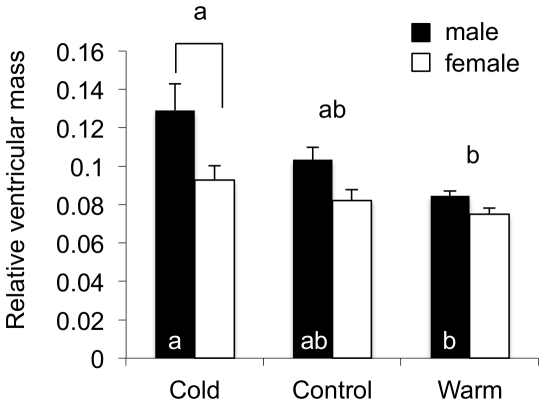
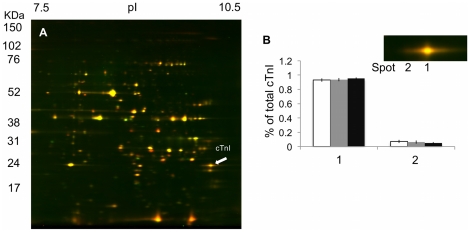
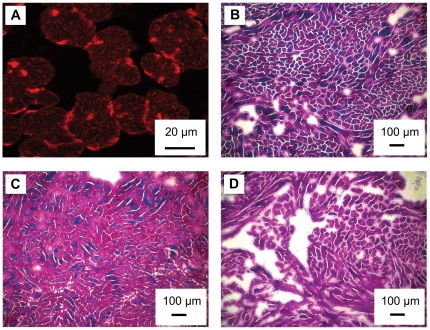
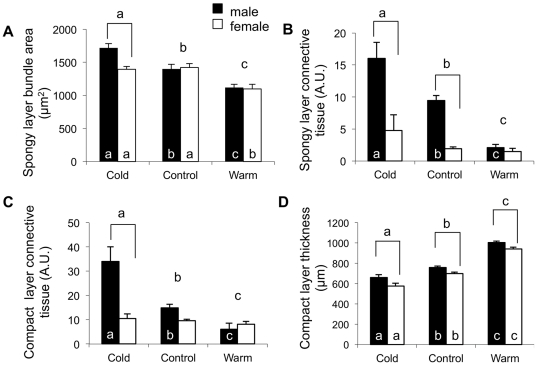
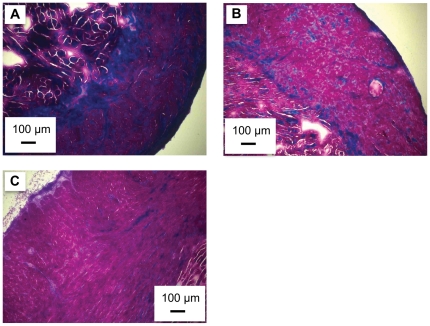
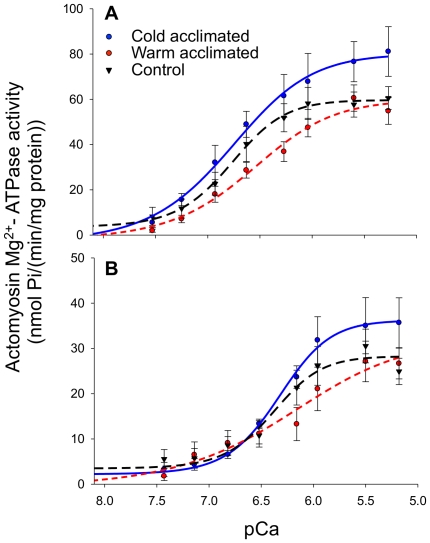
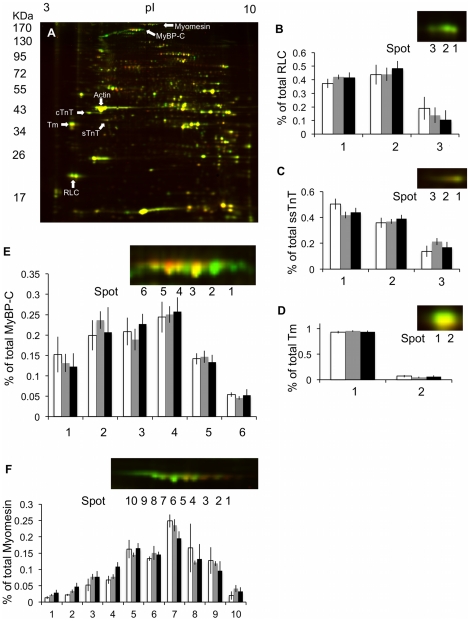
Rainbow trout remain active in waters that seasonally change between 4°C and 20°C. To explore how these fish are able to maintain cardiac function over this temperature range we characterized changes in cardiac morphology, contractile function, and the expression of contractile proteins in trout following acclimation to 4°C (cold), 12°C (control), and 17°C (warm). The relative ventricular mass (RVM) of the cold acclimated male fish was significantly greater than that of males in the control group. In addition, the compact myocardium of the cold acclimated male hearts was thinner compared to controls while the amount of spongy myocardium was found to have increased. Cold acclimation also caused an increase in connective tissue content, as well as muscle bundle area in the spongy myocardium of the male fish. Conversely, warm acclimation of male fish caused an increase in the thickness of the compact myocardium and a decrease in the amount of spongy myocardium. There was also a decrease in connective tissue content in both myocardial layers. In contrast, there was no change in the RVM or connective tissue content in the hearts of female trout with warm or cold acclimation. Cold acclimation also caused a 50% increase in the maximal rate of cardiac AM Mg(2+)-ATPase but did not influence the Ca(2+) sensitivity of this enzyme. To identify a mechanism for this change we utilized two-dimensional difference gel electrophoresis to characterize changes in the cardiac contractile proteins. Cold acclimation caused subtle changes in the phosphorylation state of the slow skeletal isoform of troponin T found in the heart, as well as of myosin binding protein C. These results demonstrate that acclimation of trout to warm and cold temperatures has opposing effects on cardiac morphology and tissue composition and that this results in distinct warm and cold cardiac phenotypes.
虹鳟鱼在 4°C 至 20°C 之间季节性变化的水中保持活跃。为了探究这些鱼如何在这个温度范围内维持心脏功能,我们研究了在适应 4°C(冷)、12°C(对照)和 17°C(暖)温度后,虹鳟鱼心脏形态、收缩功能和收缩蛋白表达的变化。与对照组相比,冷适应雄性鱼的相对心室质量(RVM)显著增加。此外,冷适应雄性鱼的致密心肌变薄,而海绵心肌的含量增加。冷适应还导致雄性鱼海绵心肌的结缔组织含量和肌束面积增加。相反,雄性鱼的暖适应导致致密心肌厚度增加和海绵心肌含量减少。两种心肌层的结缔组织含量也减少。相比之下,无论是在温暖还是寒冷的条件下适应,雌性虹鳟鱼的 RVM 或结缔组织含量都没有变化。冷适应还导致心脏 AM Mg(2+)-ATP 酶的最大速率增加 50%,但不影响该酶的 Ca(2+)敏感性。为了确定这种变化的机制,我们利用二维差异凝胶电泳来描述心脏收缩蛋白的变化。冷适应导致心脏中肌钙蛋白 T 的慢骨骼肌同工型和肌球蛋白结合蛋白 C 的磷酸化状态发生微妙变化。这些结果表明,虹鳟鱼对温暖和寒冷温度的适应对心脏形态和组织组成有相反的影响,从而导致明显的温暖和寒冷心脏表型。