Department of Obstetrics and Gynecology, First Affiliated Hospital, Zhengzhou University, No. 1 Jianshe Road, Zhengzhou, Henan, P.R. China.
J Exp Clin Cancer Res. 2011 Sep 16;30(1):83. doi: 10.1186/1756-9966-30-83.
Metastasis-associated in colon cancer 1 (MACC1) is demonstrated to be up-regulated in several types of cancer, and can serve as biomarker for cancer invasion and metastasis. To investigate the relations between MACC1 and biological processes of ovarian cancer, MACC1 specific small hairpin RNA (shRNA) expression plasmids were used to investigate the effects of MACC1 inhibition on ovarian carcinoma OVCAR-3 cells.
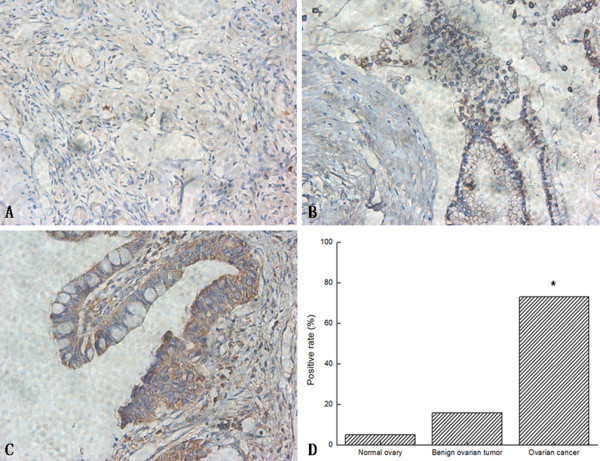
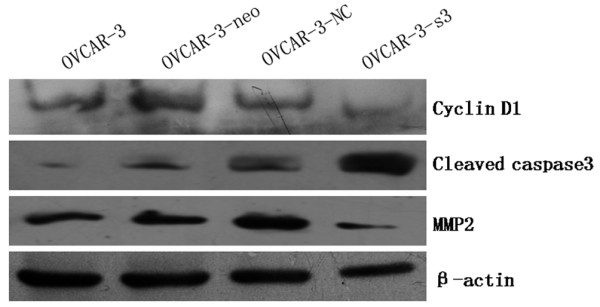
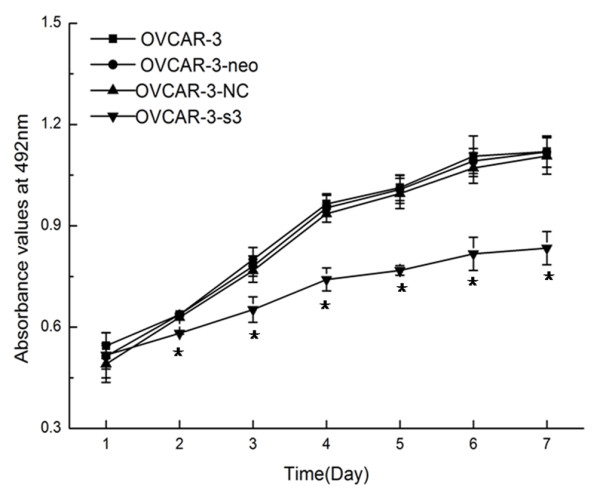
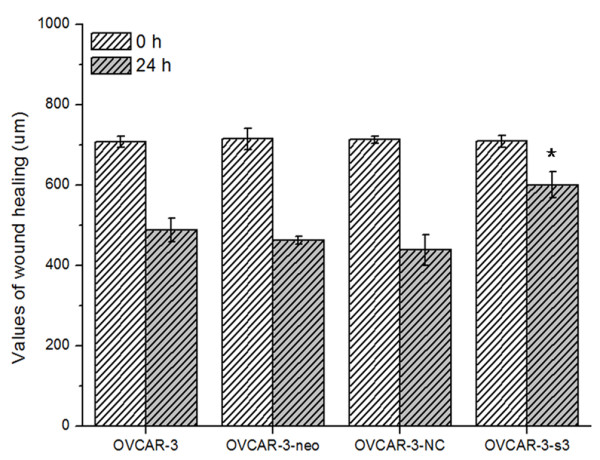
Expressions of MACC1 were detected in different ovarian tissues by immunohistochemistry. MACC1 specific shRNA expression plasmids were constructed and transfected into OVCAR-3 cells. Then, expressions of MACC1 were examined by reverse transcription polymerase chain reaction (RT-PCR) and Western blot. Cell proliferation was observed by MTT and monoplast colony formation assay. Flow cytometry and TUNEL assay were used to measure cell apoptosis. Cell migration was assessed by wound healing and transwell migration assay. Matrigel invasion and xenograft model assay were performed to analyze the potential of cell invasion. Activities of Met, MEK1/2, ERK1/2, Akt, cyclinD1, caspase3 and MMP2 protein were measured by Western blot.
Overexpressions of MACC1 were detected in ovarian cancer tissues. Expression of MACC1 in OVCAR-3 cells was significantly down-regulated by MACC1 specific small hairpin RNA. In OVCAR-3 cells, down-regulation of MACC1 resulted in significant inhibition of cell proliferation, migration and invasion, meanwhile obvious enhancement of apoptosis. As a consequence of MACC1 knockdown, expressions of Met, p-MEK1/2, p-ERK1/2, cyclinD1 and MMP2 protein decreased, level of cleaved capase3 was increased.
RNA interference (RNAi) against MACC1 could serve as a promising intervention strategy for gene therapy of ovarian carcinoma, and the antitumor effects of MACC1 knockdown might involve in the inhibition of HGF/Met and MEK/ERK pathways.
结肠癌转移相关基因 1(MACC1)在多种癌症中表达上调,可作为癌症侵袭和转移的生物标志物。为研究 MACC1 与卵巢癌生物学过程的关系,采用 MACC1 特异性小发夹 RNA(shRNA)表达质粒,观察 MACC1 抑制对卵巢癌细胞 OVCAR-3 的影响。
采用免疫组化法检测不同卵巢组织中 MACC1 的表达。构建 MACC1 特异性 shRNA 表达质粒并转染 OVCAR-3 细胞,采用逆转录聚合酶链反应(RT-PCR)和 Western blot 检测 MACC1 的表达。MTT 及单细胞集落形成实验观察细胞增殖,流式细胞术及 TUNEL 检测细胞凋亡,划痕愈合及 Transwell 迁移实验检测细胞迁移,Matrigel 侵袭及裸鼠移植瘤模型实验分析细胞侵袭能力,Western blot 检测 Met、MEK1/2、ERK1/2、Akt、cyclinD1、caspase3 及 MMP2 蛋白的活性。
MACC1 在卵巢癌组织中呈高表达。MACC1 特异性 shRNA 可显著下调 OVCAR-3 细胞中 MACC1 的表达。下调 MACC1 表达可显著抑制 OVCAR-3 细胞的增殖、迁移及侵袭,促进细胞凋亡。MACC1 沉默后,Met、p-MEK1/2、p-ERK1/2、cyclinD1 及 MMP2 蛋白表达降低,cleaved caspase3 蛋白表达升高。
针对 MACC1 的 RNAi 可作为卵巢癌基因治疗的一种有前途的干预策略,MACC1 敲低的抗肿瘤作用可能涉及 HGF/Met 和 MEK/ERK 通路的抑制。