Zhou Xiang, Xu Chang-Juan, Wang Jun-Xian, Dai Ting, Ye Ya-Ping, Cui Yan-Mei, Liao Wen-Ting, Wu Xin-Lin, Ou Jian-Ping
*Department of Microscurgery and Hand Surgery, the First Affiliated Hospital of Sun Yat-sen University, Guangzhou, China; †Department of Pathology of Basic Medical Sciences, Southern Medical University, Guangzhou, China; and ‡Department of Gynaecology and Obstetrics, the 157 Affiliated Hospital, General Hospital of Guangzhou Military Command of PLA, Guangzhou, China; §Department of Traditional Chinese Medicine, the First Affiliated Hospital, Sun Yat-sen University, Guangzhou, China; and ∥Center for Reproductive Medicine, the Third Affiliated Hospital, Sun Yat-sen University, Guangzhou, China.
Int J Gynecol Cancer. 2015 Oct;25(8):1353-63. doi: 10.1097/IGC.0000000000000524.
The aim of this study is to investigate the clinicopathologic significance and potential role of metastasis-associated in colon cancer-1 (MACC1) in the progression of cervical cancer.
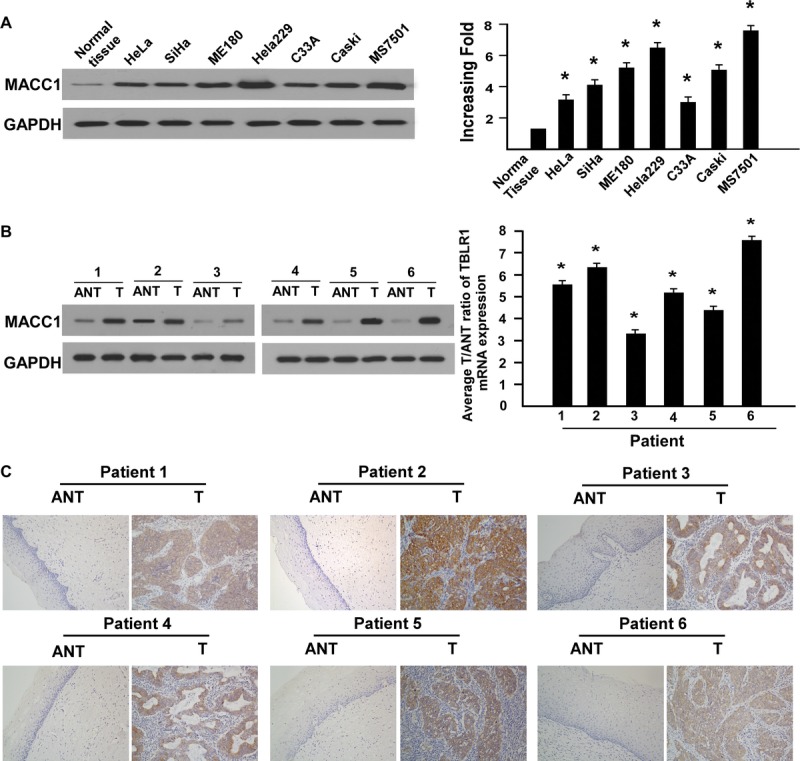
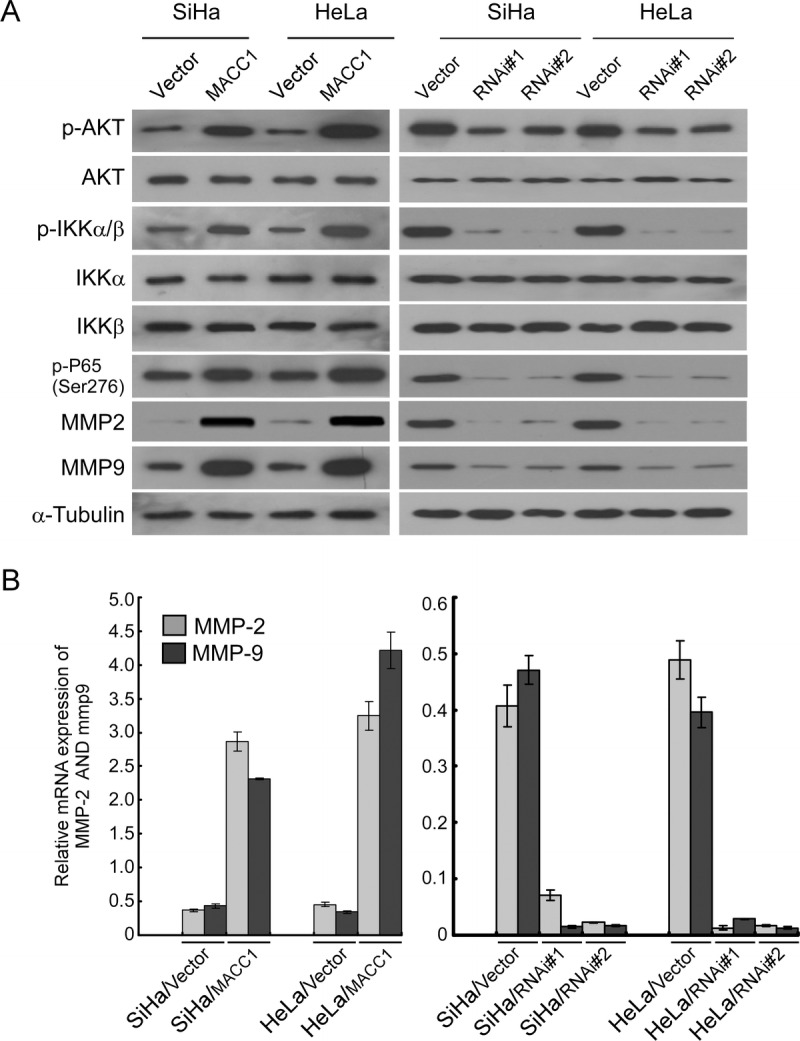
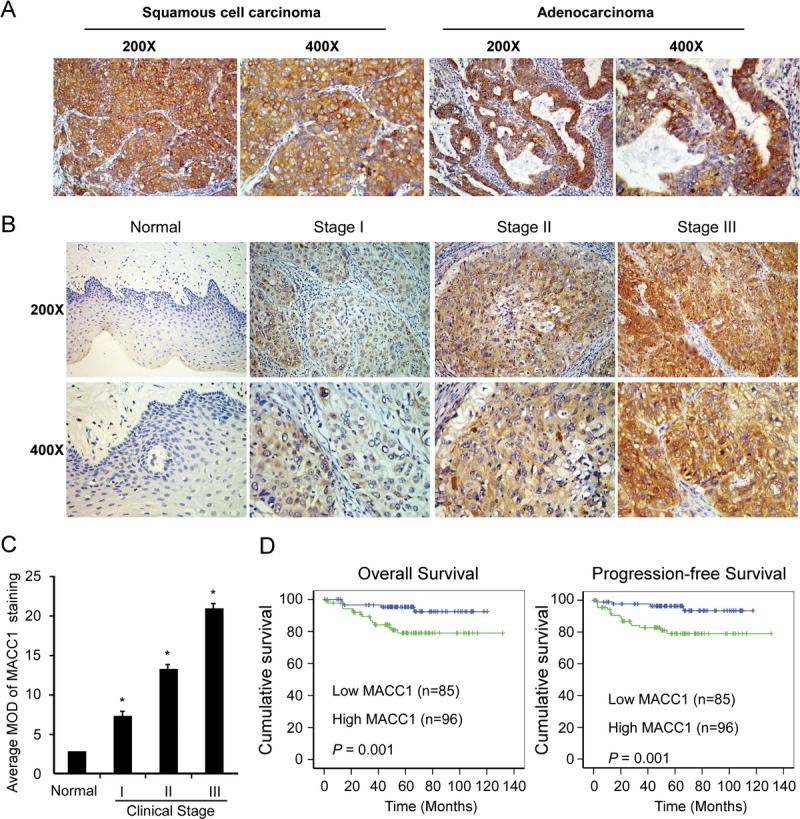
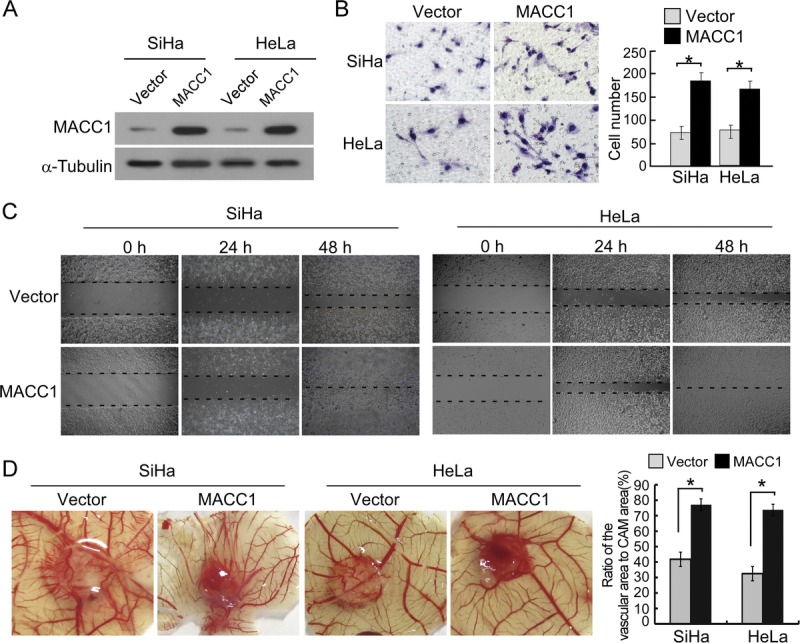
MACC1 expression was examined in cervical cancer cell lines, 6 matched cervical cancer tissues, and adjacent noncancerous tissues using Western blotting and real-time reverse transcriptase polymerase chain reaction. MACC1 protein expression and localization were determined in 181 paraffin-embedded archived cervical cancer samples using immunohistochemistry. Statistical analyses were applied to evaluate the clinicopathologic significance. The effects of MACC1 on cell migration, invasion, and angiogenesis were examined using migration assay, wound healing assay, 3-dimensional morphogenesis assay, and chicken chorioallantoic membrane assay. Western blotting was performed to examine the impact of MACC1 on the Akt and nuclear factor κB signaling pathways.
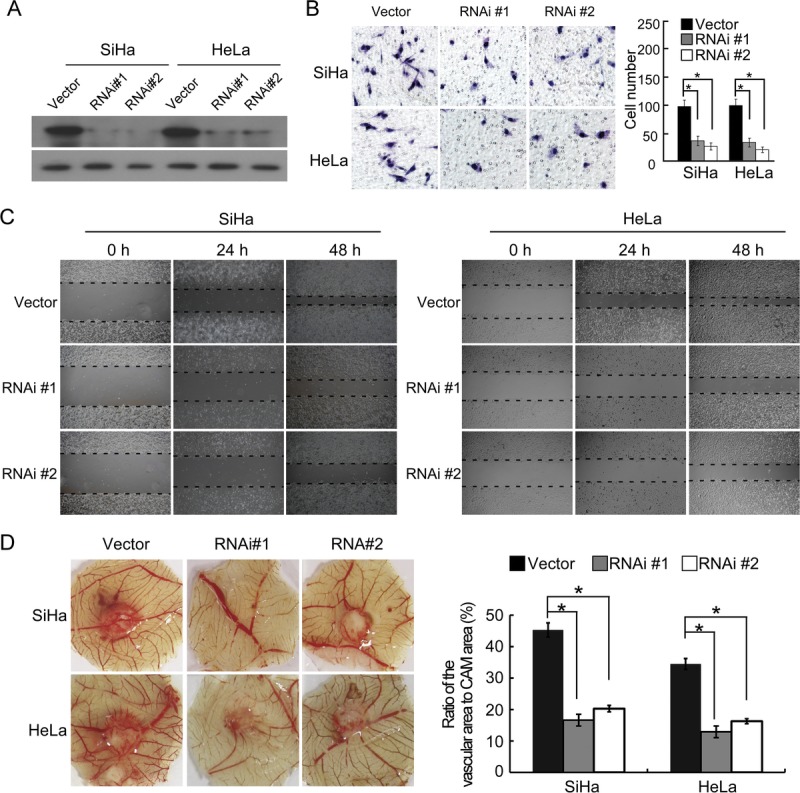
Both protein and messenger RNA levels of MACC1 was up-regulated in cervical cancer cell lines and cervical cancer tissues, as compared with normal tissues. High MACC1 expression was detected in 96 (53%) of 181 of the cervical cancer tissues. In addition, high MACC1 expression correlated significantly with aggressiveness of cervical cancer, including International Federation of Gynecology and Obstetric stage (P = 0.001), pelvic lymph node metastasis (P = 0.004), recurrence (P = 0.037), and poor survival (P = 0.001). Moreover, enforced expression of MACC1 in cervical cancer cell lines significantly enhanced cell migration, invasion, and angiogenesis. Conversely, knockdown of MACC1 caused an inhibition of cell migration, invasion, and angiogenesis. Up-regulation of MACC1 increased, but knockdown of MACC1 decreased the expression of matrix metalloproteinase-2 and matrix metalloproteinase-9. Furthermore, enforced expression of MACC1 could enhance, but knockdown of MACC1 could reduce AKT and nuclear factor κB pathway activity.
Our findings suggest that MACC1 protein, as a valuable marker of cervical cancer prognosis, plays an important role in the progression of human cervical cancer cells.
本研究旨在探讨结肠癌转移相关蛋白1(MACC1)在宫颈癌进展中的临床病理意义及潜在作用。
采用蛋白质免疫印迹法和实时逆转录聚合酶链反应检测MACC1在宫颈癌细胞系、6对配对的宫颈癌组织及癌旁非癌组织中的表达。应用免疫组织化学方法检测181例石蜡包埋的存档宫颈癌样本中MACC1蛋白的表达及定位。采用统计学分析评估其临床病理意义。通过迁移实验、伤口愈合实验、三维形态发生实验和鸡胚绒毛尿囊膜实验检测MACC1对细胞迁移、侵袭和血管生成的影响。采用蛋白质免疫印迹法检测MACC1对Akt和核因子κB信号通路的影响。
与正常组织相比,宫颈癌细胞系和宫颈癌组织中MACC1的蛋白和信使RNA水平均上调。在181例宫颈癌组织中,96例(53%)检测到MACC1高表达。此外,MACC1高表达与宫颈癌的侵袭性显著相关,包括国际妇产科联盟分期(P = 0.001)、盆腔淋巴结转移(P = 0.004)、复发(P = 0.037)及较差的生存率(P = 0.001)。此外,在宫颈癌细胞系中过表达MACC1可显著增强细胞迁移、侵袭和血管生成。相反,敲低MACC1可抑制细胞迁移、侵袭和血管生成。MACC1的上调增加了基质金属蛋白酶-2和基质金属蛋白酶-9的表达,但敲低MACC1则降低了其表达。此外,过表达MACC1可增强,但敲低MACC1可降低AKT和核因子κB信号通路的活性。
我们的研究结果表明,MACC1蛋白作为宫颈癌预后的一个有价值的标志物,在人类宫颈癌细胞的进展中起重要作用。