J Assoc Nurses AIDS Care. 2012 Jan-Feb;23(1):52-62. doi: 10.1016/j.jana.2011.07.002. Epub 2011 Sep 15.
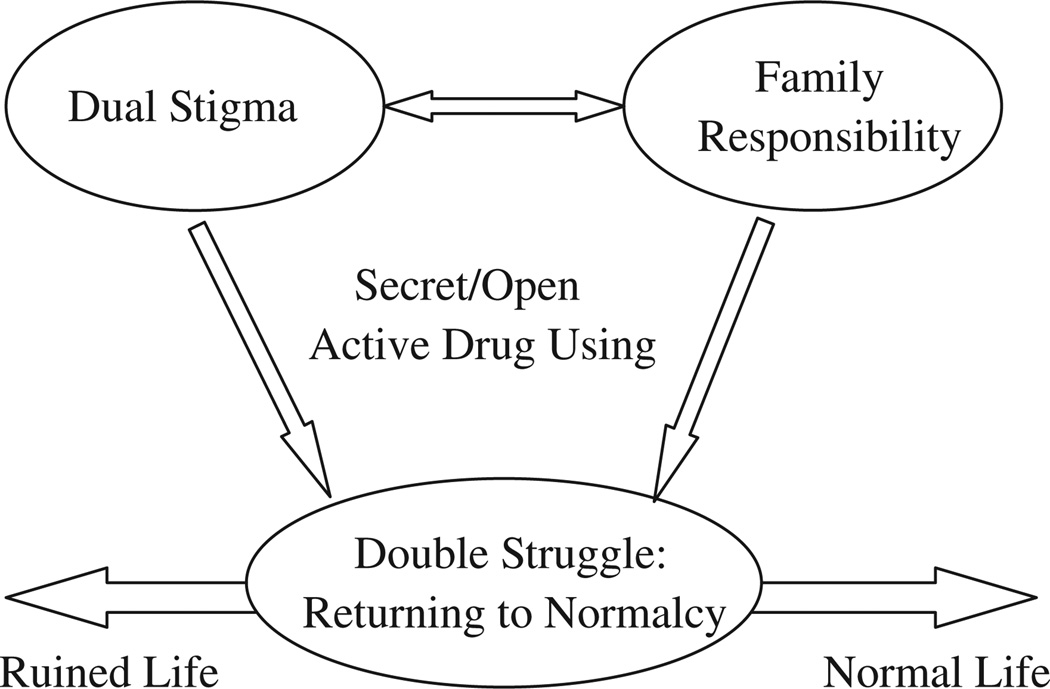
Although stigma is a significant barrier to HIV prevention and treatment globally, the culture-specific psychosocial processes through which HIV-infected Chinese experience stigma have not been described. This study used grounded theory to explore the social and psychological processes of HIV-related stigma experienced by Chinese injection drug users and proposed a culture-specific concept of stigma. The focus group had six participants, and we conducted 16 individual interviews. The core category emerged as "Double struggle: Returning to normalcy." Key concepts were dual stigma and family support, while keeping secrets and active drug use were factors influencing the struggle to return to normalcy. Family responsibility played an important role in bringing family members together to cope with HIV. Recommendations for Chinese health care providers include leveraging the traditional Chinese concept of family responsibility to establish a family alliance in response to the dual stigma and providing psychological counseling and education in treatment clinics.
尽管污名是全球艾滋病预防和治疗的一个重大障碍,但受 HIV 感染的中国人经历污名的特定文化的心理社会过程尚未被描述。本研究使用扎根理论探索了中国注射吸毒者经历的与 HIV 相关污名的社会和心理过程,并提出了一个特定文化的污名概念。焦点小组有六名参与者,我们进行了 16 次个别访谈。核心类别是“双重斗争:回归正常”。关键概念是双重污名和家庭支持,而保守秘密和积极吸毒是影响回归正常斗争的因素。家庭责任在促使家庭成员团结起来应对 HIV 方面发挥了重要作用。对中国卫生保健提供者的建议包括利用中国传统的家庭责任观念,在治疗诊所中建立家庭联盟以应对双重污名,并提供心理咨询和教育。