Department of Biology, University of Pennsylvania, PA 19104-6018, USA.
Hum Mol Genet. 2011 Dec 15;20(24):4810-21. doi: 10.1093/hmg/ddr420. Epub 2011 Sep 20.
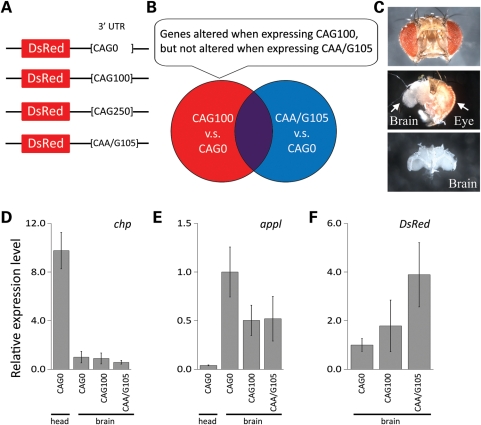
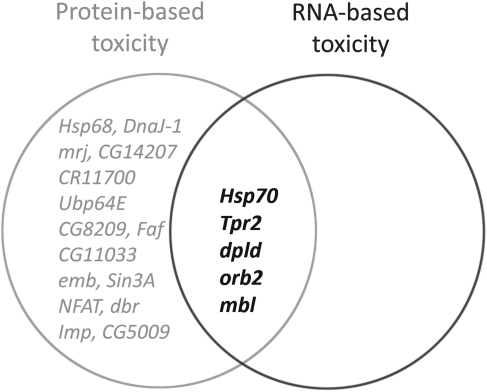
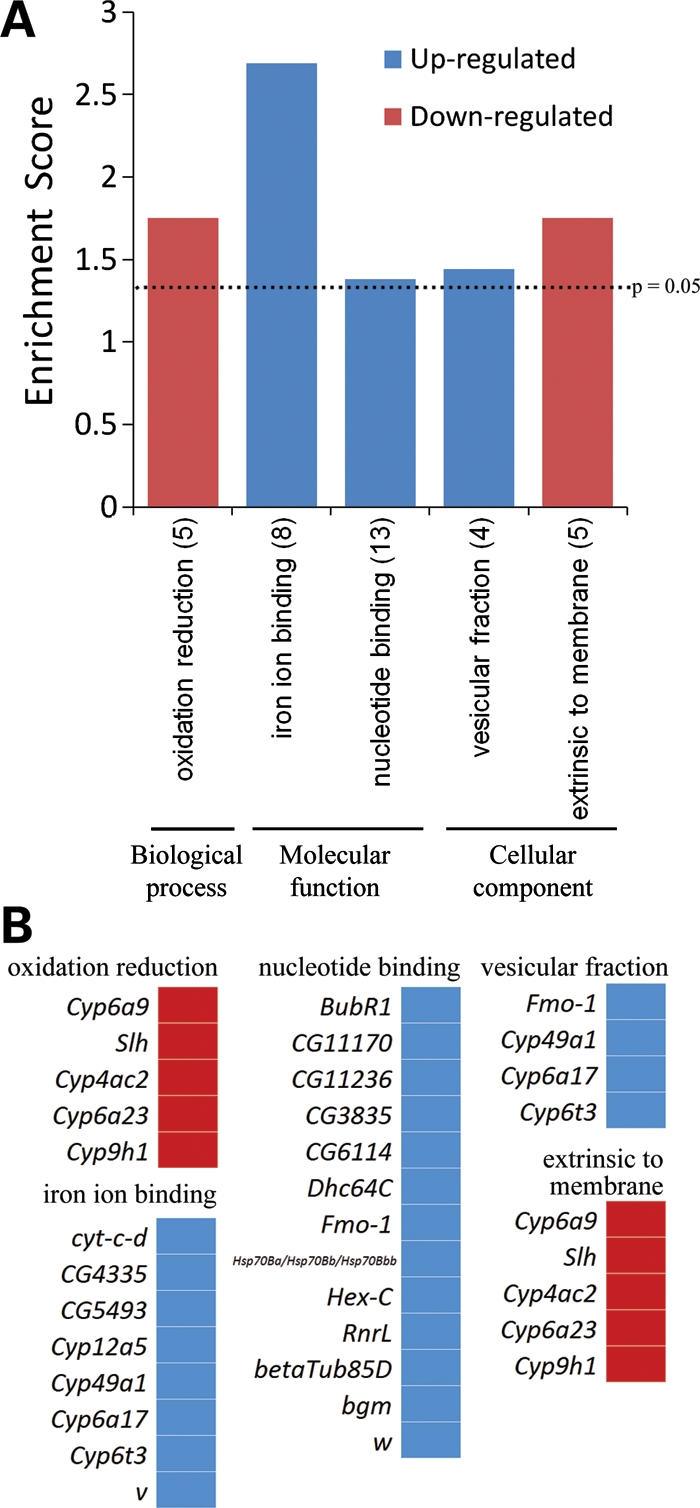
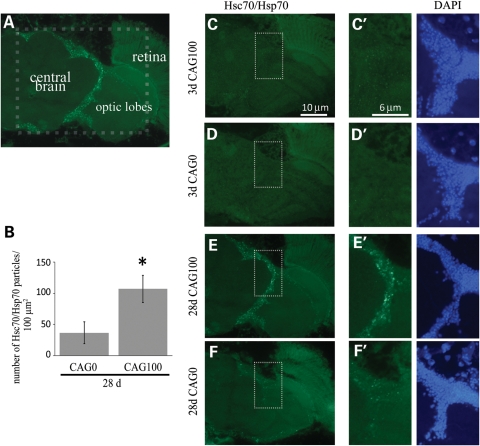
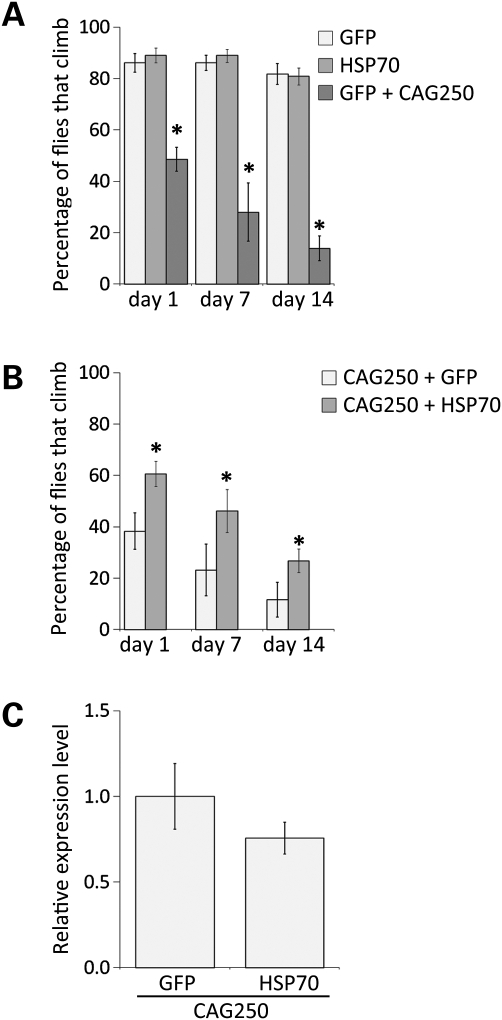
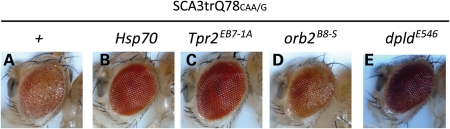
Spinocerebellar ataxia type 3 is one of the polyglutamine (polyQ) diseases, which are caused by a CAG-repeat expansion within the coding region of the associated genes. The CAG repeat specifies glutamine, and the expanded polyQ domain mutation confers dominant toxicity on the protein. Traditionally, studies have focused on protein toxicity in polyQ disease mechanisms. Recent findings, however, demonstrate that the CAG-repeat RNA, which encodes the toxic polyQ protein, also contributes to the disease in Drosophila. To provide insights into the nature of the RNA toxicity, we extracted brain-enriched RNA from flies expressing a toxic CAG-repeat mRNA (CAG100) and a non-toxic interrupted CAA/G mRNA repeat (CAA/G105) for microarray analysis. This approach identified 160 genes that are differentially expressed specifically in CAG100 flies. Functional annotation clustering analysis revealed several broad ontologies enriched in the CAG100 gene list, including iron ion binding and nucleotide binding. Intriguingly, transcripts for the Hsp70 genes, a powerful suppressor of polyQ and other human neurodegenerative diseases, were also upregulated. We therefore tested and showed that upregulation of heat shock protein 70 mitigates CAG-repeat RNA toxicity. We then assessed whether other modifiers of the pathogenic, expanded Ataxin-3 polyQ protein could also modify the CAG-repeat RNA toxicity. This approach identified the co-chaperone Tpr2, the transcriptional regulator Dpld, and the RNA-binding protein Orb2 as modifiers of both polyQ protein toxicity and CAG-repeat RNA-based toxicity. These findings suggest an overlap in the mechanisms of RNA and protein-based toxicity, providing insights into the pathogenicity of the RNA in polyQ disease.
脊髓小脑共济失调 3 型是多聚谷氨酰胺(polyQ)疾病之一,由相关基因编码区的 CAG 重复扩展引起。CAG 重复指定谷氨酰胺,扩展的多聚 Q 结构域突变赋予蛋白质显性毒性。传统上,研究集中在 polyQ 疾病机制中的蛋白质毒性。然而,最近的发现表明,编码毒性多聚 Q 蛋白的 CAG 重复 RNA 也会导致果蝇中的疾病。为了深入了解 RNA 毒性的本质,我们从表达毒性 CAG 重复 mRNA(CAG100)和非毒性中断 CAA/G mRNA 重复(CAA/G105)的果蝇中提取富含大脑的 RNA 进行微阵列分析。这种方法鉴定了 160 个在 CAG100 果蝇中特异性差异表达的基因。功能注释聚类分析显示,CAG100 基因列表中富集了几个广泛的本体论,包括铁离子结合和核苷酸结合。有趣的是,Hsp70 基因的转录本,一种强大的 polyQ 和其他人类神经退行性疾病的抑制剂,也被上调。因此,我们进行了测试并表明热休克蛋白 70 的上调减轻了 CAG 重复 RNA 的毒性。然后,我们评估了致病性、扩展的 Ataxin-3 多聚 Q 蛋白的其他修饰因子是否也可以修饰 CAG 重复 RNA 的毒性。这种方法确定了共伴侣 Tpr2、转录调节剂 Dpld 和 RNA 结合蛋白 Orb2 是 polyQ 蛋白毒性和 CAG 重复 RNA 毒性的调节剂。这些发现表明 RNA 和蛋白质毒性机制存在重叠,为 polyQ 疾病中 RNA 的致病性提供了新的见解。