Rai Saurabh, Tapadia Madhu G
Cytogenetics Laboratory, Department of Zoology, Banaras Hindu University, Varanasi, Uttar Pradesh, India.
Front Mol Neurosci. 2022 Nov 8;15:857257. doi: 10.3389/fnmol.2022.857257. eCollection 2022.
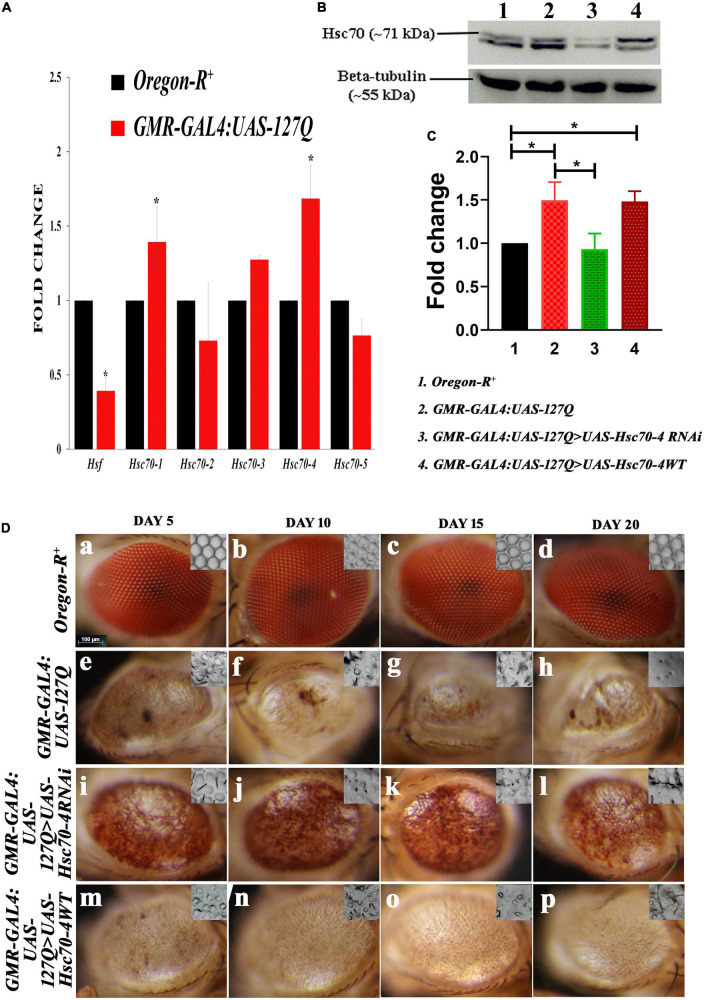
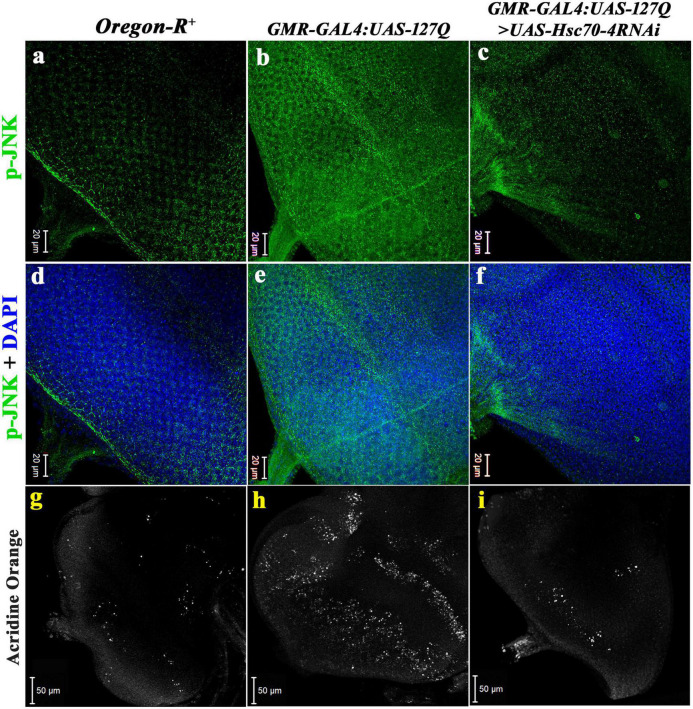
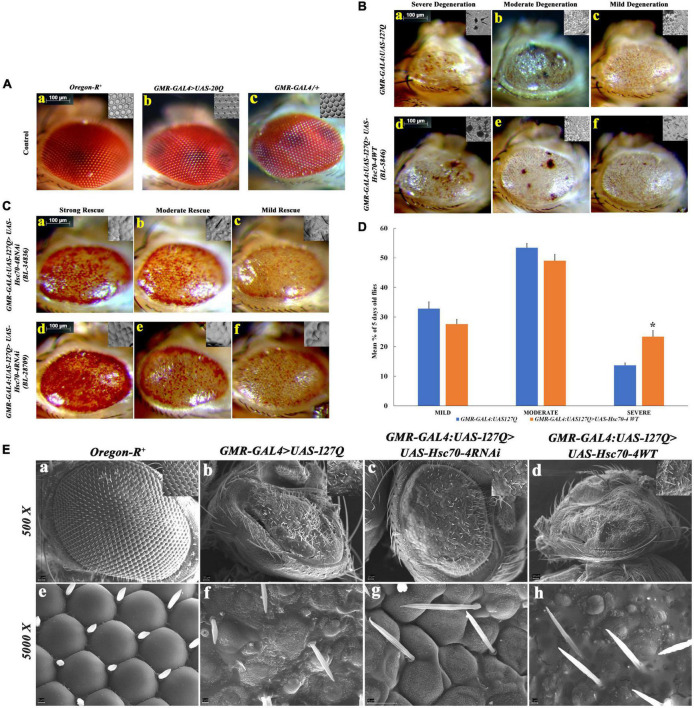
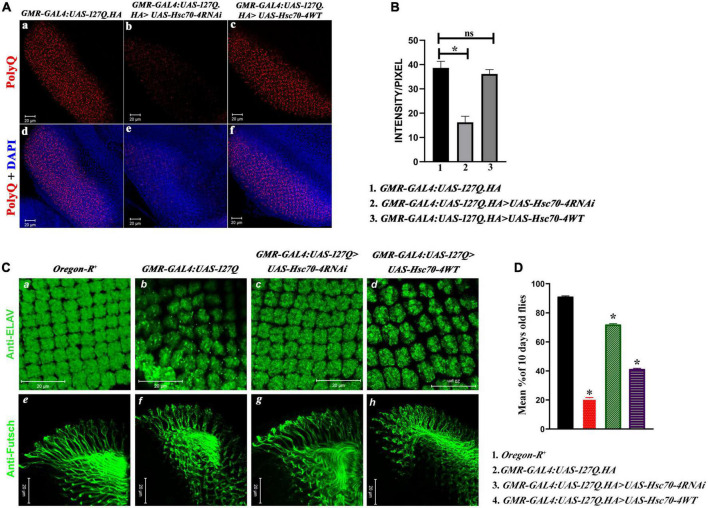
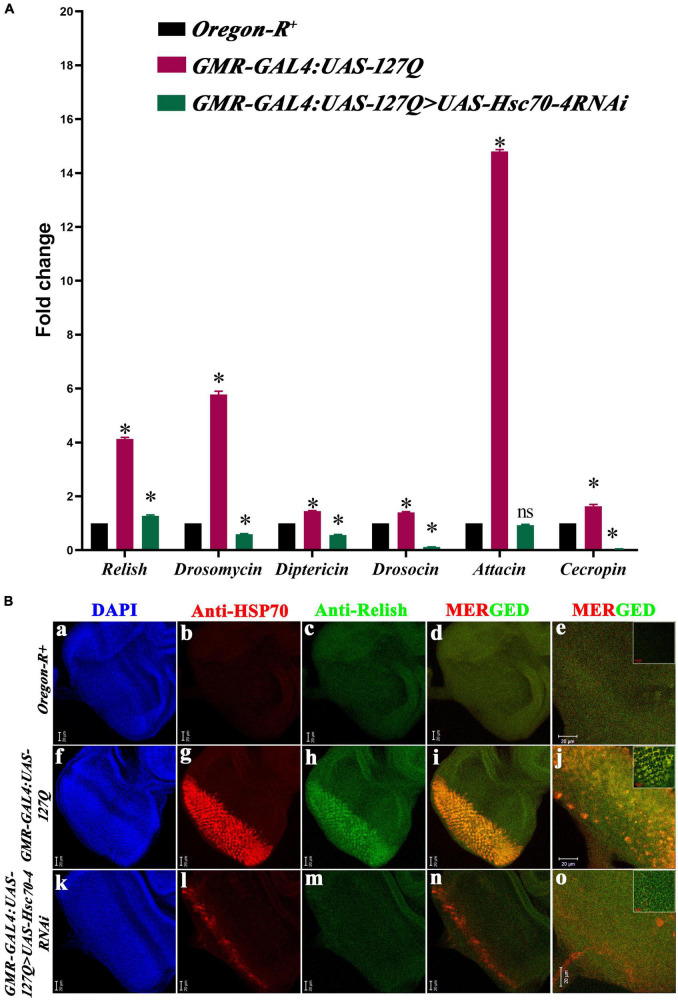
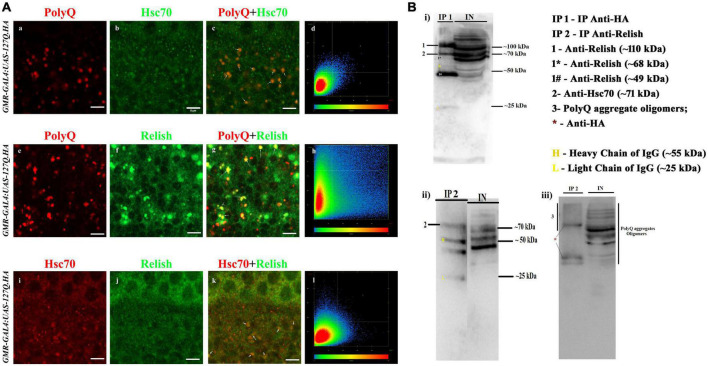
Huntington's disease occurs when the stretch of CAG repeats in exon 1 of the () gene crosses the permissible limit, causing the mutated protein (mHtt) to form insoluble aggregates or inclusion bodies. These aggregates are non-typically associated with various essential proteins in the cells, thus disrupting cellular homeostasis. The cells try to bring back normalcy by synthesizing evolutionary conserved cellular chaperones, and Hsp70 is one of the families of heat shock proteins that has a significant part in this, which comprises of heat-inducible and cognate forms. Here, we demonstrate that the heat shock cognate (Hsc70) isoform, Hsc70-4/HSPA8, has a distinct role in polyglutamate (PolyQ)-mediated pathogenicity, and its expression is enhanced in the conditions in . Downregulation of rescues PolyQ pathogenicity with a notable improvement in the ommatidia arrangement and near-normal restoration of optic neurons leading to improvement in phototaxis response. Reduced also attenuates the augmented immune response by decreasing the expression of NF-κB and the antimicrobial peptides, along with that JNK overactivation is also restored. These lead to the rescue of the photoreceptor cells, indicating a decrease in the caspase activity, thus reverting the PolyQ pathogenicity. At the molecular level, we show the interaction between Hsc70-4, Polyglutamine aggregates, and NF-κB, which may be responsible for the dysregulation of signaling molecules in conditions. Thus, the present data provides a functional link between Hsc70-4 and NF-κB under conditions.
当()基因外显子1中的CAG重复序列延伸超过允许限度时,就会发生亨廷顿舞蹈症,导致突变蛋白(mHtt)形成不溶性聚集体或包涵体。这些聚集体通常与细胞中的各种必需蛋白相关联,从而破坏细胞内稳态。细胞试图通过合成进化保守的细胞伴侣来恢复正常状态,Hsp70是热休克蛋白家族之一,在这一过程中发挥重要作用,该家族包括热诱导型和同源型。在这里,我们证明热休克同源蛋白(Hsc70)亚型Hsc70-4/HSPA8在聚谷氨酸(PolyQ)介导的致病性中具有独特作用,并且其表达在()条件下增强。下调()可挽救PolyQ致病性,小眼排列有显著改善,视神经神经元接近正常恢复,从而导致趋光反应改善。()减少还通过降低NF-κB和抗菌肽的表达来减弱增强的免疫反应,同时JNK过度激活也得到恢复。这些导致光感受器细胞得到挽救,表明半胱天冬酶活性降低,从而逆转了PolyQ致病性。在分子水平上,我们展示了Hsc70-4、聚谷氨酰胺聚集体和NF-κB之间的相互作用,这可能是()条件下信号分子失调的原因。因此,本数据提供了()条件下Hsc70-4和NF-κB之间的功能联系。