Department of Microbiology, University of Pennsylvania School of Medicine, Philadelphia, Pennsylvania, United States of America.
PLoS One. 2011;6(9):e24918. doi: 10.1371/journal.pone.0024918. Epub 2011 Sep 20.
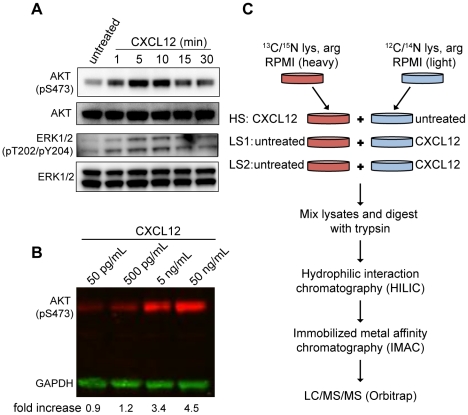
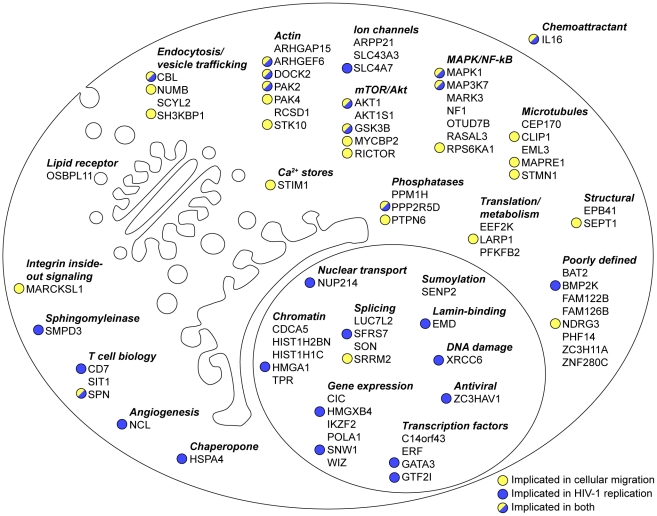
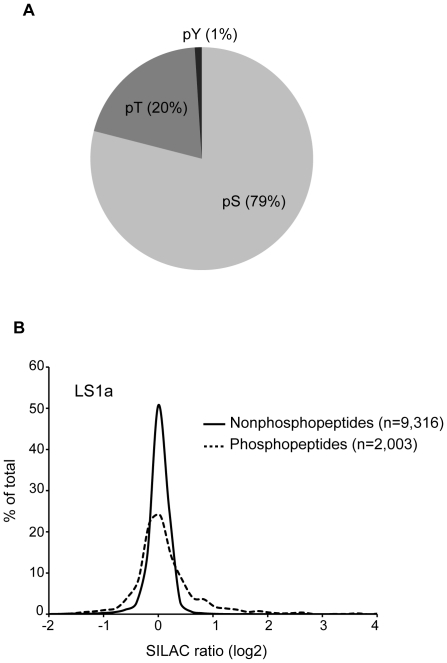
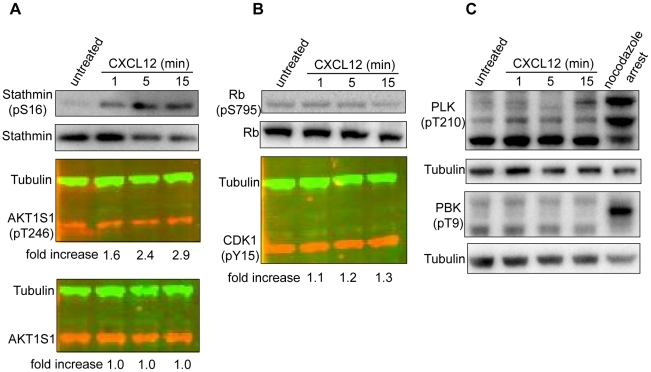
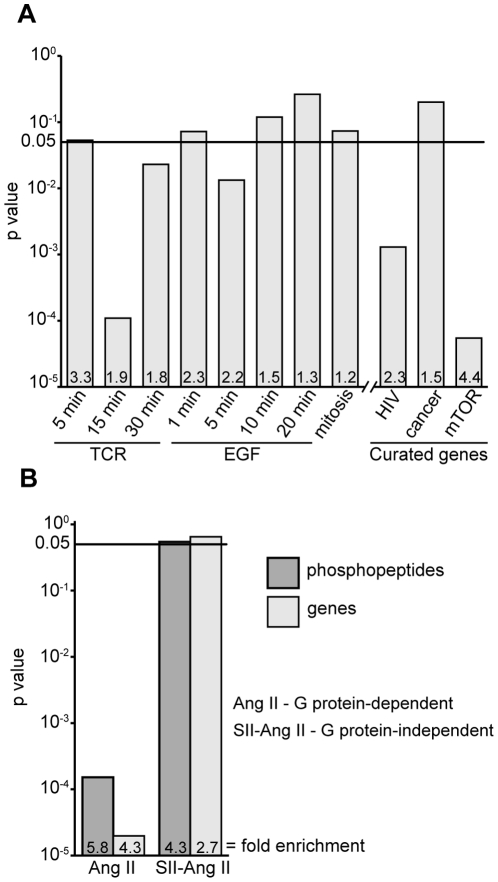
CXCL12 (SDF-1) is a chemokine that binds to and signals through the seven transmembrane receptor CXCR4. The CXCL12/CXCR4 signaling axis has been implicated in both cancer metastases and human immunodeficiency virus type 1 (HIV-1) infection and a more complete understanding of CXCL12/CXCR4 signaling pathways may support efforts to develop therapeutics for these diseases. Mass spectrometry-based phosphoproteomics has emerged as an important tool in studying signaling networks in an unbiased fashion. We employed stable isotope labeling with amino acids in cell culture (SILAC) quantitative phosphoproteomics to examine the CXCL12/CXCR4 signaling axis in the human lymphoblastic CEM cell line. We quantified 4,074 unique SILAC pairs from 1,673 proteins and 89 phosphopeptides were deemed CXCL12-responsive in biological replicates. Several well established CXCL12-responsive phosphosites such as AKT (pS473) and ERK2 (pY204) were confirmed in our study. We also validated two novel CXCL12-responsive phosphosites, stathmin (pS16) and AKT1S1 (pT246) by Western blot. Pathway analysis and comparisons with other phosphoproteomic datasets revealed that genes from CXCL12-responsive phosphosites are enriched for cellular pathways such as T cell activation, epidermal growth factor and mammalian target of rapamycin (mTOR) signaling, pathways which have previously been linked to CXCL12/CXCR4 signaling. Several of the novel CXCL12-responsive phosphoproteins from our study have also been implicated with cellular migration and HIV-1 infection, thus providing an attractive list of potential targets for the development of cancer metastasis and HIV-1 therapeutics and for furthering our understanding of chemokine signaling regulation by reversible phosphorylation.
趋化因子 CXCL12(SDF-1)与七跨膜受体 CXCR4 结合并发出信号。CXCL12/CXCR4 信号轴已被牵连到癌症转移和人类免疫缺陷病毒 1 型(HIV-1)感染中,对 CXCL12/CXCR4 信号通路的更全面了解可能会支持开发这些疾病治疗方法的努力。基于质谱的磷酸化蛋白质组学已成为以无偏方式研究信号网络的重要工具。我们采用稳定同位素标记与细胞培养中的氨基酸(SILAC)定量磷酸化蛋白质组学来研究人类淋巴母细胞 CEM 细胞系中的 CXCL12/CXCR4 信号轴。我们从 1673 种蛋白质和 89 种磷酸肽中定量了 4074 对独特的 SILAC 对,在生物学重复中,89 个磷酸肽被认为对 CXCL12 有反应。在我们的研究中,确认了几个公认的 CXCL12 反应性磷酸化位点,如 AKT(pS473)和 ERK2(pY204)。我们还通过 Western blot 验证了两个新的 CXCL12 反应性磷酸化位点,即 stathmin(pS16)和 AKT1S1(pT246)。通路分析和与其他磷酸蛋白质组学数据集的比较表明,CXCL12 反应性磷酸化位点的基因富集了 T 细胞激活、表皮生长因子和哺乳动物雷帕霉素靶蛋白(mTOR)信号等细胞通路,这些通路以前与 CXCL12/CXCR4 信号有关。我们研究中的一些新的 CXCL12 反应性磷酸化蛋白也与细胞迁移和 HIV-1 感染有关,因此为开发癌症转移和 HIV-1 治疗方法以及进一步了解趋化因子信号调节的可逆磷酸化提供了一个有吸引力的潜在靶标列表。