Department of Stem Cell Biology and Regenerative Medicine, Lerner Research Institute, Cleveland Clinic, Cleveland, Ohio, United States of America.
PLoS One. 2011;6(9):e24807. doi: 10.1371/journal.pone.0024807. Epub 2011 Sep 22.
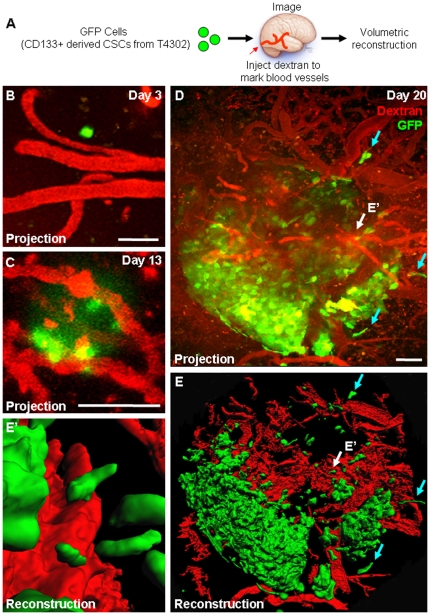
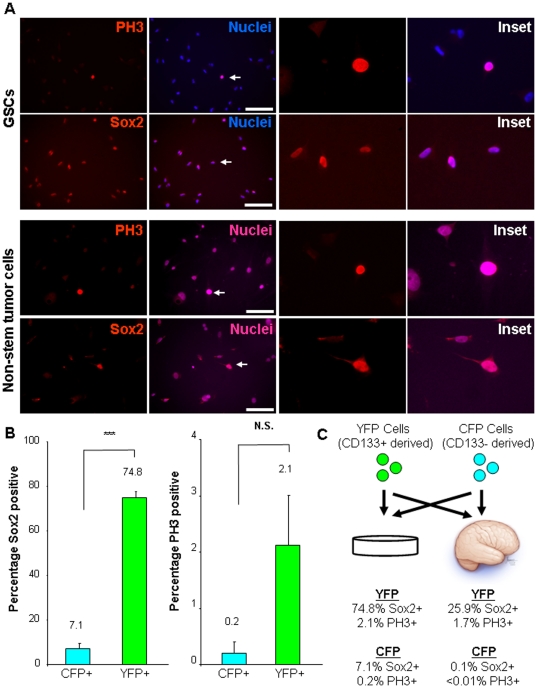
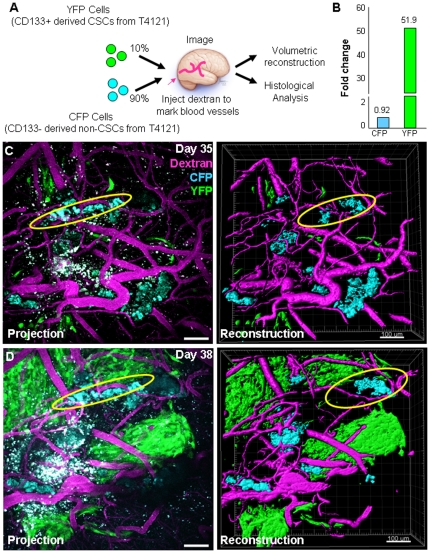
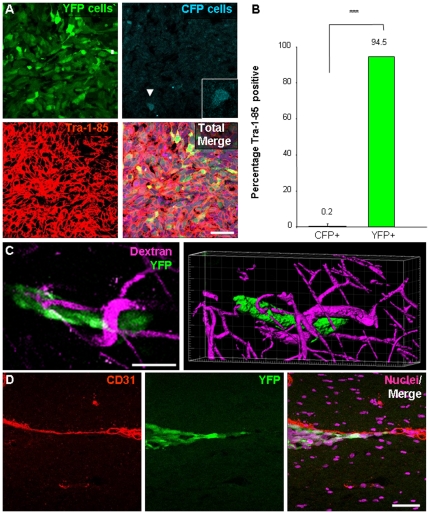
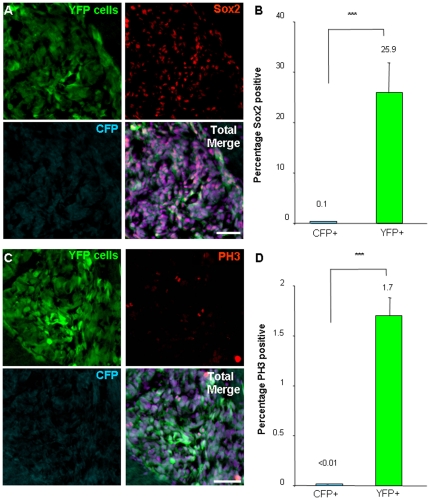
High-grade gliomas (World Health Organization grade III anaplastic astrocytoma and grade IV glioblastoma multiforme), the most prevalent primary malignant brain tumors, display a cellular hierarchy with self-renewing, tumorigenic cancer stem cells (CSCs) at the apex. While the CSC hypothesis has been an attractive model to describe many aspects of tumor behavior, it remains controversial due to unresolved issues including the use of ex vivo analyses with differential growth conditions. A CSC population has been confirmed in malignant gliomas by preferential tumor formation from cells directly isolated from patient biopsy specimens. However, direct comparison of multiple tumor cell populations with analysis of the resulting phenotypes of each population within a representative tumor environment has not been clearly described. To directly test the relative tumorigenic potential of CSCs and non-stem tumor cells in the same microenvironment, we interrogated matched tumor populations purified from a primary human tumor transplanted into a xenograft mouse model and monitored competitive in vivo tumor growth studies using serial in vivo intravital microscopy. While CSCs were a small minority of the initial transplanted cancer cell population, the CSCs, not the non-stem tumor cells, drove tumor formation and yielded tumors displaying a cellular hierarchy. In the resulting tumors, a fraction of the initial transplanted CSCs maintained expression of stem cell and proliferation markers, which were significantly higher compared to the non-stem tumor cell population and demonstrated that CSCs generated cellular heterogeneity within the tumor. These head-to-head comparisons between matched CSCs and non-stem tumor cells provide the first functional evidence using live imaging that in the same microenvironment, CSCs more than non-stem tumor cells are responsible for tumor propagation, confirming the functional definition of a CSC.
高级别神经胶质瘤(世界卫生组织三级间变性星形细胞瘤和四级多形性胶质母细胞瘤)是最常见的原发性恶性脑肿瘤,其表现出具有自我更新能力的细胞层级结构,顶端是致瘤性癌症干细胞(CSC)。虽然 CSC 假说一直是一种很有吸引力的模型,可以描述肿瘤行为的许多方面,但由于未解决的问题,包括使用具有差异生长条件的体外分析,该假说仍然存在争议。CSC 群体已通过直接从患者活检标本中分离的细胞优先形成肿瘤而在恶性神经胶质瘤中得到证实。然而,尚未清楚地描述对多个肿瘤细胞群体进行直接比较,并对代表性肿瘤环境中每个群体的表型进行分析的情况。为了直接测试 CSCs 和非干细胞肿瘤细胞在相同微环境中的相对致瘤潜力,我们从移植到异种移植小鼠模型中的原发性人类肿瘤中分离匹配的肿瘤群体,并使用连续的体内活体显微镜监测竞争体内肿瘤生长研究。虽然 CSCs 是初始移植癌细胞群体中的一小部分,但 CSCs 而非非干细胞肿瘤细胞驱动肿瘤形成,并产生显示细胞层级结构的肿瘤。在产生的肿瘤中,初始移植 CSCs 的一部分保留了干细胞和增殖标志物的表达,与非干细胞肿瘤细胞群体相比,其表达显著更高,并表明 CSCs 在肿瘤内产生了细胞异质性。这些匹配的 CSCs 和非干细胞肿瘤细胞之间的直接比较提供了使用活体成像进行的第一个功能证据,即在相同的微环境中,CSC 比非干细胞肿瘤细胞更负责肿瘤的增殖,从而证实了 CSC 的功能定义。