Division of Pharmaceutical Sciences & Center for Cardiovascular Research and Alternative Medicine, University of Wyoming College of Health Sciences, Laramie, WY 82071, USA.
Toxicol Lett. 2011 Dec 15;207(3):222-31. doi: 10.1016/j.toxlet.2011.09.015. Epub 2011 Sep 22.
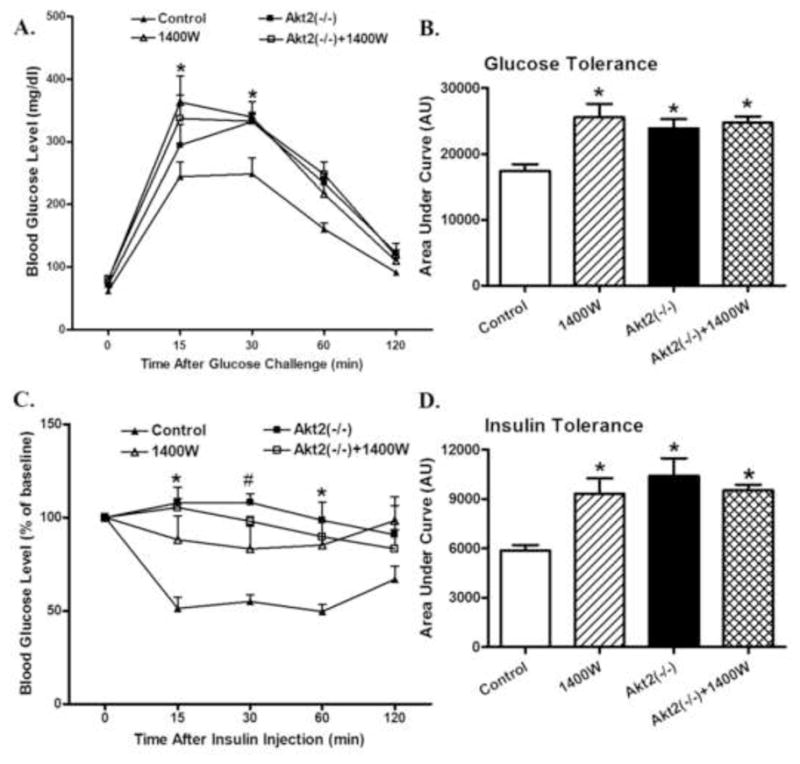
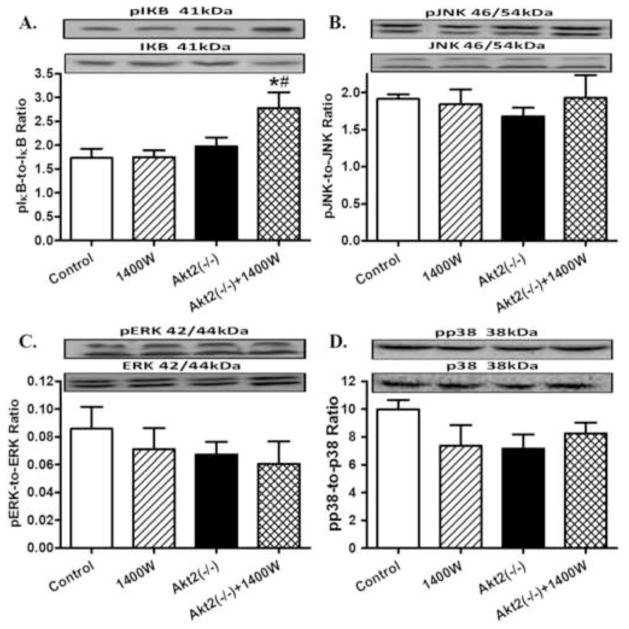
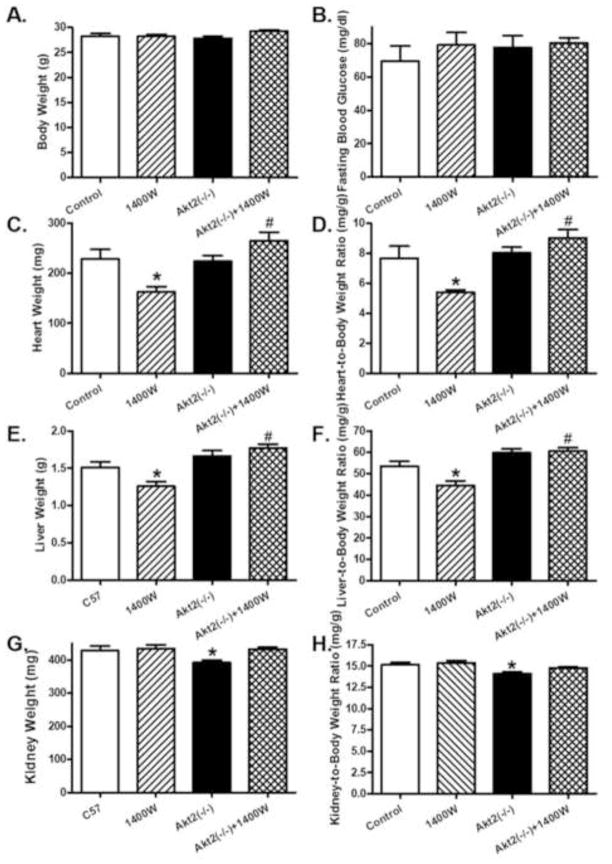
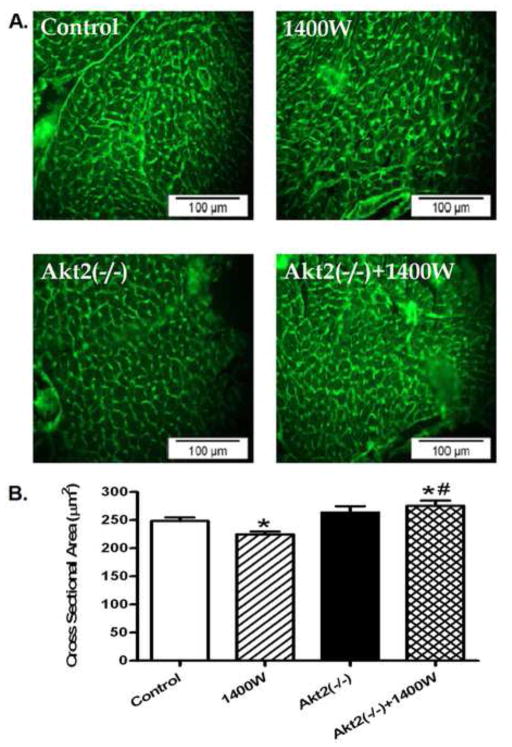
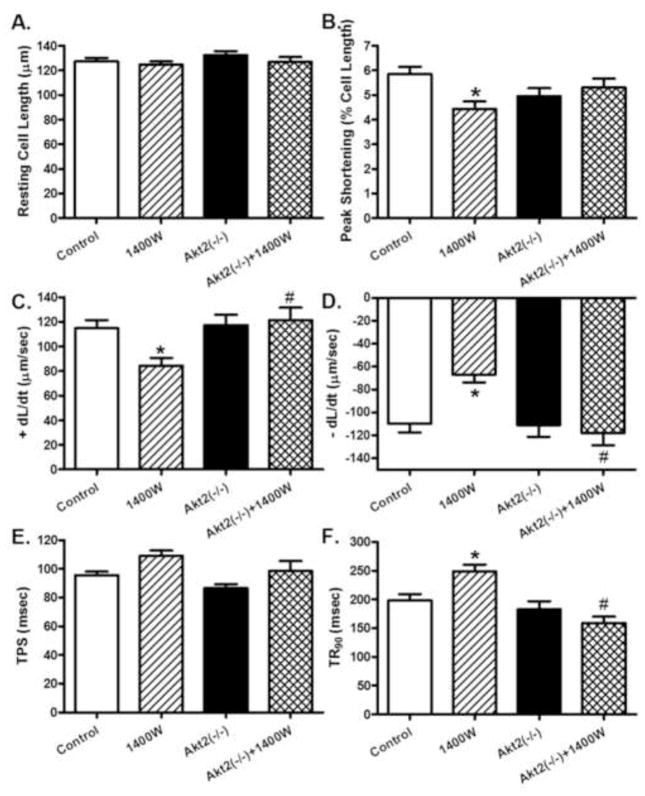
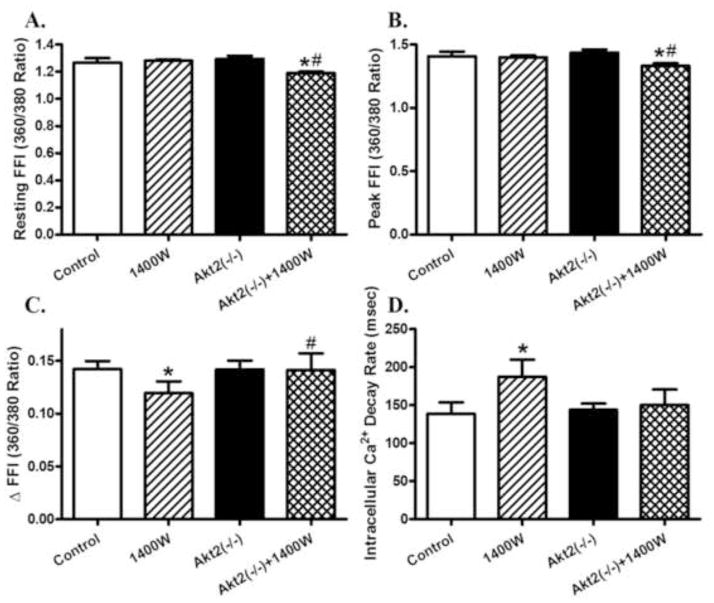
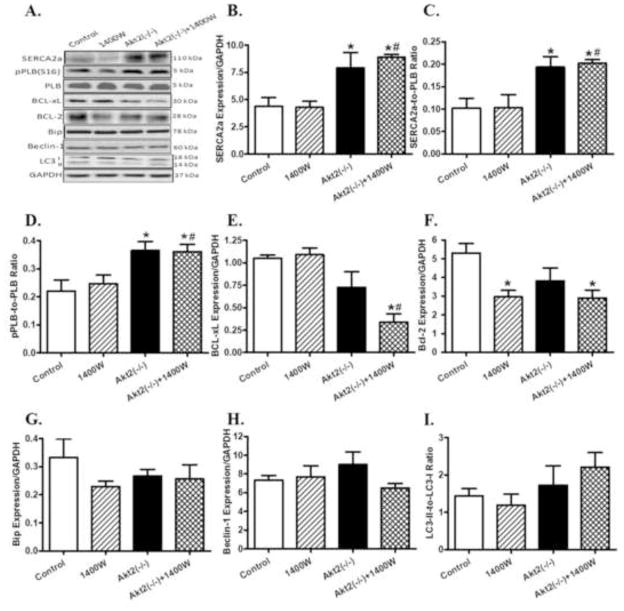
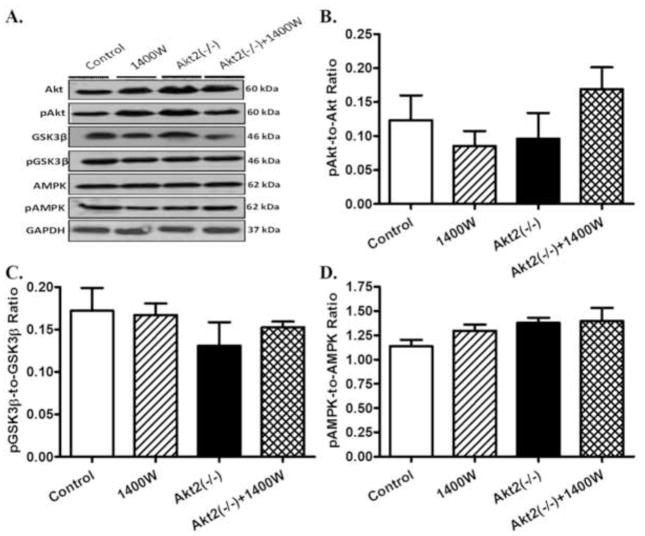
Increased levels of inducible nitric oxide synthase (iNOS) during cardiac stress such as ischemia-reperfusion, sepsis and hypertension may display both beneficial and detrimental roles in cardiac contractile performance. However, the precise role of iNOS in the maintenance of cardiac contractile function remains elusive. This study was designed to determine the impact of chronic iNOS inhibition on cardiac contractile function and the underlying mechanism involved with a special focus on the NO downstream signaling molecule Akt. Male C57 or Akt2 knockout [Akt2(-/-)] mice were injected with the specific iNOS inhibitor 1400W (2 mg/kg/d) or saline for 7 days. Both 1400W and Akt2 knockout dampened glucose and insulin tolerance without additive effects. Treatment of 1400W decreased heart and liver weights as well as cardiomyocyte cross-sectional area in C57 but not Akt2 knockout mice. 1400W but not Akt2 knockout compromised cardiomyocyte mechanical properties including decreased peak shortening and maximal velocity of shortening/relengthening, prolonged relengthening duration, reduced intracellular Ca(2+) release and decay rate, the effects of which were ablated or attenuated by Akt2 knockout. Akt2 knockout but not 1400W increased the levels of intracellular Ca(2+) regulatory proteins including SERCA2a and phospholamban phosphorylation. 1400W reduced the level of anti-apoptotic protein Bcl-2, the effect of which was unaffected by Akt2 knockout. Neither 1400W nor Akt2 knockout significantly affected ER stress, autophagy, the post-insulin receptor signaling Akt, GSK3β and AMPK, as well as the stress signaling IκB, JNK, ERK and p38 with the exception of elevated IκB phosphorylation with jointed effect of 1400W and Akt2 knockout. Taken together, these data indicated that an essential role of iNOS in the maintenance of cardiac morphology and function possibly through an Akt2-dependent mechanism.
在心脏应激如缺血再灌注、脓毒症和高血压期间,诱导型一氧化氮合酶 (iNOS) 水平升高可能在心脏收缩性能方面显示出有益和有害的作用。然而,iNOS 在维持心脏收缩功能中的精确作用仍然难以捉摸。本研究旨在确定慢性 iNOS 抑制对心脏收缩功能的影响及其潜在机制,特别关注 NO 下游信号分子 Akt。雄性 C57 或 Akt2 敲除 [Akt2(-/-)] 小鼠每天注射特异性 iNOS 抑制剂 1400W(2mg/kg/d)或生理盐水 7 天。1400W 和 Akt2 敲除均减弱了葡萄糖和胰岛素耐量,但没有相加作用。1400W 处理降低了 C57 但不降低 Akt2 敲除小鼠的心脏和肝脏重量以及心肌细胞横截面积。1400W 但不降低 Akt2 敲除小鼠的心肌细胞机械性能,包括缩短峰值和缩短/再缩短的最大速度,延长再缩短持续时间,减少细胞内 Ca(2+)释放和衰减率,这些作用被 Akt2 敲除消除或减弱。Akt2 敲除但不是 1400W 增加了细胞内 Ca(2+)调节蛋白的水平,包括 SERCA2a 和磷蛋白磷酸化。1400W 降低了抗凋亡蛋白 Bcl-2 的水平,该作用不受 Akt2 敲除的影响。1400W 和 Akt2 敲除均未显著影响 ER 应激、自噬、胰岛素受体后信号 Akt、GSK3β 和 AMPK,以及应激信号 IκB、JNK、ERK 和 p38,除了联合 1400W 和 Akt2 敲除引起的 IκB 磷酸化升高外。综上所述,这些数据表明 iNOS 在维持心脏形态和功能方面起着重要作用,可能通过 Akt2 依赖性机制。