Tumor Immunology, Department of Clinical Research, University of Bern, Bern, Switzerland.
PLoS One. 2011;6(9):e24772. doi: 10.1371/journal.pone.0024772. Epub 2011 Sep 23.
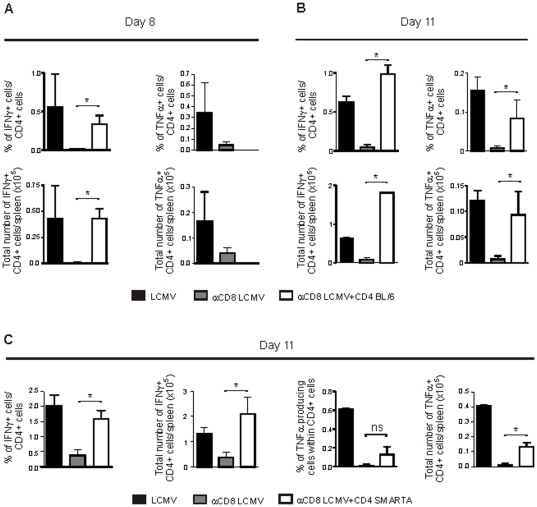
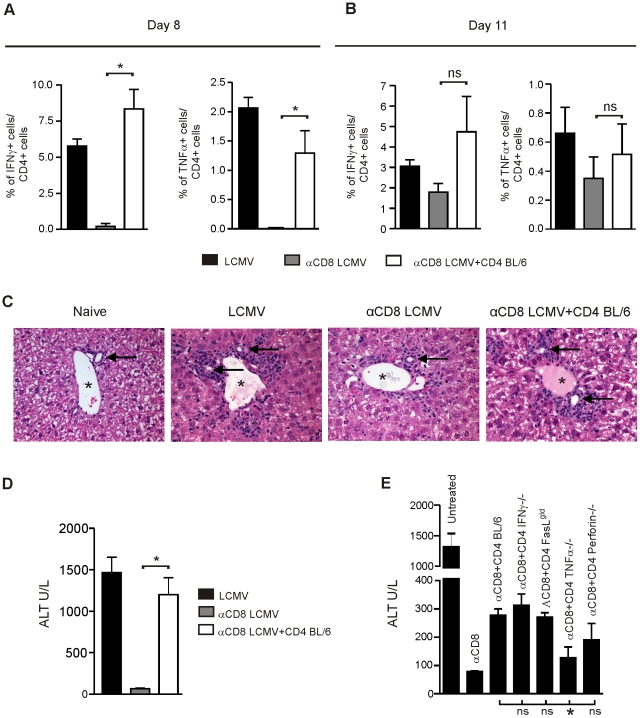
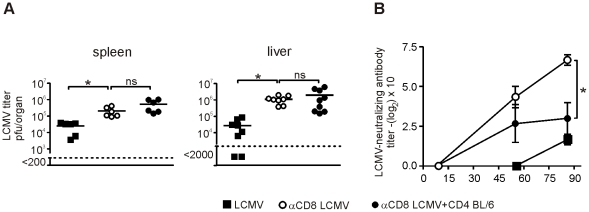
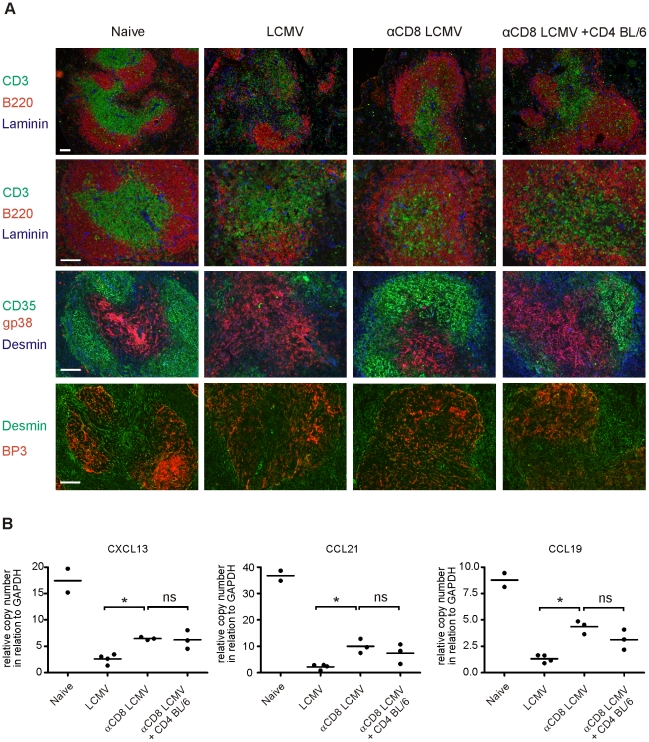
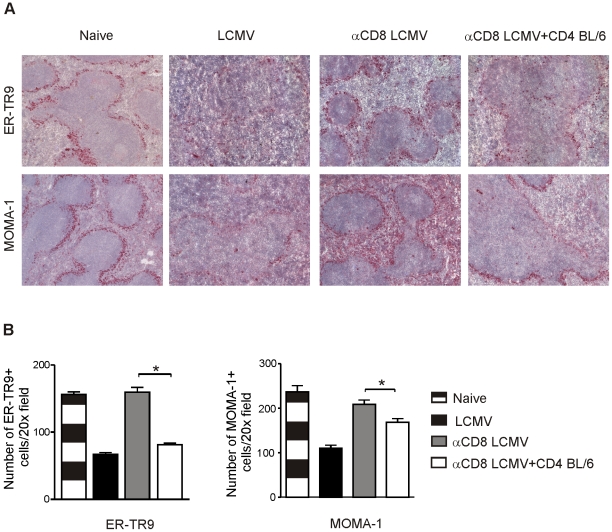
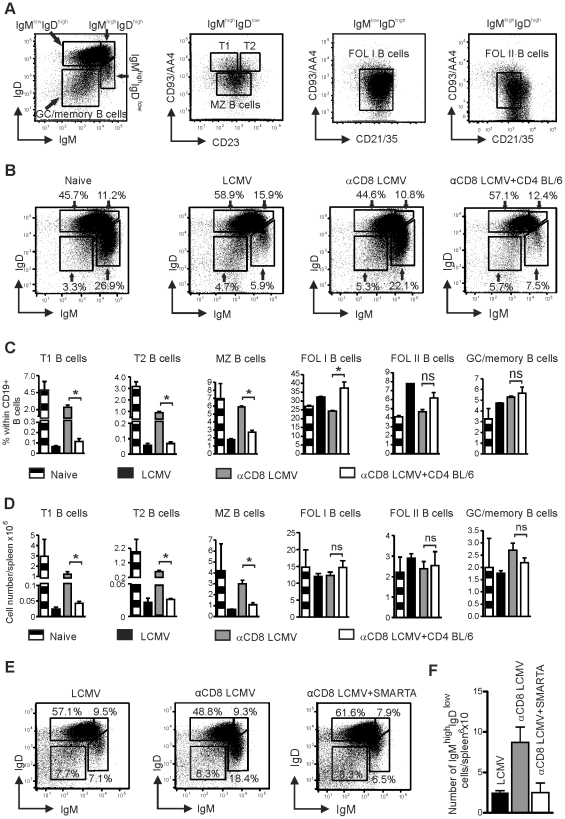
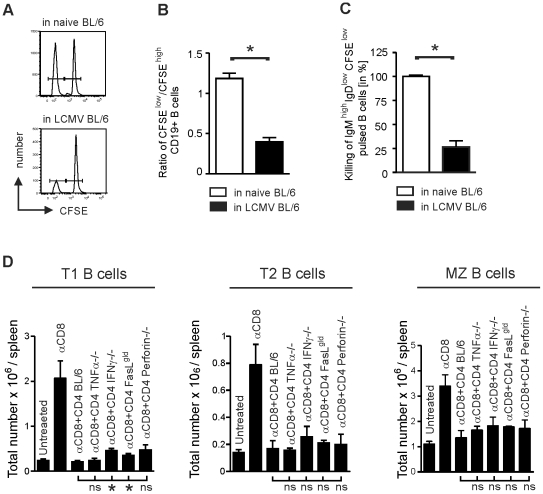
Immune responses have the important function of host defense and protection against pathogens. However, the immune response also causes inflammation and host tissue injury, termed immunopathology. For example, hepatitis B and C virus infection in humans cause immunopathological sequel with destruction of liver cells by the host's own immune response. Similarly, after infection with lymphocytic choriomeningitis virus (LCMV) in mice, the adaptive immune response causes liver cell damage, choriomeningitis and destruction of lymphoid organ architecture. The immunopathological sequel during LCMV infection has been attributed to cytotoxic CD8(+) T cells. However, we now show that during LCMV infection CD4(+) T cells selectively induced the destruction of splenic marginal zone and caused liver cell damage with elevated serum alanin-transferase (ALT) levels. The destruction of the splenic marginal zone by CD4(+) T cells included the reduction of marginal zone B cells, marginal zone macrophages and marginal zone metallophilic macrophages. Functionally, this resulted in an impaired production of neutralizing antibodies against LCMV. Furthermore, CD4(+) T cells reduced B cells with an IgM(high)IgD(low) phenotype (transitional stage 1 and 2, marginal zone B cells), whereas other B cell subtypes such as follicular type 1 and 2 and germinal center/memory B cells were not affected. Adoptive transfer of CD4(+) T cells lacking different important effector cytokines and cytolytic pathways such as IFNγ, TNFα, perforin and Fas-FasL interaction did reveal that these cytolytic pathways are redundant in the induction of immunopathological sequel in spleen. In conclusion, our results define an important role of CD4(+) T cells in the induction of immunopathology in liver and spleen. This includes the CD4(+) T cell mediated destruction of the splenic marginal zone with consecutively impaired protective neutralizing antibody responses.
免疫反应具有宿主防御和抵御病原体的重要功能。然而,免疫反应也会引起炎症和宿主组织损伤,称为免疫病理学。例如,乙型肝炎和丙型肝炎病毒感染会导致免疫病理后果,即宿主自身免疫反应破坏肝细胞。同样,在感染淋巴细胞性脉络丛脑膜炎病毒(LCMV)后,适应性免疫反应会导致肝细胞损伤、脉络丛脑膜炎和淋巴器官结构破坏。在 LCMV 感染期间的免疫病理后果归因于细胞毒性 CD8(+)T 细胞。然而,我们现在表明,在 LCMV 感染期间,CD4(+)T 细胞选择性地诱导脾脏边缘区的破坏,并导致肝细胞损伤和血清丙氨酸转移酶(ALT)水平升高。CD4(+)T 细胞对脾脏边缘区的破坏包括边缘区 B 细胞、边缘区巨噬细胞和边缘区金属嗜酸性巨噬细胞的减少。功能上,这导致针对 LCMV 的中和抗体产生受损。此外,CD4(+)T 细胞减少了具有 IgM(高)IgD(低)表型的 B 细胞(过渡阶段 1 和 2,边缘区 B 细胞),而其他 B 细胞亚型,如滤泡型 1 和 2 以及生发中心/记忆 B 细胞则不受影响。缺乏不同重要效应细胞因子和细胞溶解途径(如 IFNγ、TNFα、穿孔素和 Fas-FasL 相互作用)的 CD4(+)T 细胞的过继转移确实表明,这些细胞溶解途径在诱导脾脏免疫病理学方面是冗余的。总之,我们的结果定义了 CD4(+)T 细胞在肝脏和脾脏诱导免疫病理学中的重要作用。这包括 CD4(+)T 细胞介导的脾脏边缘区破坏,随后导致保护性中和抗体反应受损。