Department of Reproduction and Development, Kunming Institute of Zoology, Chinese Academy of Sciences, Kunming, China.
PLoS One. 2011;6(9):e25052. doi: 10.1371/journal.pone.0025052. Epub 2011 Sep 26.
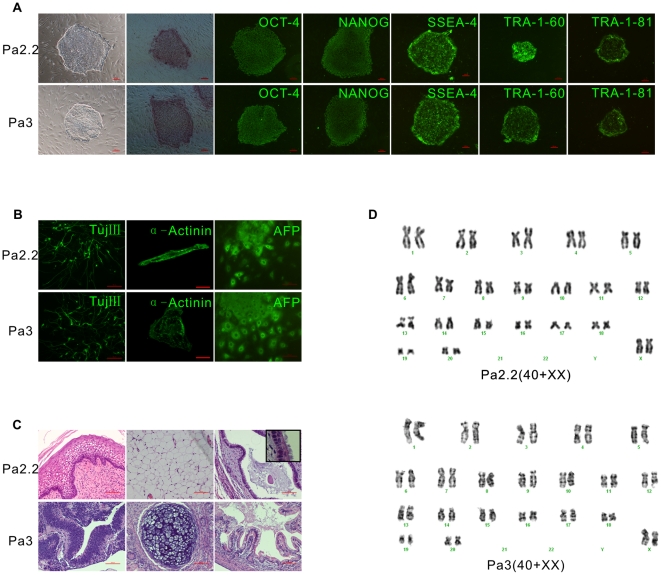
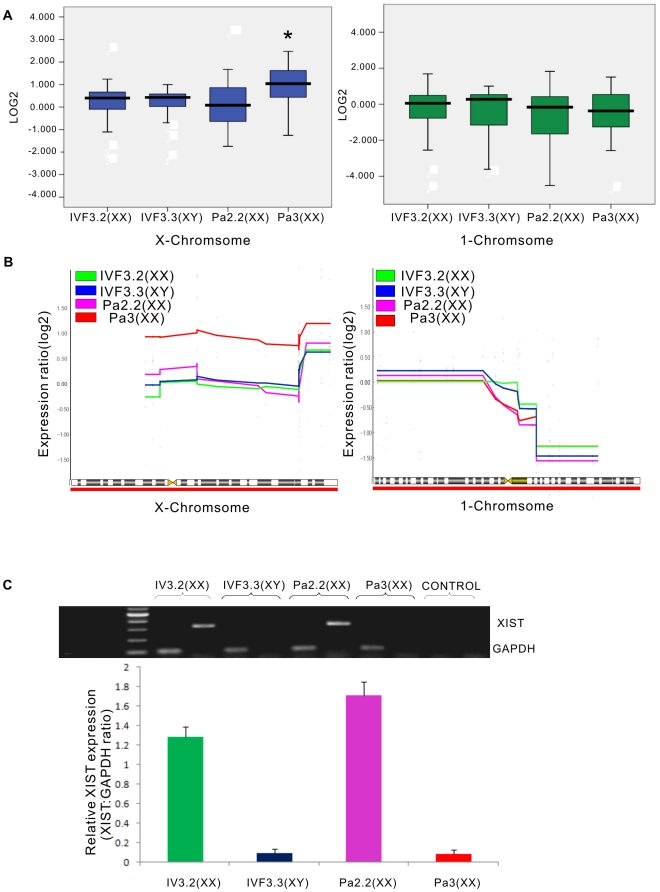
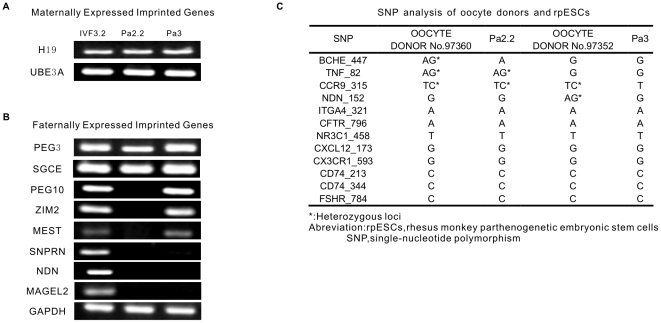
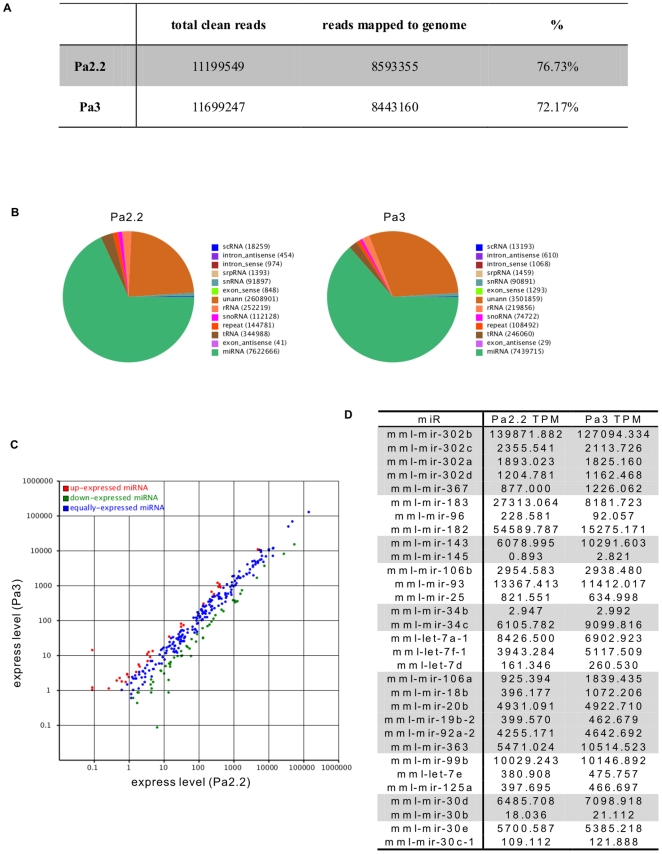
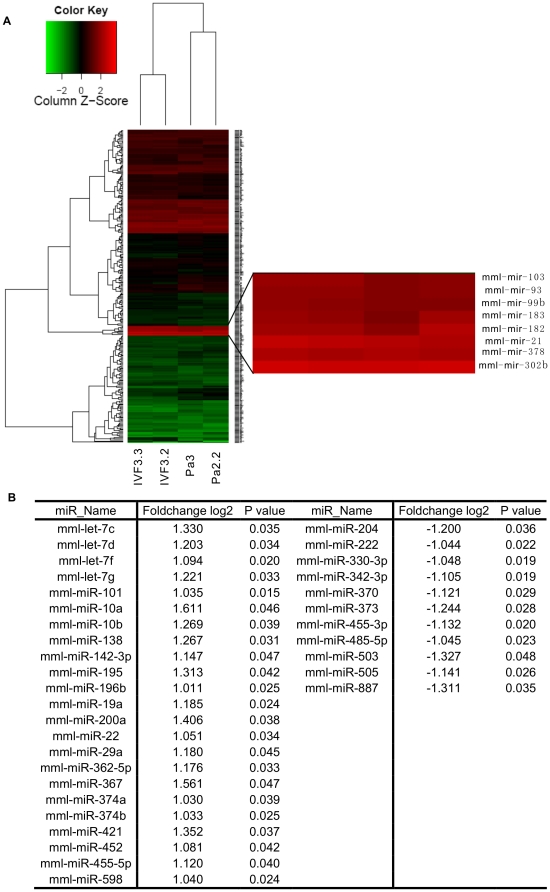
Parthenogenetic embryonic stem cells are considered as a promising resource for regeneration medicine and powerful tools for developmental biology. A lot of studies have revealed that embryonic stem cells have distinct microRNA expression pattern and these microRNAs play important roles in self-renewal and pluripotency of embryonic stem cells. However, few studies concern about microRNA expression pattern in parthenogenetic embryonic stem cells, especially in non-human primate--the ideal model species for human, largely due to the limited rhesus monkey parthenogenetic embryonic stem cells (rpESCs) available and lack of systematic analysis of the basics of rpESCs. Here, we derived two novel rpESCs lines and characterized their microRNA signature by Solexa deep sequencing. These two novel rpESCs shared many properties with other primate ESCs, including expression of pluripotent markers, capacity to generate derivatives representative of all three germ layers in vivo and in vitro, maintaining of euploid karyotype even after long culture. Additionally, lack of some paternally expressed imprinted genes and identity of Single-nucleotide Polymorphism (SNP) compare to their oocyte donors support their parthenogenesis origin. By characterizing their microRNA signature, we identified 91 novel microRNAs, except those are also detected in other primate ESCs. Moreover, these two novel rpESCs display a unique microRNA signature, comparing to their biparental counterpart ESCs. Then we analyzed X chromosome status in these two novel rpESCs; results suggested that one of them possesses two active X chromosomes, the other possesses only one active X chromosome liking biparental female embryonic stem cells. Taken together, our novel rpESCs provide a new alternative to existing rhesus monkey embryonic stem cells, microRNA information expands rhesus monkey microRNA data and may help understanding microRNA roles in pluripotency and parthenogenesis.
体细胞核移植胚胎干细胞被认为是再生医学的一种有前途的资源,也是发育生物学的有力工具。大量研究表明,胚胎干细胞具有独特的 microRNA 表达模式,这些 microRNA 在胚胎干细胞的自我更新和多能性中发挥重要作用。然而,很少有研究关注体细胞核移植胚胎干细胞中的 microRNA 表达模式,特别是在非人类灵长类动物——人类的理想模型物种中,这主要是由于可用的恒河猴体细胞核移植胚胎干细胞(rpESCs)有限,以及缺乏对 rpESCs 基本原理的系统分析。在这里,我们通过单细胞测序衍生了两个新的 rpESC 系,并通过 Solexa 深度测序对其 microRNA 特征进行了表征。这两个新的 rpESCs 与其他灵长类 ESC 具有许多共同特性,包括多能性标记的表达、在体内和体外产生代表所有三个胚层的衍生物的能力、即使在长期培养后仍保持整倍体核型。此外,与卵母细胞供体相比,一些父系表达的印迹基因的缺失和单核苷酸多态性(SNP)的同一性支持它们的孤雌生殖起源。通过对其 microRNA 特征进行表征,我们鉴定了 91 个新的 microRNA,除了在其他灵长类 ESC 中也检测到的 microRNA 之外。此外,与它们的双亲 ESC 相比,这两个新的 rpESCs 显示出独特的 microRNA 特征。然后,我们分析了这两个新的 rpESCs 中的 X 染色体状态;结果表明,其中一个具有两条活性 X 染色体,另一个具有与双亲雌性胚胎干细胞相似的一条活性 X 染色体。总之,我们的新型 rpESCs 为现有的恒河猴胚胎干细胞提供了一种新的替代选择,microRNA 信息扩展了恒河猴 microRNA 数据,有助于理解 microRNA 在多能性和孤雌生殖中的作用。