Influenza Division, National Center for Immunization and Respiratory, Centers for Disease Control and Prevention, Atlanta, Georgia, United States of America.
PLoS One. 2011;6(9):e25242. doi: 10.1371/journal.pone.0025242. Epub 2011 Sep 23.
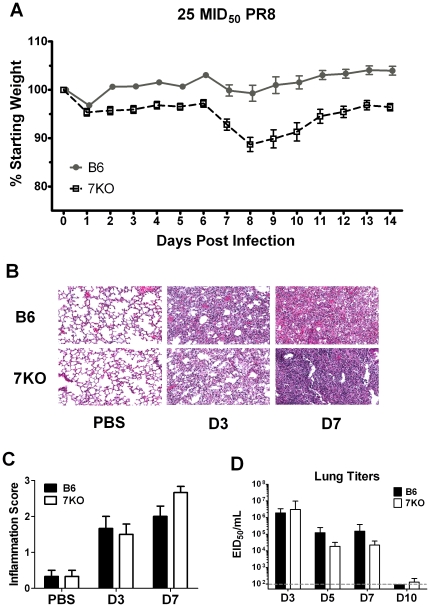
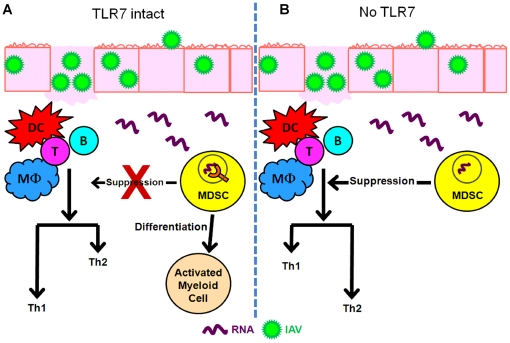
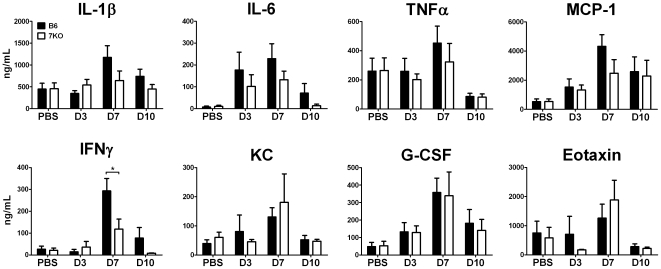
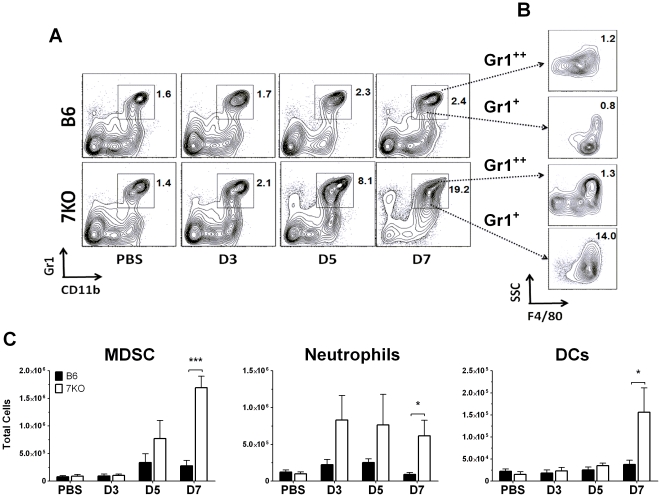
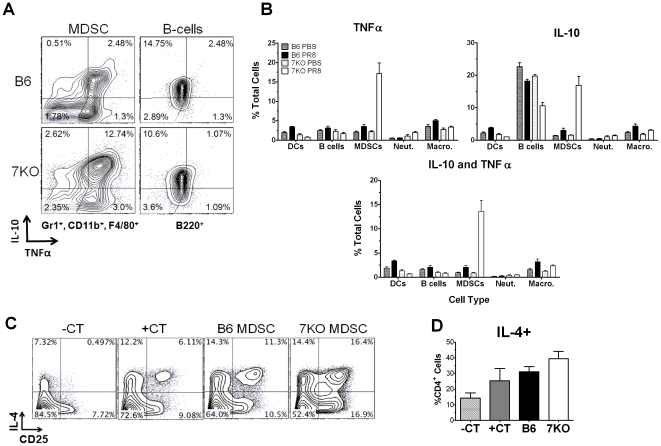
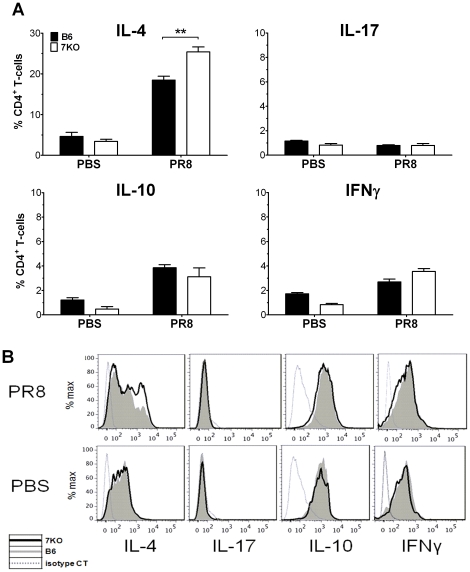
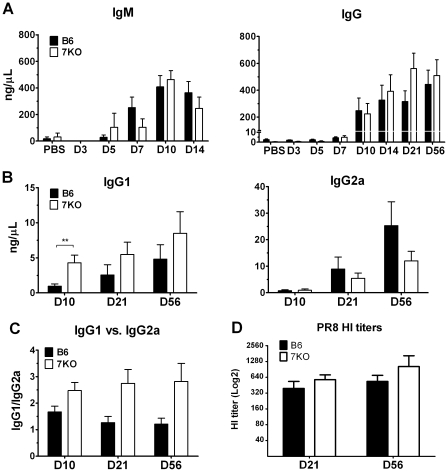
Toll-like receptors (TLRs) play an important role in the induction of innate and adaptive immune response against influenza A virus (IAV) infection; however, the role of Toll-like receptor 7 (TLR7) during the innate immune response to IAV infection and the cell types affected by the absence of TLR7 are not clearly understood. In this study, we show that myeloid derived suppressor cells (MDSC) accumulate in the lungs of TLR7 deficient mice more so than in wild-type C57Bl/6 mice, and display increased cytokine expression. Furthermore, there is an increase in production of Th2 cytokines by TLR7(-/-) compared with wildtype CD4+ T-cells in vivo, leading to a Th2 polarized humoral response. Our findings indicate that TLR7 modulates the accumulation of MDSCs during an IAV infection in mice, and that lack of TLR7 signaling leads to a Th2-biased response.
Toll-like 受体(TLRs)在诱导针对甲型流感病毒(IAV)感染的固有和适应性免疫反应中发挥重要作用;然而,Toll-like 受体 7(TLR7)在 IAV 感染固有免疫反应中的作用以及缺乏 TLR7 时受影响的细胞类型尚不清楚。在这项研究中,我们表明,髓源抑制细胞(MDSC)在 TLR7 缺陷小鼠的肺部聚集比在野生型 C57Bl/6 小鼠中更多,并且表现出更高的细胞因子表达。此外,与野生型 CD4+T 细胞相比,TLR7(-/-)体内 Th2 细胞因子的产生增加,导致 Th2 偏极化的体液反应。我们的研究结果表明,TLR7 调节 IAV 感染期间小鼠 MDSC 的积累,并且缺乏 TLR7 信号会导致 Th2 偏倚反应。