Emory Vaccine Center, Emory University, Atlanta, Georgia 30329, USA.
Nature. 2011 Feb 24;470(7335):543-7. doi: 10.1038/nature09737.
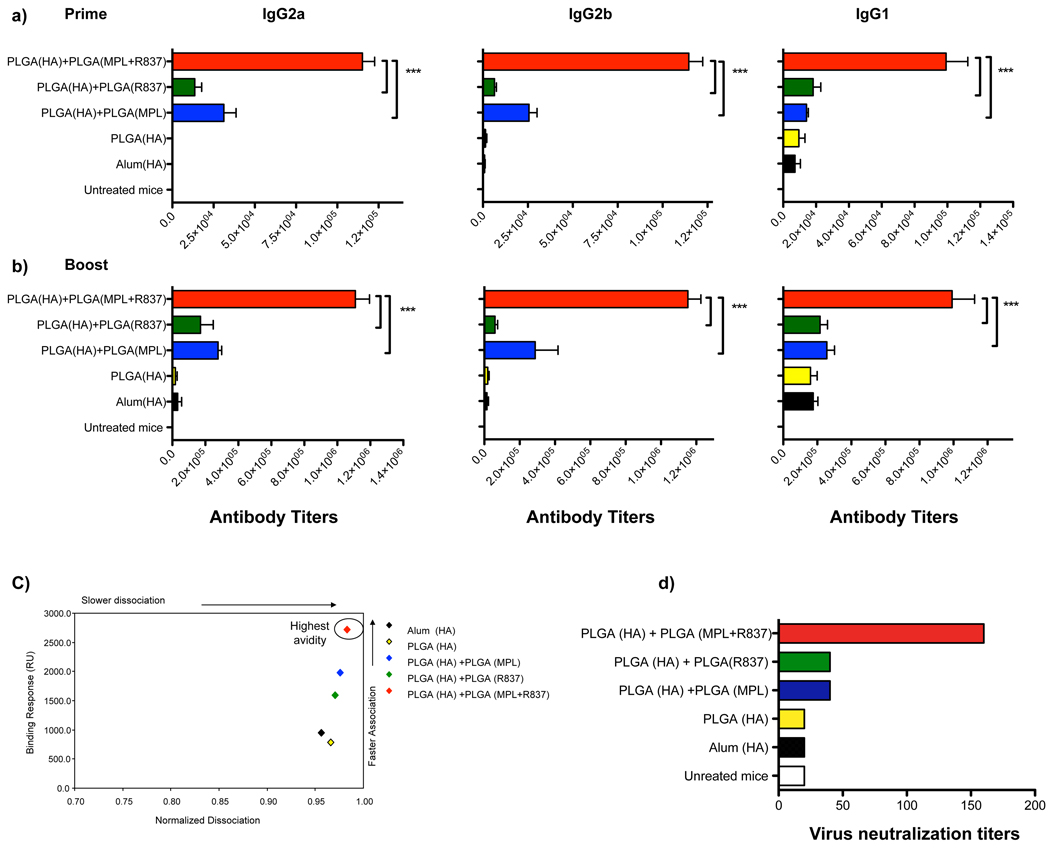
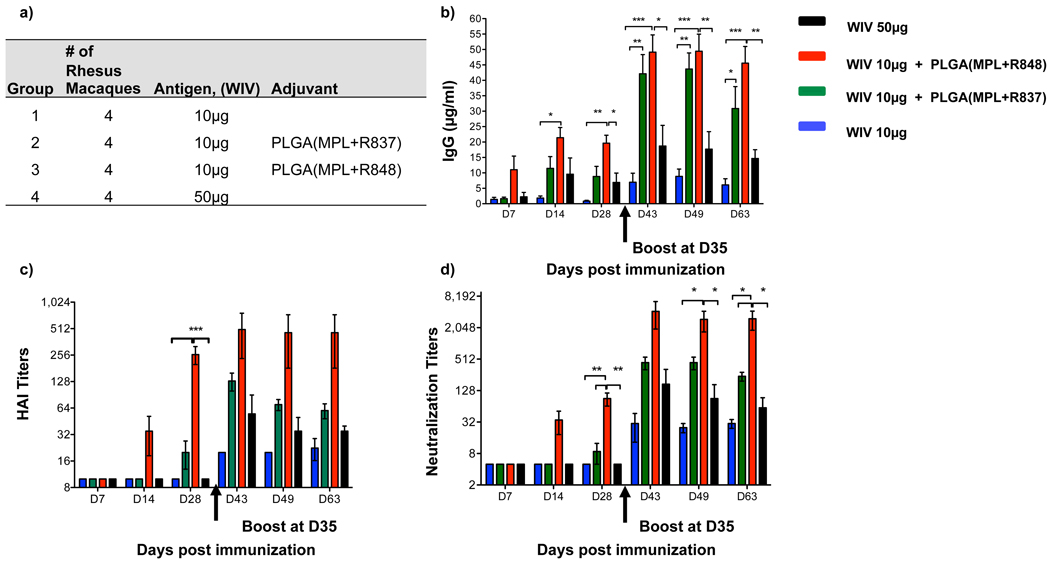
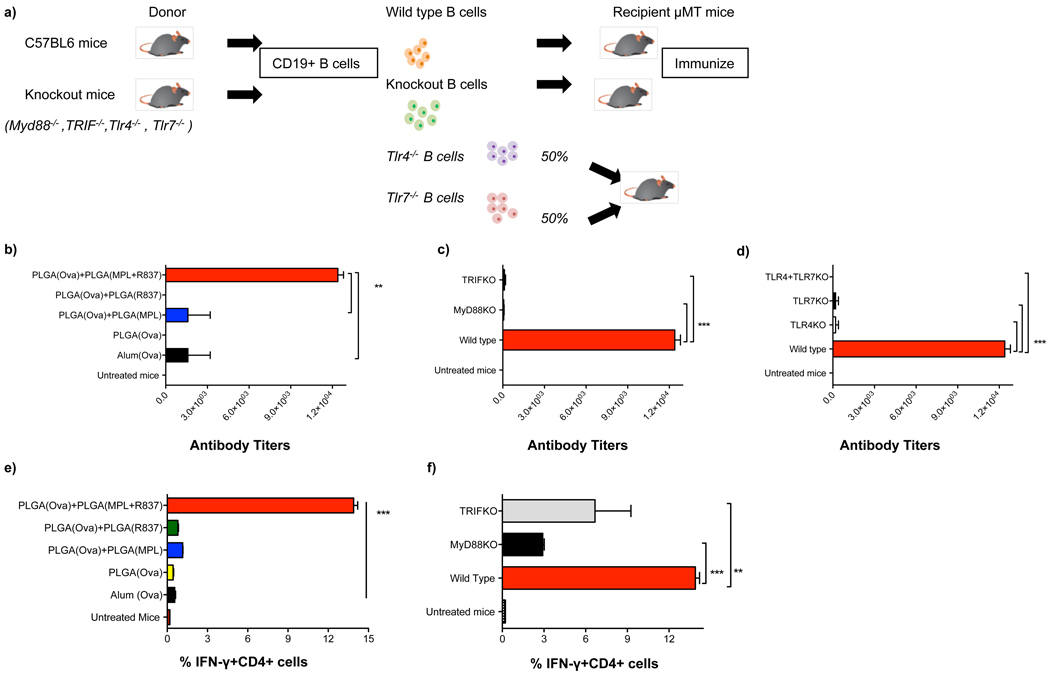
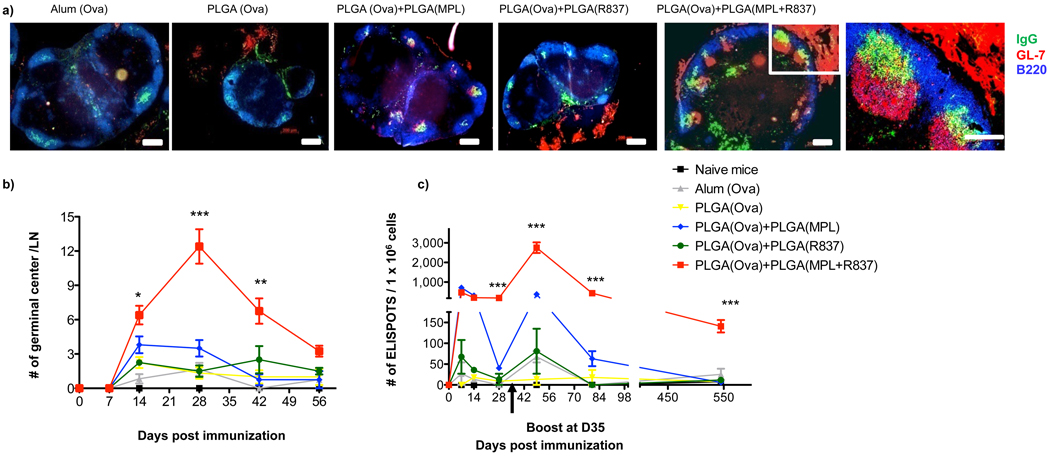
Many successful vaccines induce persistent antibody responses that can last a lifetime. The mechanisms by which they do so remain unclear, but emerging evidence indicates that they activate dendritic cells via Toll-like receptors (TLRs). For example, the yellow fever vaccine YF-17D, one of the most successful empiric vaccines ever developed, activates dendritic cells via multiple TLRs to stimulate proinflammatory cytokines. Triggering specific combinations of TLRs in dendritic cells can induce synergistic production of cytokines, which results in enhanced T-cell responses, but its impact on antibody responses remain unknown. Learning the critical parameters of innate immunity that program such antibody responses remains a major challenge in vaccinology. Here we demonstrate that immunization of mice with synthetic nanoparticles containing antigens plus ligands that signal through TLR4 and TLR7 induces synergistic increases in antigen-specific, neutralizing antibodies compared to immunization with nanoparticles containing antigens plus a single TLR ligand. Consistent with this there was enhanced persistence of germinal centres and of plasma-cell responses, which persisted in the lymph nodes for >1.5 years. Surprisingly, there was no enhancement of the early short-lived plasma-cell response relative to that observed with single TLR ligands. Molecular profiling of activated B cells, isolated 7 days after immunization, indicated that there was early programming towards B-cell memory. Antibody responses were dependent on direct triggering of both TLRs on B cells and dendritic cells, as well as on T-cell help. Immunization protected completely against lethal avian and swine influenza virus strains in mice, and induced robust immunity against pandemic H1N1 influenza in rhesus macaques.
许多成功的疫苗能诱导持久的抗体应答,持续一生。其作用机制尚不清楚,但新出现的证据表明,它们通过 Toll 样受体(TLR)激活树突状细胞。例如,黄热病疫苗 YF-17D 是有史以来最成功的经验性疫苗之一,通过多种 TLR 激活树突状细胞,刺激促炎细胞因子。触发树突状细胞中特定 TLR 的组合可以诱导细胞因子的协同产生,从而增强 T 细胞反应,但对抗体反应的影响尚不清楚。了解先天免疫的关键参数,从而编程这种抗体反应,仍然是疫苗学中的一个主要挑战。在这里,我们证明了用含有抗原和 TLR4 和 TLR7 信号配体的合成纳米颗粒免疫小鼠,与用含有抗原和单一 TLR 配体的纳米颗粒免疫相比,可协同增加抗原特异性、中和抗体。与之一致的是,生发中心和浆细胞反应的持续时间延长,在淋巴结中持续了>1.5 年。令人惊讶的是,与单一 TLR 配体相比,早期短暂的浆细胞反应并没有增强。免疫后 7 天分离出的活化 B 细胞的分子谱分析表明,存在向 B 细胞记忆的早期编程。抗体反应依赖于 B 细胞和树突状细胞上 TLR 的直接触发,以及 T 细胞的辅助。疫苗在小鼠中完全预防了致死性禽流感和猪流感病毒株的感染,并在恒河猴中诱导了对大流行性 H1N1 流感的强大免疫。