Institute of Pharmaceutical Biotechnology, Biberach University of Applied Sciences, Biberach, Germany.
PLoS One. 2011;6(9):e25282. doi: 10.1371/journal.pone.0025282. Epub 2011 Sep 22.
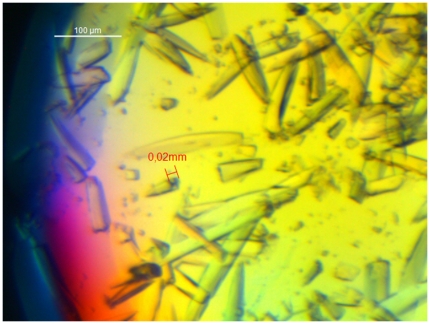
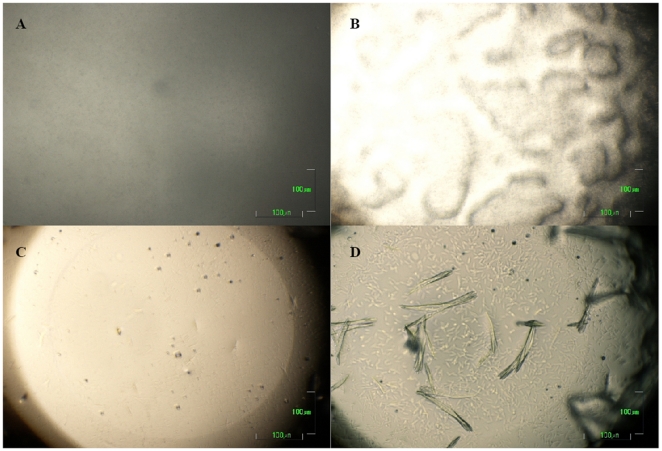
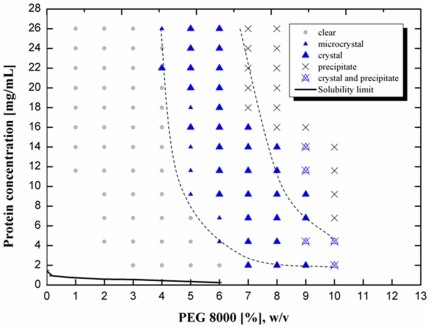
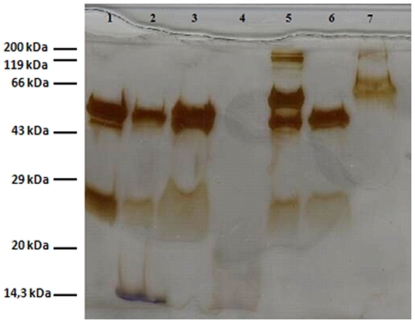
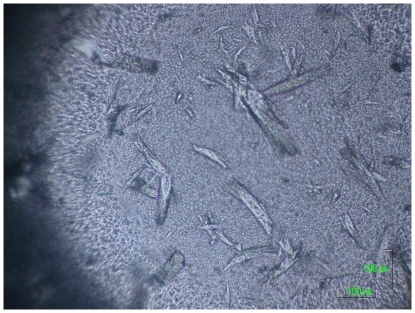
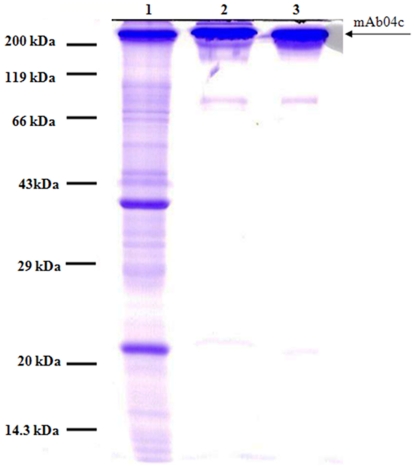
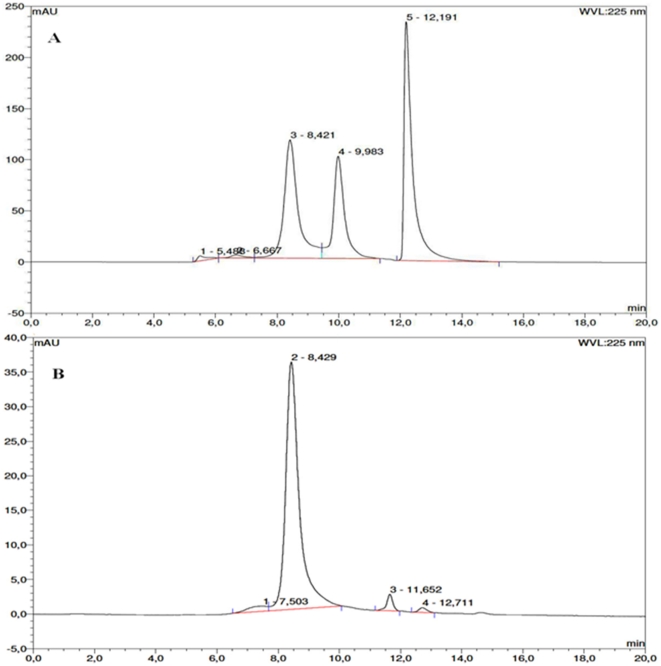
Crystallization conditions of an intact monoclonal IgG4 (immunoglobulin G, subclass 4) antibody were established in vapor diffusion mode by sparse matrix screening and subsequent optimization. The procedure was transferred to microbatch conditions and a phase diagram was built showing surprisingly low solubility of the antibody at equilibrium. With up-scaling to process scale in mind, purification efficiency of the crystallization step was investigated. Added model protein contaminants were excluded from the crystals to more than 95%. No measurable loss of Fc-binding activity was observed in the crystallized and redissolved antibody. Conditions could be adapted to crystallize the antibody directly from concentrated and diafiltrated cell culture supernatant, showing purification efficiency similar to that of Protein A chromatography. We conclude that crystallization has the potential to be included in downstream processing as a low-cost purification or formulation step.
通过稀疏矩阵筛选和后续优化,在蒸汽扩散模式下确定了完整的单克隆 IgG4(免疫球蛋白 G,亚类 4)抗体的结晶条件。该方法被转移到微批量条件下,并绘制了相图,显示出人意料的低平衡抗体溶解度。考虑到放大到工艺规模,研究了结晶步骤的纯化效率。添加的模型蛋白污染物被排除在晶体之外,超过 95%。在结晶和重溶的抗体中未观察到 Fc 结合活性的可测量损失。可以适应条件,直接从浓缩和透析的细胞培养上清液中结晶抗体,显示出与 Protein A 层析相似的纯化效率。我们得出结论,结晶有可能作为低成本的纯化或制剂步骤被纳入下游加工。