IUCN/SSC Marine Turtle Specialist Group, Arlington, Virginia, United States of America.
PLoS One. 2011;6(9):e24510. doi: 10.1371/journal.pone.0024510. Epub 2011 Sep 28.
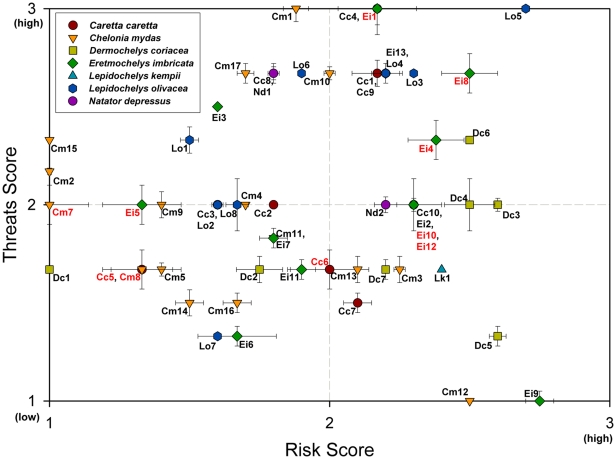
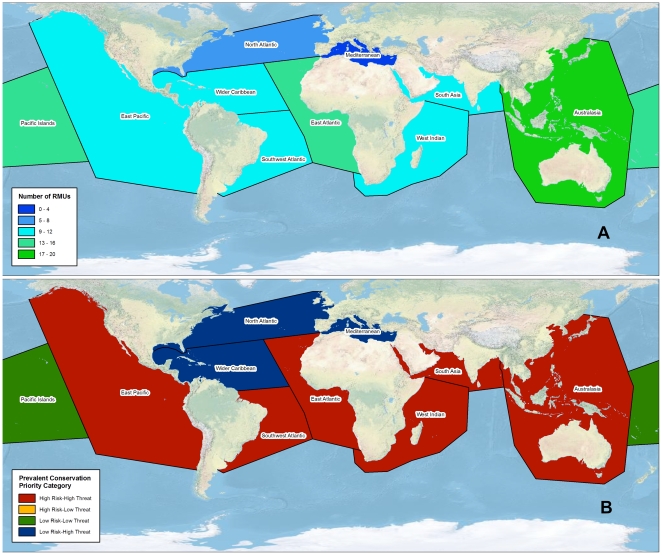
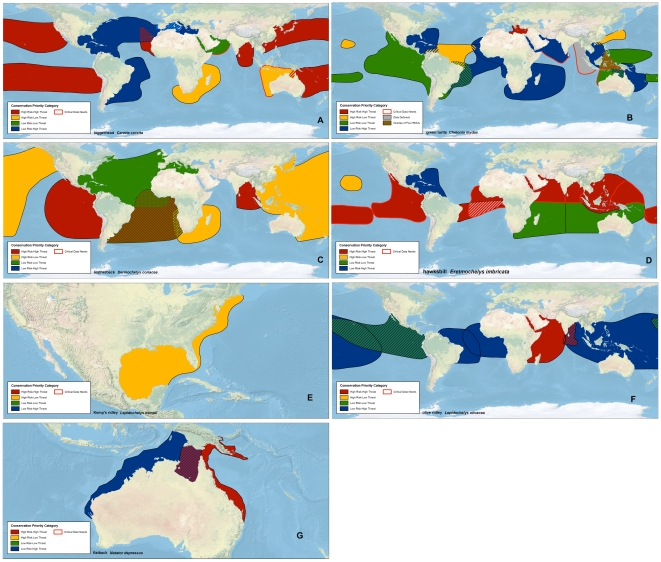
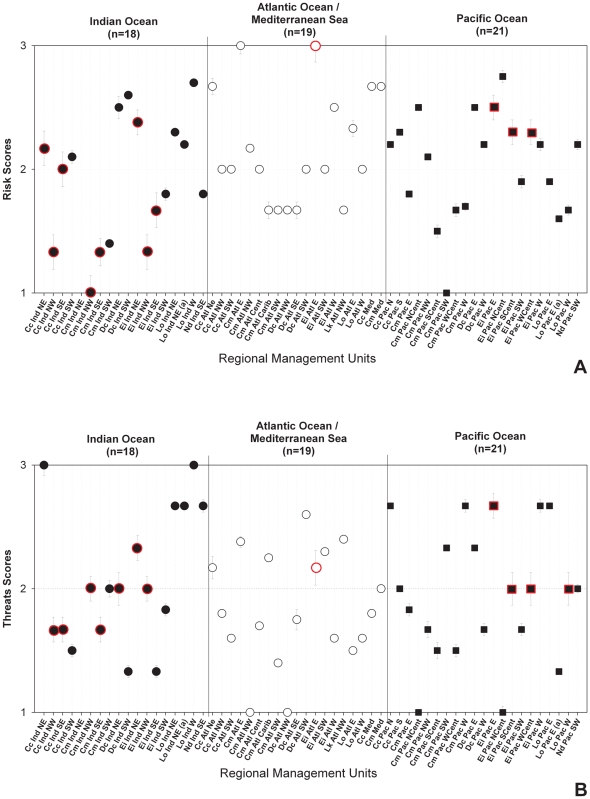
Where conservation resources are limited and conservation targets are diverse, robust yet flexible priority-setting frameworks are vital. Priority-setting is especially important for geographically widespread species with distinct populations subject to multiple threats that operate on different spatial and temporal scales. Marine turtles are widely distributed and exhibit intra-specific variations in population sizes and trends, as well as reproduction and morphology. However, current global extinction risk assessment frameworks do not assess conservation status of spatially and biologically distinct marine turtle Regional Management Units (RMUs), and thus do not capture variations in population trends, impacts of threats, or necessary conservation actions across individual populations. To address this issue, we developed a new assessment framework that allowed us to evaluate, compare and organize marine turtle RMUs according to status and threats criteria. Because conservation priorities can vary widely (i.e. from avoiding imminent extinction to maintaining long-term monitoring efforts) we developed a "conservation priorities portfolio" system using categories of paired risk and threats scores for all RMUs (n = 58). We performed these assessments and rankings globally, by species, by ocean basin, and by recognized geopolitical bodies to identify patterns in risk, threats, and data gaps at different scales. This process resulted in characterization of risk and threats to all marine turtle RMUs, including identification of the world's 11 most endangered marine turtle RMUs based on highest risk and threats scores. This system also highlighted important gaps in available information that is crucial for accurate conservation assessments. Overall, this priority-setting framework can provide guidance for research and conservation priorities at multiple relevant scales, and should serve as a model for conservation status assessments and priority-setting for widespread, long-lived taxa.
当保护资源有限且保护目标多样化时,强大而灵活的优先级设置框架至关重要。优先级设置对于地理分布广泛、具有不同种群且受到多种威胁的物种尤为重要,这些威胁在不同的空间和时间尺度上运作。海龟广泛分布,其种群规模和趋势存在种内差异,以及繁殖和形态。然而,当前的全球灭绝风险评估框架并未评估在空间和生物学上有区别的海龟区域管理单位 (RMU) 的保护状况,因此无法捕捉到个别种群的种群趋势变化、威胁的影响或必要的保护行动。为了解决这个问题,我们开发了一个新的评估框架,使我们能够根据状况和威胁标准评估、比较和组织海龟 RMU。由于保护优先级可能有很大差异(即从避免即将灭绝到维持长期监测工作),我们为所有 RMU(n=58)开发了一个“保护优先级组合”系统,使用风险和威胁得分的配对类别。我们在全球范围内、按物种、按海洋盆地和按公认的地缘政治实体进行了这些评估和排名,以确定不同尺度的风险、威胁和数据差距的模式。这一过程导致对所有海龟 RMU 的风险和威胁进行了特征描述,包括根据最高风险和威胁得分确定了世界上 11 个最濒危的海龟 RMU。该系统还突出了现有信息中的重要差距,这些差距对于准确的保护评估至关重要。总的来说,这个优先级设置框架可以为多个相关尺度的研究和保护优先级提供指导,并且应该成为广泛存在的长寿类群的保护状况评估和优先级设置的模型。