Department of Physiology, Iuliu Hatieganu University of Medicine and Pharmacy, Cluj-Napoca, Romania.
Int J Nanomedicine. 2011;6:1945-54. doi: 10.2147/IJN.S24060. Epub 2011 Sep 12.
In recent years, a new concept of an anticancer vaccine has been proposed to prevent and control the proliferation and expansion of cancer cells by eliciting an immune boost in biological systems. The recent literature supports the role of embryonic stem cells (ESC) as cellular agents that stimulate the biological systems to destroy cancer cells. However, at present, a true anticancer vaccine remains elusive. There are several lines of evidence showing that carbon nanotubes may be used to initiate and maintain immune responses.
The authors proposed to test the therapeutic potential of multiwalled carbon nanotubes (MWCNTs) combined with ESC as agents to induce an immune boost and provide subsequent anticancer protection in mice.
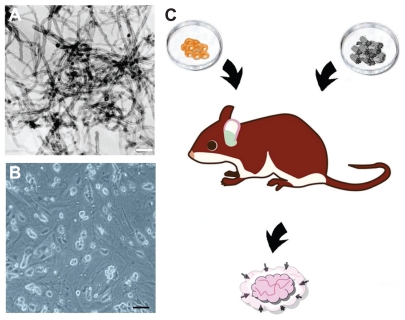
C57 BL/6 mice were immunized with ESC and MWCNTs.
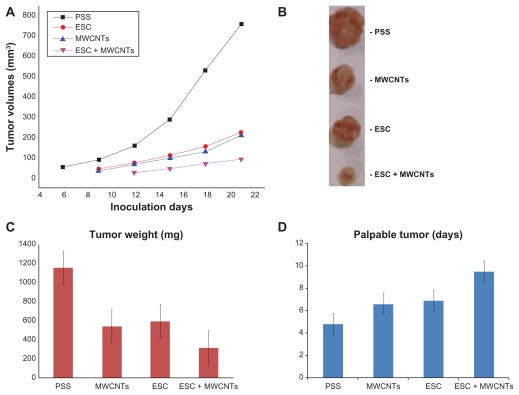
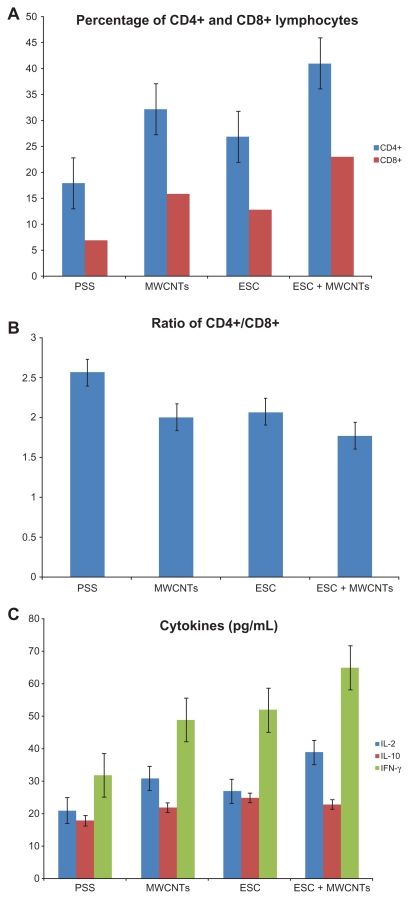
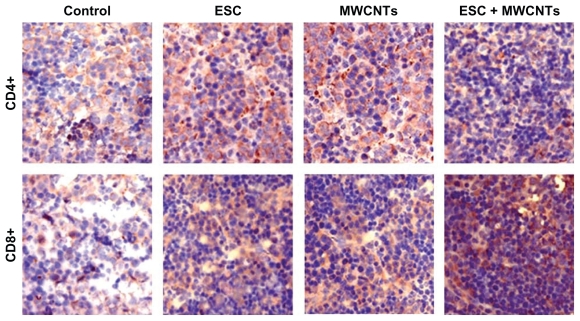
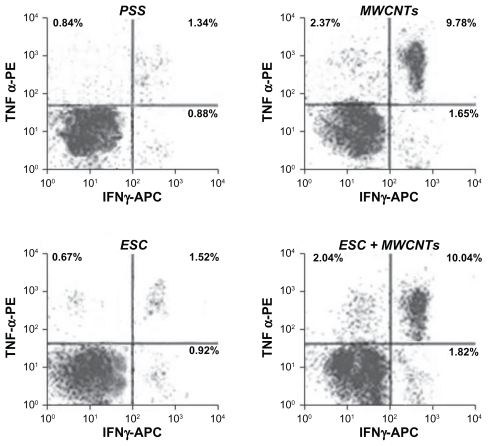
The proposed vaccine led to significant antitumor responses and enhanced tumor rejection in mice with subcutaneous inoculation of MC38 colon malign cells compared with groups only administered ESC, only MWCNTs, and controls.
The application and potential of ESC combined with MWCNTs as anticancer immunization agents may represent the beginning of a new chapter in the treatment of colon cancer.
近年来,提出了一种新的抗癌疫苗概念,通过在生物系统中引发免疫增强来预防和控制癌细胞的增殖和扩张。最近的文献支持胚胎干细胞(ESC)作为细胞制剂的作用,这些细胞制剂刺激生物系统破坏癌细胞。然而,目前,真正的抗癌疫苗仍然难以捉摸。有几条证据表明,碳纳米管可用于引发和维持免疫反应。
作者提出测试多壁碳纳米管(MWCNT)与 ESC 联合作为诱导免疫增强并为小鼠提供随后抗癌保护的制剂的治疗潜力。
用 ESC 和 MWCNT 免疫 C57 BL/6 小鼠。
与仅给予 ESC、仅给予 MWCNT 和对照组的小鼠相比,该疫苗导致皮下接种 MC38 结肠恶性细胞的小鼠产生显著的抗肿瘤反应,并增强了肿瘤排斥反应。
将 ESC 与 MWCNT 联合作为抗癌免疫制剂的应用和潜力可能代表着治疗结肠癌的新篇章的开始。