• 文献检索
  • 文档翻译
  • 深度研究
  • 学术资讯
  • Suppr Zotero 插件Zotero 插件
  • 邀请有礼
  • 套餐&价格
  • 历史记录
应用&插件
Suppr Zotero 插件Zotero 插件浏览器插件Mac 客户端Windows 客户端微信小程序
定价
高级版会员购买积分包购买API积分包
服务
文献检索文档翻译深度研究API 文档MCP 服务
关于我们
关于 Suppr公司介绍联系我们用户协议隐私条款
关注我们

Suppr 超能文献

核心技术专利:CN118964589B侵权必究
粤ICP备2023148730 号-1Suppr @ 2026

文献检索

告别复杂PubMed语法,用中文像聊天一样搜索,搜遍4000万医学文献。AI智能推荐,让科研检索更轻松。

立即免费搜索

文件翻译

保留排版,准确专业,支持PDF/Word/PPT等文件格式,支持 12+语言互译。

免费翻译文档

深度研究

AI帮你快速写综述,25分钟生成高质量综述,智能提取关键信息,辅助科研写作。

立即免费体验

具有低滞后性的野生三色堇(Viola tricolor)分层结构超疏水花——仿生材料的新设计原理。

Hierarchically structured superhydrophobic flowers with low hysteresis of the wild pansy (Viola tricolor) - new design principles for biomimetic materials.

机构信息

Nees Institute for Biodiversity of Plants, University of Bonn, Meckenheimer Allee 170, Bonn, Germany.

出版信息

Beilstein J Nanotechnol. 2011;2:228-36. doi: 10.3762/bjnano.2.27. Epub 2011 May 4.

DOI:10.3762/bjnano.2.27
PMID:21977435
原文链接:https://pmc.ncbi.nlm.nih.gov/articles/PMC3148064/
Abstract

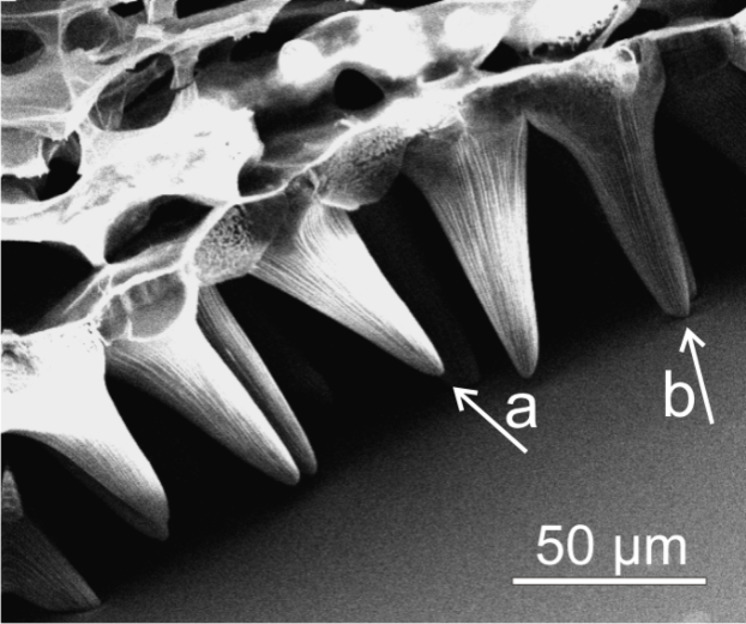
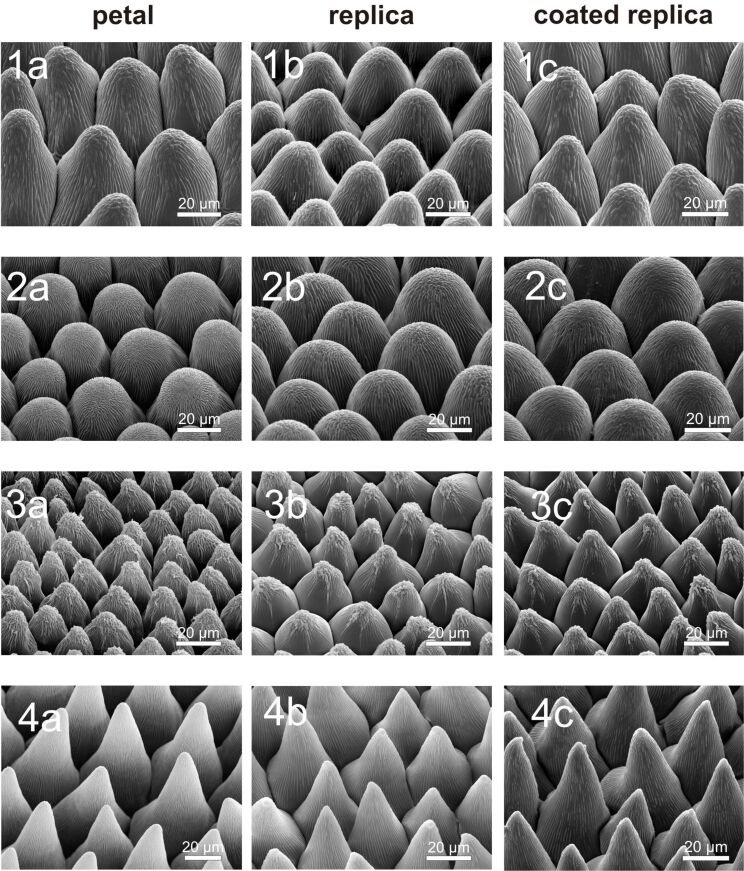
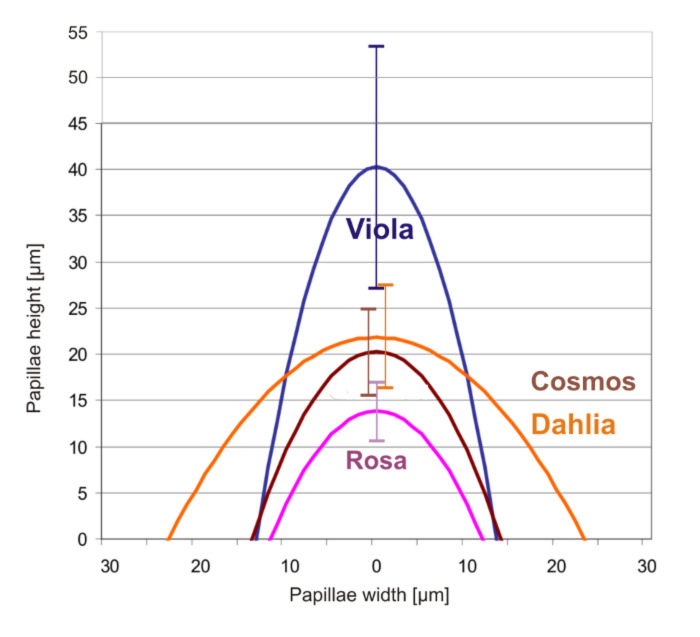
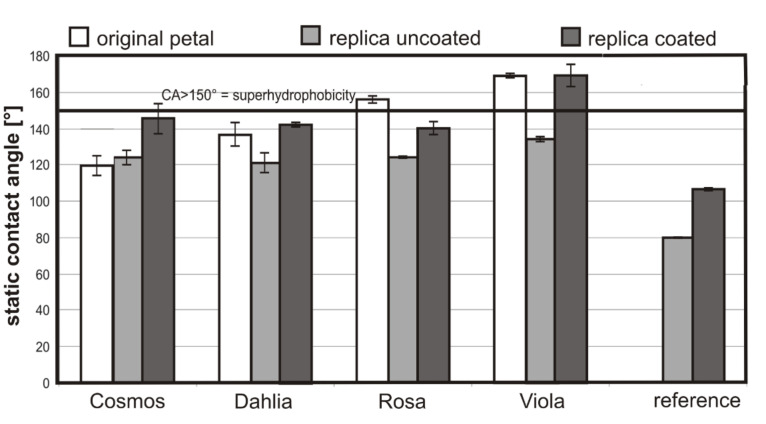
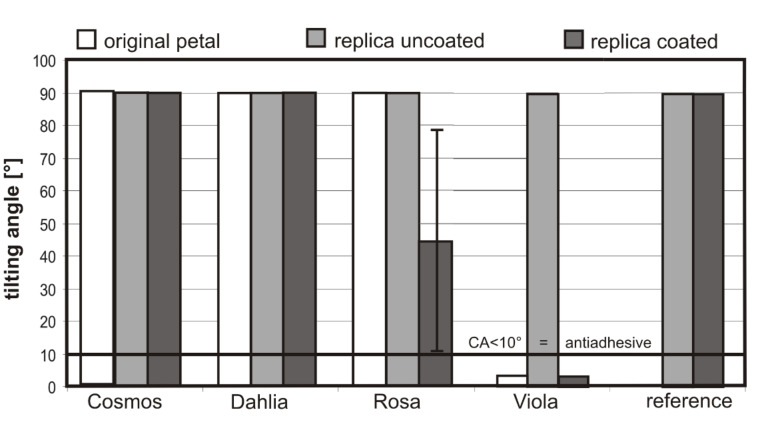
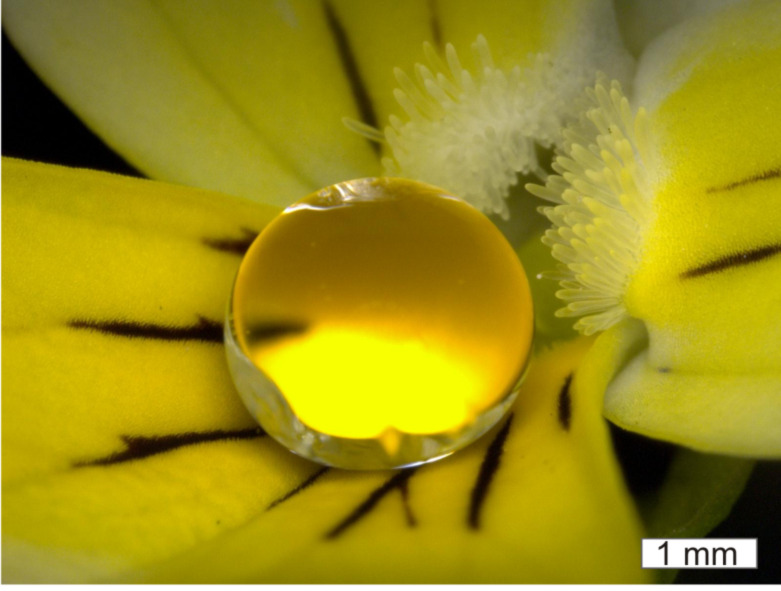
Hierarchically structured flower leaves (petals) of many plants are superhydrophobic, but water droplets do not roll-off when the surfaces are tilted. On such surfaces water droplets are in the "Cassie impregnating wetting state", which is also known as the "petal effect". By analyzing the petal surfaces of different species, we discovered interesting new wetting characteristics of the surface of the flower of the wild pansy (Viola tricolor). This surface is superhydrophobic with a static contact angle of 169° and very low hysteresis, i.e., the petal effect does not exist and water droplets roll-off as from a lotus (Nelumbo nucifera) leaf. However, the surface of the wild pansy petal does not possess the wax crystals of the lotus leaf. Its petals exhibit high cone-shaped cells (average size 40 µm) with a high aspect ratio (2.1) and a very fine cuticular folding (width 260 nm) on top. The applied water droplets are in the Cassie-Baxter wetting state and roll-off at inclination angles below 5°. Fabricated hydrophobic polymer replicas of the wild pansy were prepared in an easy two-step moulding process and possess the same wetting characteristics as the original flowers. In this work we present a technical surface with a new superhydrophobic, low adhesive surface design, which combines the hierarchical structuring of petals with a wetting behavior similar to that of the lotus leaf.

摘要

许多植物的分层结构花(花瓣)具有超疏水性,但当表面倾斜时,水滴不会滚落。在这种表面上,水滴处于“Cassie 浸渍润湿状态”,也称为“花瓣效应”。通过分析不同物种的花瓣表面,我们发现了野生三色堇(Viola tricolor)花表面有趣的新润湿特性。该表面具有超疏水性,静态接触角为 169°,滞后性非常低,即不存在花瓣效应,水滴会像从荷叶(Nelumbo nucifera)上滚落一样。然而,野生三色堇花瓣表面没有荷叶的蜡晶。它的花瓣具有高锥形细胞(平均尺寸为 40 µm),高纵横比(2.1)和非常精细的角质折叠(宽度为 260nm)。施加的水滴处于 Cassie-Baxter 润湿状态,在低于 5°的倾斜角度下滚落。通过简单的两步模塑工艺制备了野生三色堇的疏水聚合物复制品,具有与原始花朵相同的润湿特性。在这项工作中,我们提出了一种具有新的超疏水性、低粘性表面设计的技术表面,它将花瓣的分层结构与类似荷叶的润湿行为结合在一起。
https://cdn.ncbi.nlm.nih.gov/pmc/blobs/2fd9/3148064/e4e578fba768/Beilstein_J_Nanotechnol-02-228-g007.jpg
https://cdn.ncbi.nlm.nih.gov/pmc/blobs/2fd9/3148064/89ecad846b33/Beilstein_J_Nanotechnol-02-228-g002.jpg
https://cdn.ncbi.nlm.nih.gov/pmc/blobs/2fd9/3148064/ce57ad943795/Beilstein_J_Nanotechnol-02-228-g003.jpg
https://cdn.ncbi.nlm.nih.gov/pmc/blobs/2fd9/3148064/f1bdd262f475/Beilstein_J_Nanotechnol-02-228-g004.jpg
https://cdn.ncbi.nlm.nih.gov/pmc/blobs/2fd9/3148064/084bc45c3357/Beilstein_J_Nanotechnol-02-228-g005.jpg
https://cdn.ncbi.nlm.nih.gov/pmc/blobs/2fd9/3148064/6f6f17f7c430/Beilstein_J_Nanotechnol-02-228-g006.jpg
https://cdn.ncbi.nlm.nih.gov/pmc/blobs/2fd9/3148064/e4e578fba768/Beilstein_J_Nanotechnol-02-228-g007.jpg
https://cdn.ncbi.nlm.nih.gov/pmc/blobs/2fd9/3148064/89ecad846b33/Beilstein_J_Nanotechnol-02-228-g002.jpg
https://cdn.ncbi.nlm.nih.gov/pmc/blobs/2fd9/3148064/ce57ad943795/Beilstein_J_Nanotechnol-02-228-g003.jpg
https://cdn.ncbi.nlm.nih.gov/pmc/blobs/2fd9/3148064/f1bdd262f475/Beilstein_J_Nanotechnol-02-228-g004.jpg
https://cdn.ncbi.nlm.nih.gov/pmc/blobs/2fd9/3148064/084bc45c3357/Beilstein_J_Nanotechnol-02-228-g005.jpg
https://cdn.ncbi.nlm.nih.gov/pmc/blobs/2fd9/3148064/6f6f17f7c430/Beilstein_J_Nanotechnol-02-228-g006.jpg
https://cdn.ncbi.nlm.nih.gov/pmc/blobs/2fd9/3148064/e4e578fba768/Beilstein_J_Nanotechnol-02-228-g007.jpg

相似文献

1
Hierarchically structured superhydrophobic flowers with low hysteresis of the wild pansy (Viola tricolor) - new design principles for biomimetic materials.具有低滞后性的野生三色堇(Viola tricolor)分层结构超疏水花——仿生材料的新设计原理。
Beilstein J Nanotechnol. 2011;2:228-36. doi: 10.3762/bjnano.2.27. Epub 2011 May 4.
2
Petal effect: a superhydrophobic state with high adhesive force.花瓣效应:一种具有高附着力的超疏水状态。
Langmuir. 2008 Apr 15;24(8):4114-9. doi: 10.1021/la703821h. Epub 2008 Mar 1.
3
Direct observation of wetting behavior of water drops on single micro-scale roughness surfaces of rose petal effect.水滴滴落在具有玫瑰花瓣效应的单微尺度粗糙表面上的润湿行为的直接观察。
J Colloid Interface Sci. 2021 Dec;603:539-549. doi: 10.1016/j.jcis.2021.06.132. Epub 2021 Jun 25.
4
A theoretical approach to the relationship between wettability and surface microstructures of epidermal cells and structured cuticles of flower petals.表皮细胞的润湿性与表面微观结构及花瓣结构化角质层之间关系的理论研究方法。
Ann Bot. 2015 May;115(6):923-37. doi: 10.1093/aob/mcv024. Epub 2015 Apr 7.
5
Magnetic-Responsive Superhydrophobic Surface of Magnetorheological Elastomers Mimicking from Lotus Leaves to Rose Petals.磁流变弹性体仿荷叶-玫瑰花瓣的磁响应超疏水表面。
Langmuir. 2021 Feb 23;37(7):2312-2321. doi: 10.1021/acs.langmuir.0c03122. Epub 2021 Feb 5.
6
One pot synthesis of opposing 'rose petal' and 'lotus leaf' superhydrophobic materials with zinc oxide nanorods.一锅法合成具有氧化锌纳米棒的对向“玫瑰花瓣”和“荷叶”超疏水材料。
J Colloid Interface Sci. 2014 Feb 1;415:32-8. doi: 10.1016/j.jcis.2013.10.015. Epub 2013 Oct 21.
7
Hierarchical Rose Petal Surfaces Delay the Early-Stage Bacterial Biofilm Growth.分层玫瑰花瓣表面延缓早期细菌生物膜的生长。
Langmuir. 2019 Nov 12;35(45):14670-14680. doi: 10.1021/acs.langmuir.9b02367. Epub 2019 Nov 4.
8
Self-Cleaning of Hydrophobic Rough Surfaces by Coalescence-Induced Wetting Transition.通过聚结诱导的润湿转变实现疏水粗糙表面的自清洁
Langmuir. 2019 Feb 12;35(6):2431-2442. doi: 10.1021/acs.langmuir.8b03664. Epub 2019 Jan 25.
9
Defect by design: Harnessing the "petal effect" for advanced hydrophobic surface applications.设计缺陷:利用“花瓣效应”实现先进的疏水表面应用。
J Colloid Interface Sci. 2024 Nov;673:37-48. doi: 10.1016/j.jcis.2024.05.192. Epub 2024 Jun 8.
10
Dual-Functional Superhydrophobic Textiles with Asymmetric Roll-Down/Pinned States for Water Droplet Transportation and Oil-Water Separation.具有非对称滚落/固着状态的双功能超疏水纺织品用于液滴输运和油水分离。
ACS Appl Mater Interfaces. 2018 Jan 31;10(4):4213-4221. doi: 10.1021/acsami.7b15909. Epub 2018 Jan 19.

引用本文的文献

1
Robust Rain-Repellency and Droplet Bouncing Properties of Fresh and Aged Leaves Up to 6 Months.新鲜和长达6个月的老化叶片的强大防雨性和水滴弹跳特性
ACS Omega. 2024 Jun 19;9(26):28323-28338. doi: 10.1021/acsomega.4c01623. eCollection 2024 Jul 2.
2
Beneficial medicinal effects and material applications of rose.玫瑰的有益药用功效及物质应用。
Heliyon. 2023 Dec 10;10(1):e23530. doi: 10.1016/j.heliyon.2023.e23530. eCollection 2024 Jan 15.
3
Micro-replication platform for studying the structural effect of seed surfaces on wetting properties.

本文引用的文献

1
Progess in superhydrophobic surface development.超疏水表面发展的进展。
Soft Matter. 2008 Jan 22;4(2):224-240. doi: 10.1039/b712575p.
2
Structure-function relationships of the plant cuticle and cuticular waxes - a smart material?植物角质层和角质蜡的结构-功能关系——一种智能材料?
Funct Plant Biol. 2006 Oct;33(10):893-910. doi: 10.1071/FP06139.
3
Soft Lithography.软光刻
用于研究种子表面结构对润湿性影响的微复制平台。
Sci Rep. 2022 Apr 4;12(1):5607. doi: 10.1038/s41598-022-09634-7.
4
Interaction of surfactants with barley leaf surfaces: time-dependent recovery of contact angles is due to foliar uptake of surfactants.表面活性剂与大麦叶面的相互作用:接触角的时间依赖性恢复是由于叶面吸收了表面活性剂。
Planta. 2021 Nov 26;255(1):1. doi: 10.1007/s00425-021-03785-z.
5
An ecological perspective on water shedding from leaves.从生态学角度看叶片的排水现象。
J Exp Bot. 2022 Feb 24;73(4):1176-1189. doi: 10.1093/jxb/erab479.
6
Multiple Wetting-Dewetting States of a Water Droplet on Dual-Scale Hierarchical Structured Surfaces.双尺度分级结构表面上水滴的多重润湿-去湿状态
JACS Au. 2021 Jun 24;1(7):955-966. doi: 10.1021/jacsau.1c00183. eCollection 2021 Jul 26.
7
Tailoring silicon for dew water harvesting panels.为露水收集面板量身定制硅材料。
iScience. 2021 Jul 1;24(7):102814. doi: 10.1016/j.isci.2021.102814. eCollection 2021 Jul 23.
8
Structure, Assembly and Function of Cuticle from Mechanical Perspective with Special Focus on Perianth.从力学角度看表皮的结构、组装和功能,特别关注花被。
Int J Mol Sci. 2021 Apr 16;22(8):4160. doi: 10.3390/ijms22084160.
9
Artificial Intelligence Aided Design of Microtextured Surfaces: Application to Controlling Wettability.人工智能辅助微纹理表面设计:在控制润湿性方面的应用
Nanomaterials (Basel). 2020 Nov 18;10(11):2287. doi: 10.3390/nano10112287.
10
Inner surface of slippery zone: ratchet effect of lunate cells causes anisotropic superhydrophobicity.滑动区的内表面:半月形细胞的棘轮效应导致各向异性超疏水性。
R Soc Open Sci. 2020 Mar 25;7(3):200066. doi: 10.1098/rsos.200066. eCollection 2020 Mar.
Angew Chem Int Ed Engl. 1998 Mar 16;37(5):550-575. doi: 10.1002/(SICI)1521-3773(19980316)37:5<550::AID-ANIE550>3.0.CO;2-G.
4
The salvinia paradox: superhydrophobic surfaces with hydrophilic pins for air retention under water.槐叶萍悖论:具有亲水针状结构的超疏水表面可在水下留住空气。
Adv Mater. 2010 Jun 4;22(21):2325-8. doi: 10.1002/adma.200904411.
5
Fabrication of superhydrophobic surfaces with high and low adhesion inspired from rose petal.仿玫瑰花瓣的高低粘附力超疏水表面的构建。
Langmuir. 2010 Jun 1;26(11):8207-17. doi: 10.1021/la904585j.
6
Bioinspired super-antiwetting interfaces with special liquid-solid adhesion.具有特殊固液附着的仿生超疏液界面。
Acc Chem Res. 2010 Mar 16;43(3):368-77. doi: 10.1021/ar900205g.
7
Droplets on superhydrophobic surfaces: visualization of the contact area by cryo-scanning electron microscopy.超疏水表面上的液滴:通过冷冻扫描电子显微镜观察接触面积。
Langmuir. 2009 Nov 17;25(22):13077-83. doi: 10.1021/la9017536.
8
Contributions of iridescence to floral patterning.虹彩对花卉图案形成的贡献。
Commun Integr Biol. 2009 May;2(3):230-2. doi: 10.4161/cib.2.3.8084.
9
Micro-, nano- and hierarchical structures for superhydrophobicity, self-cleaning and low adhesion.用于超疏水性、自清洁和低附着力的微纳及分级结构
Philos Trans A Math Phys Eng Sci. 2009 May 13;367(1894):1631-72. doi: 10.1098/rsta.2009.0014.
10
Superhydrophobic and superhydrophilic plant surfaces: an inspiration for biomimetic materials.超疏水和超亲水植物表面:对仿生材料的一种启发。
Philos Trans A Math Phys Eng Sci. 2009 Apr 28;367(1893):1487-509. doi: 10.1098/rsta.2009.0022.