Division of Nephrology, Department of Internal Medicine, The Catholic University of Korea College of Medicine, Seoul, Korea.
Diabetes Metab J. 2011 Aug;35(4):327-36. doi: 10.4093/dmj.2011.35.4.327. Epub 2011 Aug 31.
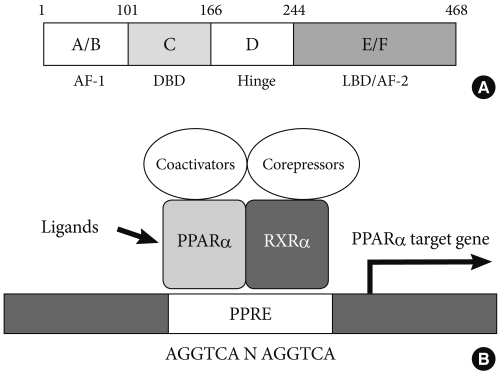
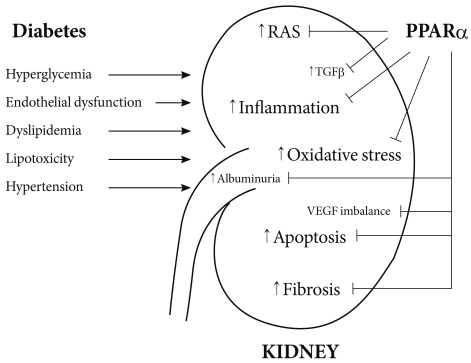
With a developing worldwide epidemic of diabetes mellitus, the renal complications associated with diabetes have become a serious health concern. Primary therapy for treating diabetic nephropathy is a multifactorial process. Peroxisome proliferator-activated receptor alpha (PPARα) agonists have been used primarily in clinical practice for the treatment of dyslipidemia and insulin resistance. Given that PPARα expression and regulation of metabolic pathways are involved in oxidative stress, inflammation, blood pressure regulation, and the renin-angiotensin aldosterone system, PPARα likely influences the development and pathogenesis of diabetic nephropathy via indirect effects on glucose and lipid homeostasis and also by direct action on the kidneys. These findings suggest that PPARα may become an important therapeutic target for treating diabetic renal complications.
随着全球糖尿病流行的发展,与糖尿病相关的肾脏并发症已成为严重的健康问题。治疗糖尿病肾病的主要治疗方法是多因素的过程。过氧化物酶体增殖物激活受体α(PPARα)激动剂主要用于临床实践中的血脂异常和胰岛素抵抗的治疗。鉴于 PPARα的表达和代谢途径的调节与氧化应激、炎症、血压调节和肾素-血管紧张素-醛固酮系统有关,PPARα可能通过对葡萄糖和脂质稳态的间接影响以及对肾脏的直接作用影响糖尿病肾病的发展和发病机制。这些发现表明,PPARα可能成为治疗糖尿病肾脏并发症的重要治疗靶点。