Department of Pharmaceutics, Changhai Hospital, Second Military Medical University, Shanghai, People’s Republic of China.
Int J Nanomedicine. 2011;6:1747-56. doi: 10.2147/IJN.S23747. Epub 2011 Aug 19.
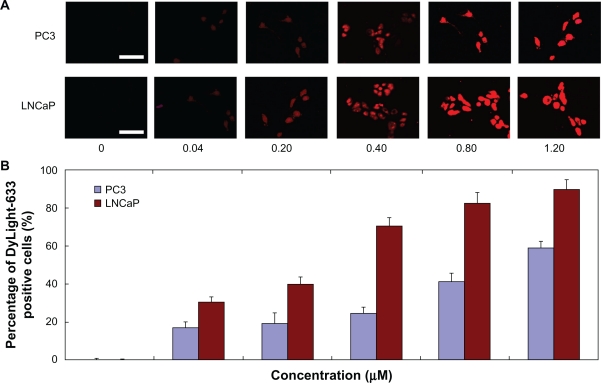
miR-15a and miR-16-1 have been identified as tumor suppressor genes in prostate cancer, but their safe and effective delivery to target cells is key to the successful use of this therapeutic strategy. RNA aptamer A10 has been used as a ligand, targeting prostate cancer cells that express prostate-specific membrane antigen (PSMA). Compared with A10, the binding of the second-generation RNA aptamer, A10-3.2, to PSMA is more efficient.
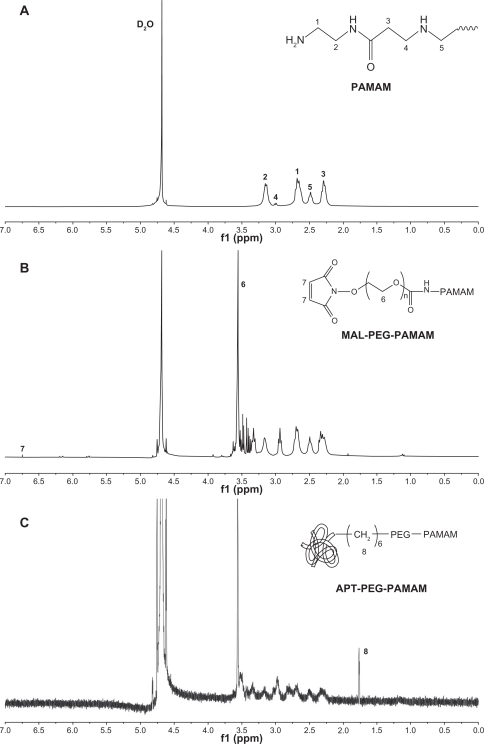
A10-3.2 was investigated as a PSMA-targeting ligand in the design of a polyamidoamine (PAMAM)-based microRNA (miR-15a and miR-16-1) vector to prostate cancer cells. Using polyethyleneglycol (PEG) as a spacer, PAMAM was conjugated to aptamer (PAMAM-PEG-APT) and used as a vehicle for miRNA target delivery.
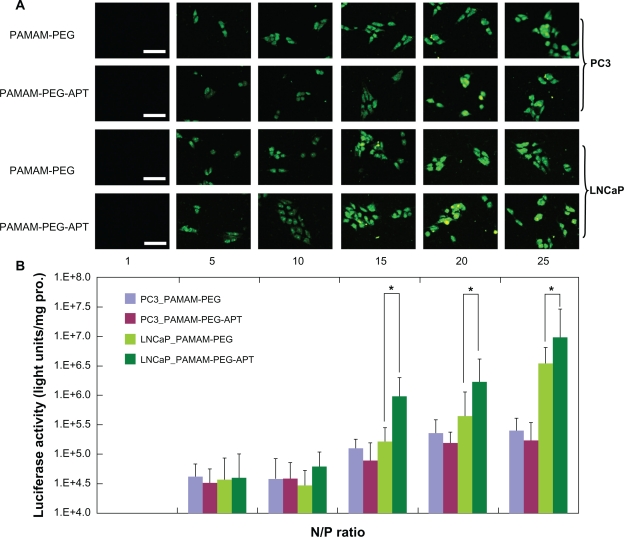
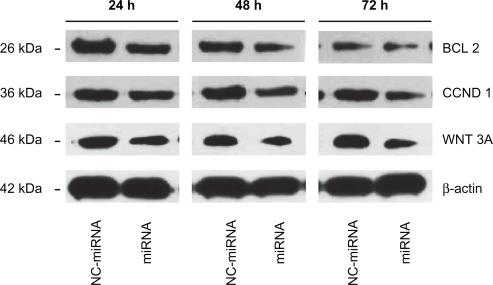
Luciferase assays of pGL-3 expression against PC3 (PSMA(-)) and LNCaP (PSMA(+)) cells demonstrated that the transfection efficiency of the synthesized DNA/PAMAM-PEG-APT complex was higher than that of the DNA/PAMAM-PEG complex. In addition, cell viability assays of LNCaP (PSMA(+)) cells showed that, with a N/P ratio of 15:1, the IC(50) value of miRNA/PAMAM-PEG-APT was approximately 4.7-fold lower than that of miRNA/PAMAM-PEG.
This PSMA-targeted system may prove useful in widening the therapeutic window and allow for selective killing of prostate cancer cells.
miR-15a 和 miR-16-1 已被鉴定为前列腺癌中的肿瘤抑制基因,但将它们安全有效地递送到靶细胞是成功应用这种治疗策略的关键。RNA 适体 A10 已被用作配体,靶向表达前列腺特异性膜抗原(PSMA)的前列腺癌细胞。与 A10 相比,第二代 RNA 适体 A10-3.2 与 PSMA 的结合效率更高。
在设计基于聚酰胺胺(PAMAM)的 microRNA(miR-15a 和 miR-16-1)载体靶向前列腺癌细胞时,研究了 A10-3.2 作为 PSMA 靶向配体。使用聚乙二醇(PEG)作为间隔物,将 PAMAM 与适体(PAMAM-PEG-APT)缀合,并用作 miRNA 靶标递送的载体。
针对 PC3(PSMA(-))和 LNCaP(PSMA(+))细胞的 pGL-3 表达荧光素酶测定表明,合成的 DNA/PAMAM-PEG-APT 复合物的转染效率高于 DNA/PAMAM-PEG 复合物。此外,LNCaP(PSMA(+))细胞的细胞活力测定表明,在 N/P 比为 15:1 时,miRNA/PAMAM-PEG-APT 的 IC50 值比 miRNA/PAMAM-PEG 低约 4.7 倍。
这种 PSMA 靶向系统可能有助于拓宽治疗窗口,并允许选择性杀死前列腺癌细胞。