Laboratory of Radiation Biology, Research Reactor Institute, Kyoto University, Osaka, Japan.
PLoS One. 2011;6(9):e25319. doi: 10.1371/journal.pone.0025319. Epub 2011 Sep 29.
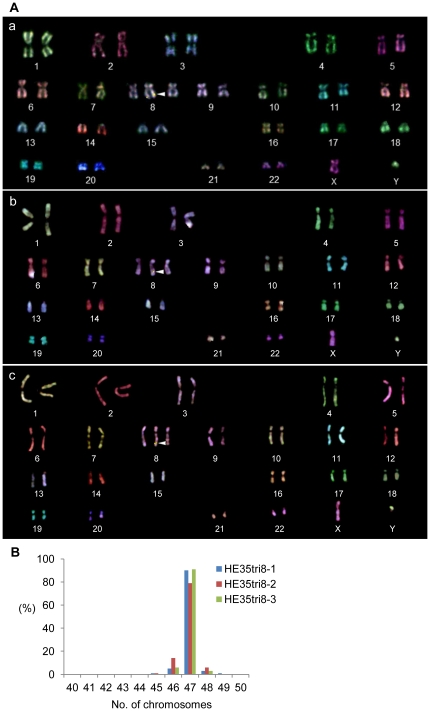
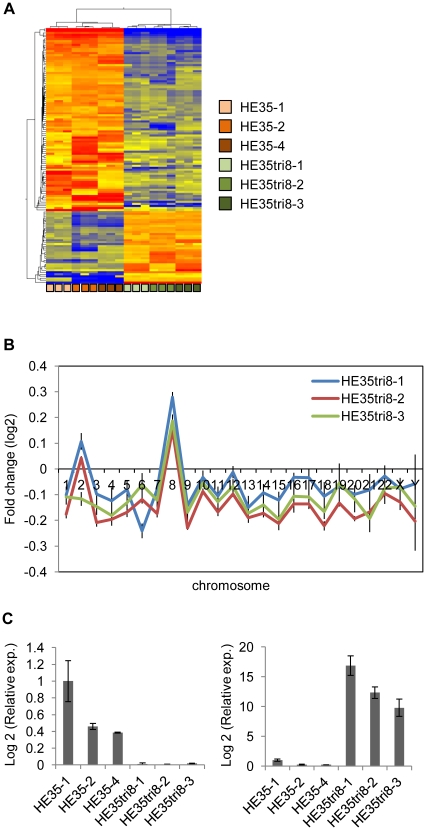
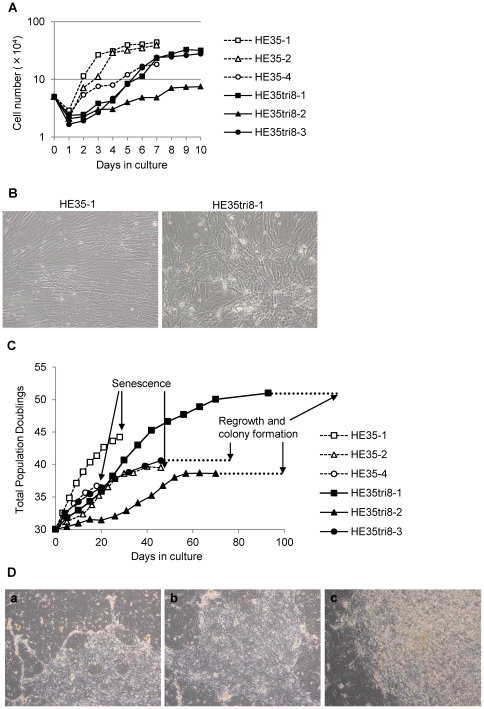
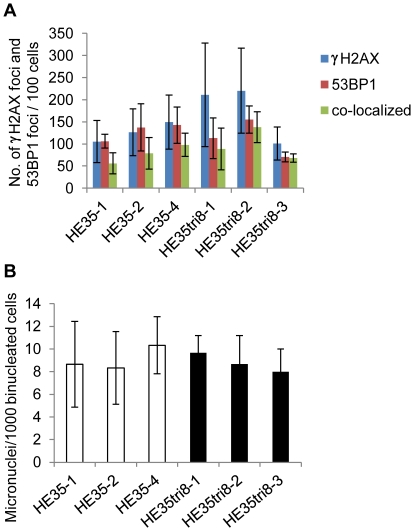
A change in chromosome number, known as aneuploidy, is a common characteristic of cancer. Aneuploidy disrupts gene expression in human cancer cells and immortalized human epithelial cells, but not in normal human cells. However, the relationship between aneuploidy and cancer remains unclear. To study the effects of aneuploidy in normal human cells, we generated artificial cells of human primary fibroblast having three chromosome 8 (trisomy 8 cells) by using microcell-mediated chromosome transfer technique. In addition to decreased proliferation, the trisomy 8 cells lost contact inhibition and reproliferated after exhibiting senescence-like characteristics that are typical of transformed cells. Furthermore, the trisomy 8 cells exhibited chromosome instability, and the overall gene expression profile based on microarray analyses was significantly different from that of diploid human primary fibroblasts. Our data suggest that aneuploidy, even a single chromosome gain, can be introduced into normal human cells and causes, in some cases, a partial cancer phenotype due to a disruption in overall gene expression.
染色体数量的变化,称为非整倍体,是癌症的一个常见特征。非整倍体扰乱了人类癌细胞和永生化的人上皮细胞中的基因表达,但在正常人类细胞中不会。然而,非整倍体和癌症之间的关系仍不清楚。为了研究非整倍体在正常人类细胞中的作用,我们使用微细胞介导的染色体转移技术,生成了具有三条 8 号染色体的人类原代成纤维细胞的人工细胞(三体 8 细胞)。除了增殖减少外,三体 8 细胞在表现出类似于转化细胞的衰老特征后失去接触抑制并重新增殖。此外,三体 8 细胞表现出染色体不稳定性,并且基于微阵列分析的整体基因表达谱与二倍体人原代成纤维细胞显著不同。我们的数据表明,非整倍体,即使是单个染色体增益,也可以被引入正常人类细胞,并由于整体基因表达的破坏,在某些情况下导致部分癌症表型。