McGovern Institute for Brain Research, Department of Brain and Cognitive Science, Massachusetts Institute of Technology, Cambridge, Massachusetts, United States of America.
PLoS One. 2011;6(9):e25461. doi: 10.1371/journal.pone.0025461. Epub 2011 Sep 28.
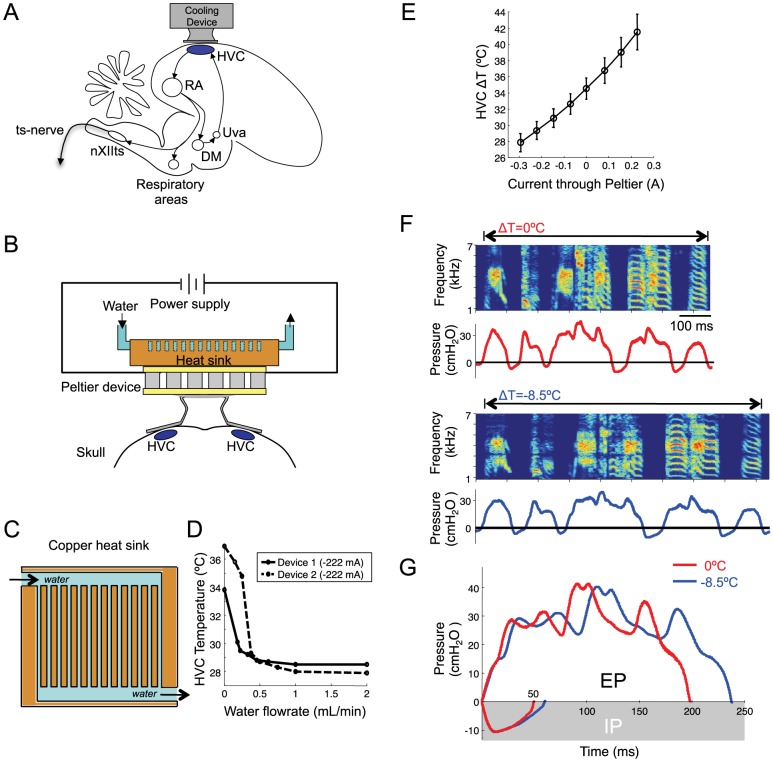
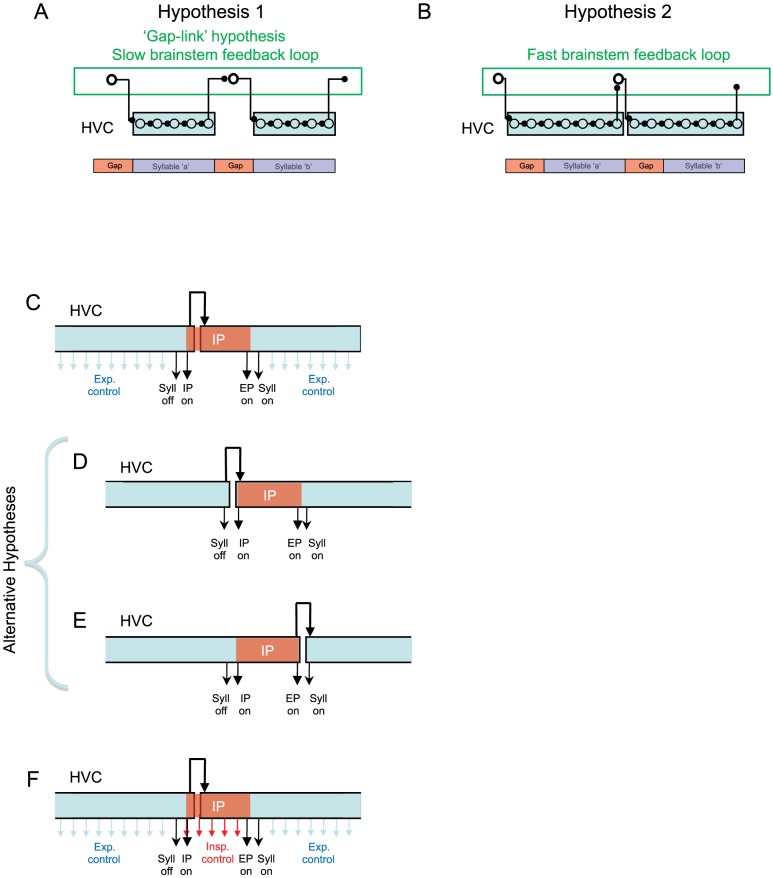
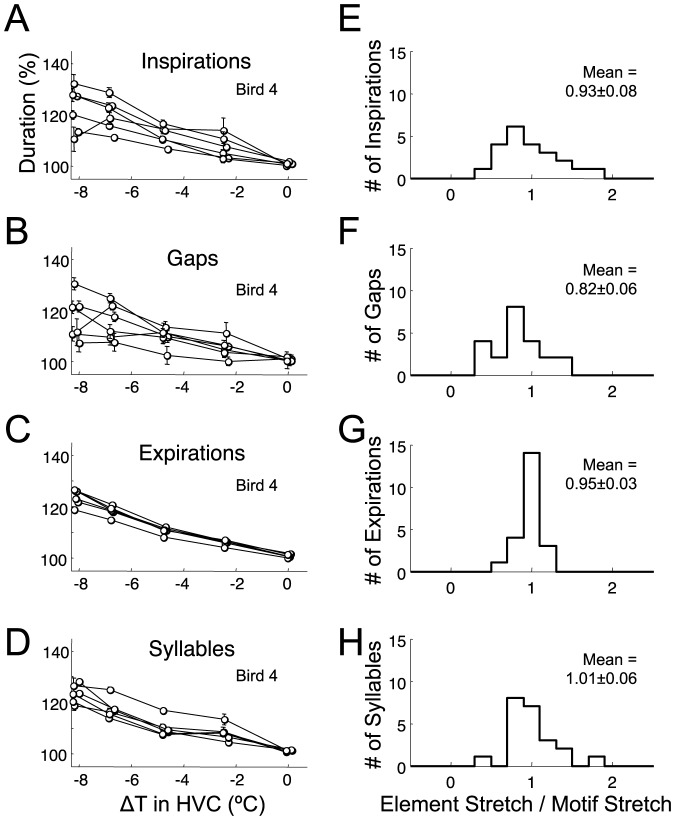
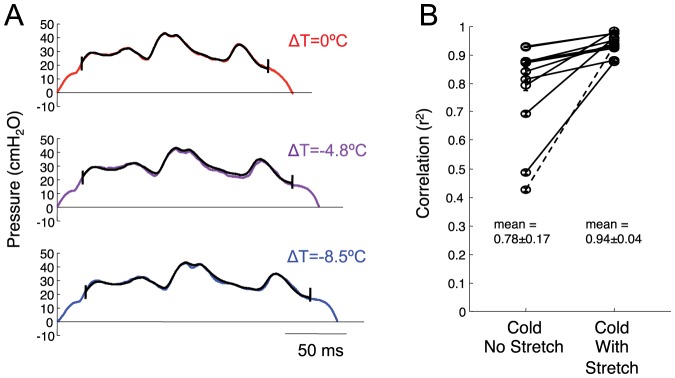
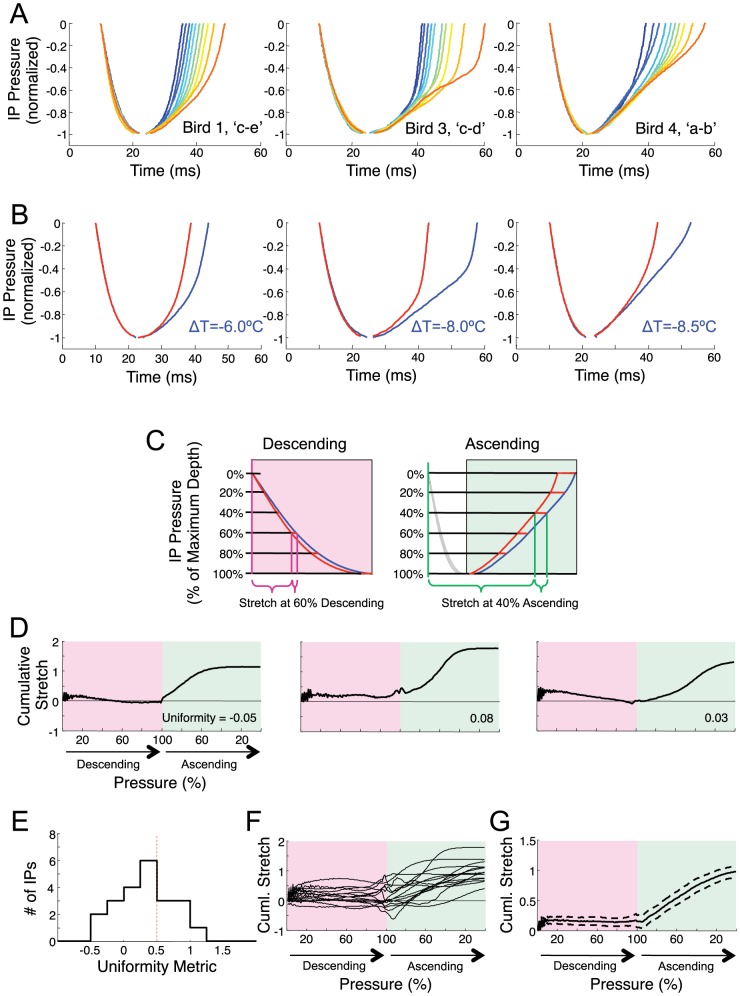
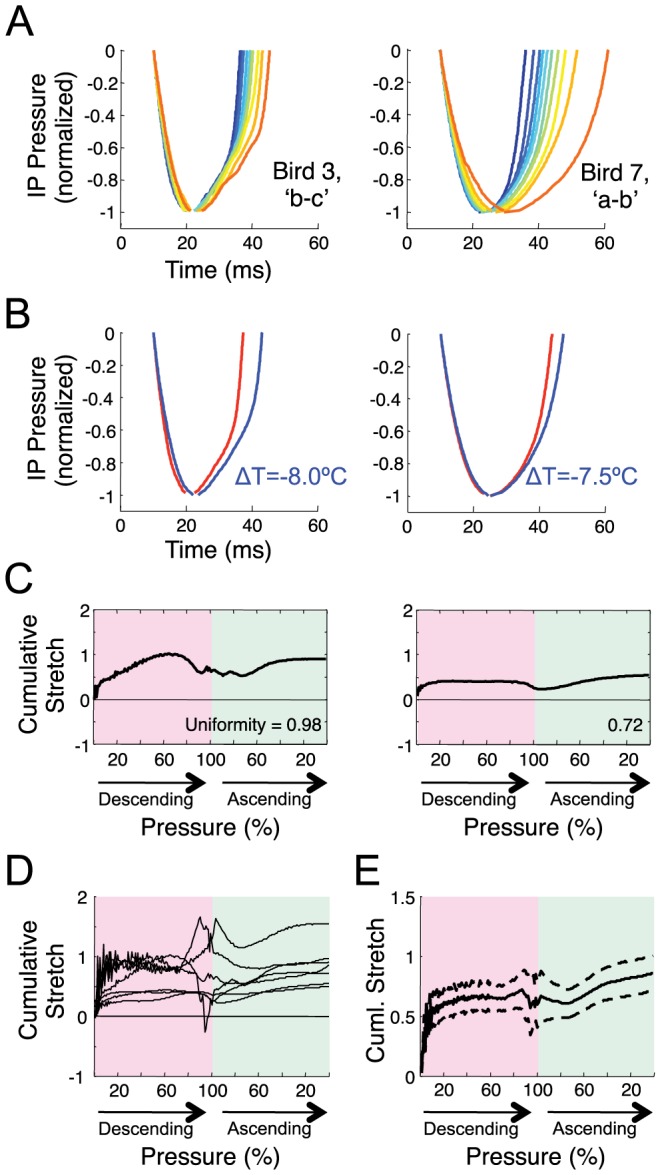
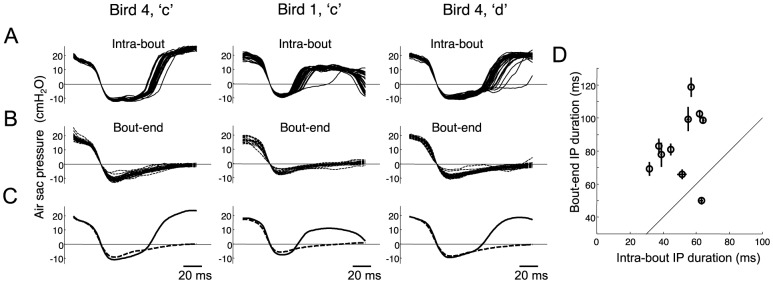
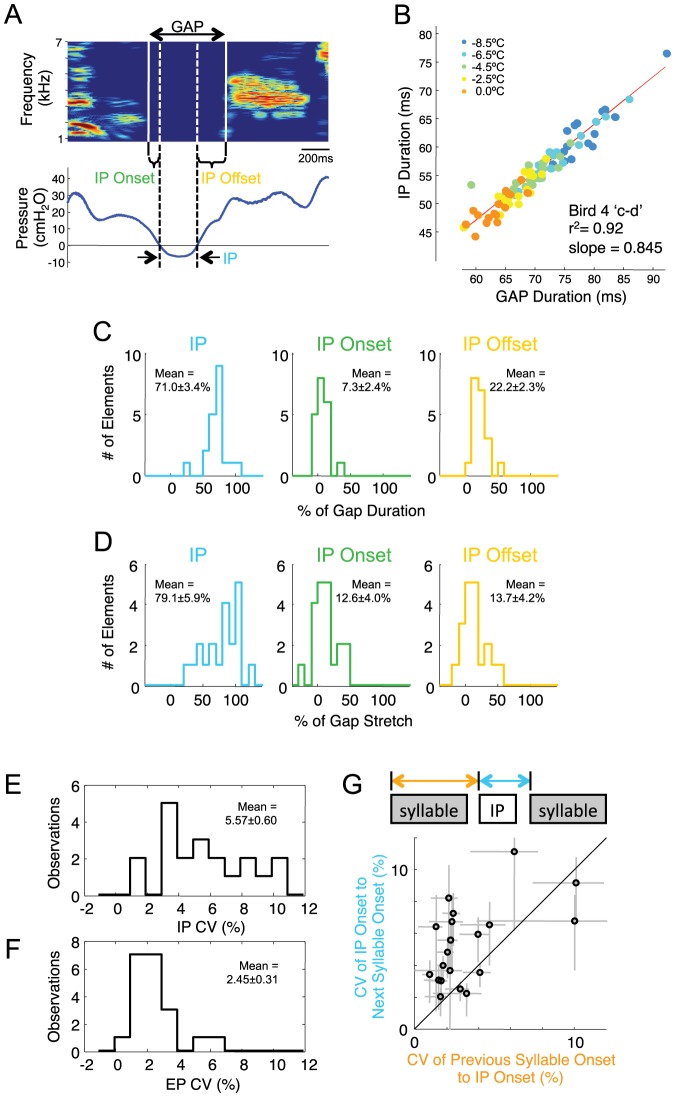
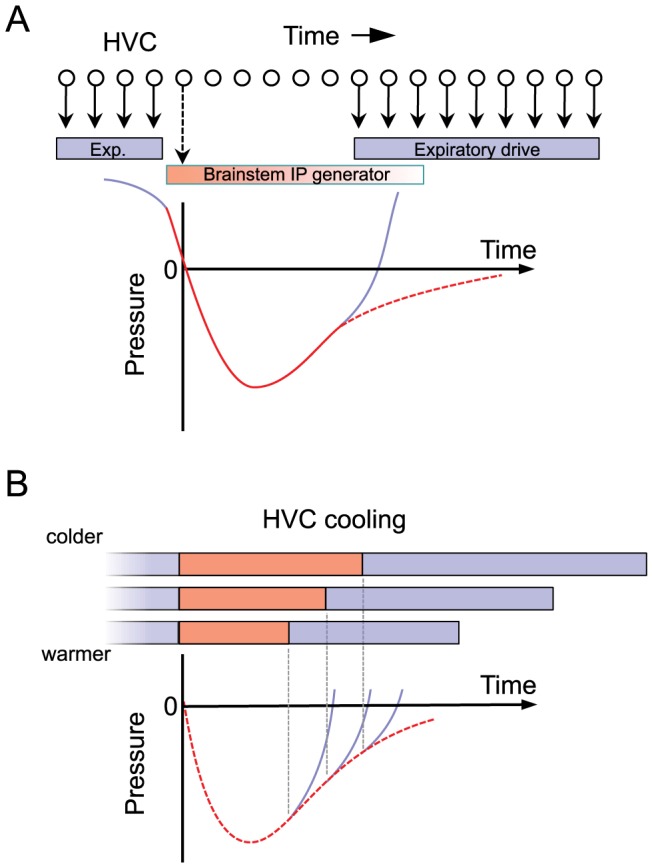
Learned motor behaviors require descending forebrain control to be coordinated with midbrain and brainstem motor systems. In songbirds, such as the zebra finch, regular breathing is controlled by brainstem centers, but when the adult songbird begins to sing, its breathing becomes tightly coordinated with forebrain-controlled vocalizations. The periods of silence (gaps) between song syllables are typically filled with brief breaths, allowing the bird to sing uninterrupted for many seconds. While substantial progress has been made in identifying the brain areas and pathways involved in vocal and respiratory control, it is not understood how respiratory and vocal control is coordinated by forebrain motor circuits. Here we combine a recently developed technique for localized brain cooling, together with recordings of thoracic air sac pressure, to examine the role of cortical premotor nucleus HVC (proper name) in respiratory-vocal coordination. We found that HVC cooling, in addition to slowing all song timescales as previously reported, also increased the duration of expiratory pulses (EPs) and inspiratory pulses (IPs). Expiratory pulses, like song syllables, were stretched uniformly by HVC cooling, but most inspiratory pulses exhibited non-uniform stretch of pressure waveform such that the majority of stretch occurred late in the IP. Indeed, some IPs appeared to change duration by the earlier or later truncation of an underlying inspiratory event. These findings are consistent with the idea that during singing the temporal structure of EPs is under the direct control of forebrain circuits, whereas that of IPs can be strongly influenced by circuits downstream of HVC, likely in the brainstem. An analysis of the temporal jitter of respiratory and vocal structure suggests that IPs may be initiated by HVC at the end of each syllable and terminated by HVC immediately before the onset of the next syllable.
习得的运动行为需要来自大脑皮层的下行控制,以协调中脑和脑干运动系统。在鸣禽(如斑马雀)中,有规律的呼吸由脑干中心控制,但当成年鸣禽开始唱歌时,它的呼吸会与大脑皮层控制的发声紧密协调。在音节之间的沉默(间隙)期间,通常会进行短暂的呼吸,使鸟类能够不间断地连续唱很多秒。虽然在确定参与发声和呼吸控制的大脑区域和通路方面已经取得了相当大的进展,但尚不清楚大脑皮层运动回路如何协调呼吸和发声控制。在这里,我们结合最近开发的局部脑冷却技术,以及对胸气囊压力的记录,来研究皮质前运动核 HVC(学名)在呼吸-发声协调中的作用。我们发现,除了如先前报道的那样使所有歌曲时间尺度变慢之外,HVC 冷却还增加了呼气脉冲(EP)和吸气脉冲(IP)的持续时间。与音节一样,呼气脉冲被 HVC 冷却均匀拉伸,但大多数吸气脉冲的压力波形表现出非均匀拉伸,使得大部分拉伸发生在 IP 的后期。实际上,一些 IP 似乎通过在 IP 早期或晚期截断基础吸气事件来改变持续时间。这些发现与以下观点一致,即在唱歌期间,EP 的时间结构受到大脑皮层回路的直接控制,而 IP 的时间结构可能受到 HVC 下游回路的强烈影响,可能位于脑干中。对呼吸和发声结构的时间抖动的分析表明,每个音节结束时,HVC 可能会发起 IP,而下一个音节开始前,HVC 可能会立即终止 IP。