Music and Neuroimaging Laboratory, Department of Neurology, Beth Israel Deaconess Medical Center, Harvard Medical School, Boston, Massachusetts, United States of America.
PLoS One. 2011;6(9):e25505. doi: 10.1371/journal.pone.0025505. Epub 2011 Sep 29.
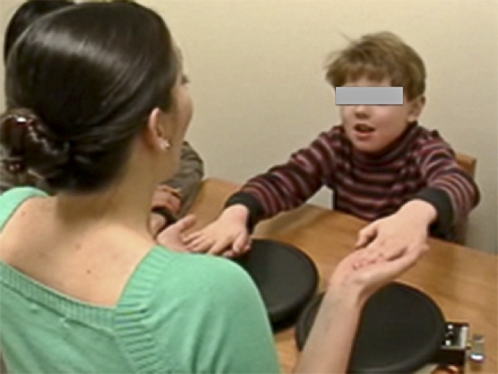
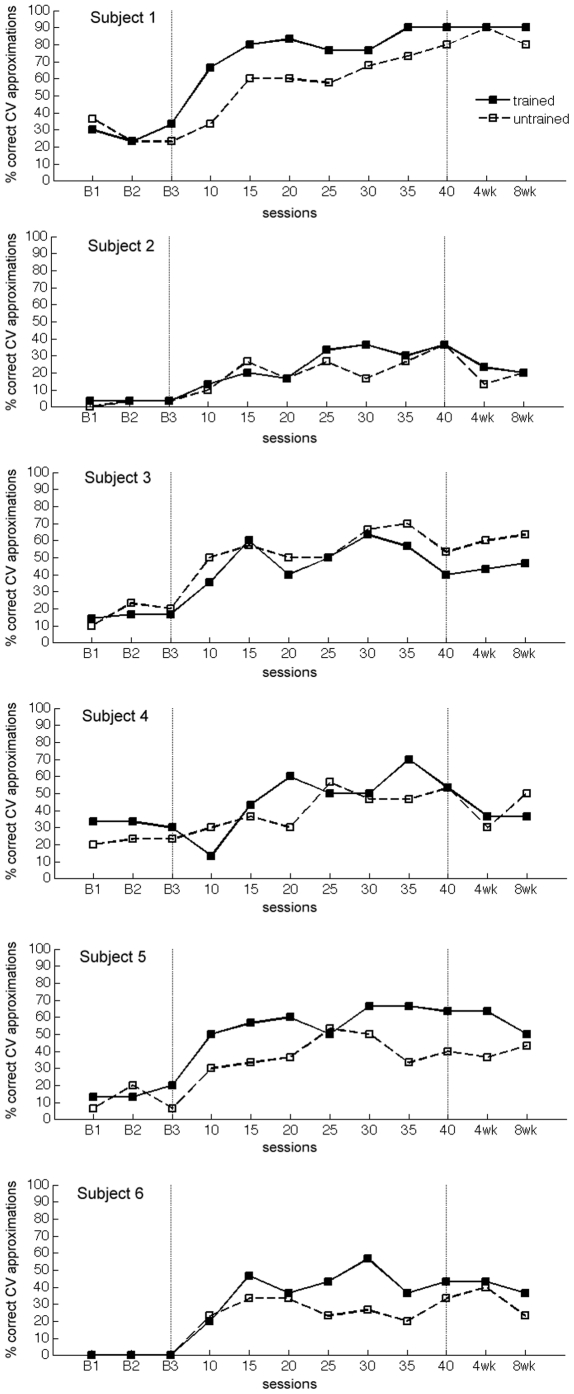
Although up to 25% of children with autism are non-verbal, there are very few interventions that can reliably produce significant improvements in speech output. Recently, a novel intervention called Auditory-Motor Mapping Training (AMMT) has been developed, which aims to promote speech production directly by training the association between sounds and articulatory actions using intonation and bimanual motor activities. AMMT capitalizes on the inherent musical strengths of children with autism, and offers activities that they intrinsically enjoy. It also engages and potentially stimulates a network of brain regions that may be dysfunctional in autism. Here, we report an initial efficacy study to provide 'proof of concept' for AMMT. Six non-verbal children with autism participated. Prior to treatment, the children had no intelligible words. They each received 40 individual sessions of AMMT 5 times per week, over an 8-week period. Probe assessments were conducted periodically during baseline, therapy, and follow-up sessions. After therapy, all children showed significant improvements in their ability to articulate words and phrases, with generalization to items that were not practiced during therapy sessions. Because these children had no or minimal vocal output prior to treatment, the acquisition of speech sounds and word approximations through AMMT represents a critical step in expressive language development in children with autism.
尽管多达 25%的自闭症儿童是不具备语言能力的,但很少有干预措施能够可靠地显著改善他们的言语输出。最近,一种名为听觉-运动映射训练(Auditory-Motor Mapping Training,AMMT)的新干预方法已经被开发出来,该方法旨在通过使用语调以及双手运动活动来训练声音与发音动作之间的联系,从而直接促进言语产生。AMMT 利用了自闭症儿童天生的音乐优势,提供了他们本能喜欢的活动。它还参与并可能刺激了可能在自闭症中功能失调的大脑区域网络。在这里,我们报告了一项初步的疗效研究,为 AMMT 提供了“概念验证”。6 名不具备语言能力的自闭症儿童参与了该研究。在治疗前,这些儿童没有任何可理解的单词。他们每个人都接受了 40 次个体 AMMT 治疗,每周 5 次,持续 8 周。在基线、治疗和随访期间定期进行探针评估。治疗后,所有儿童在发音单词和短语的能力上都有显著提高,并且能够将在治疗过程中未练习过的项目进行泛化。由于这些儿童在治疗前没有或只有很少的发声,因此通过 AMMT 获得语音和单词近似音代表了自闭症儿童表达性语言发展的一个关键步骤。