Department of Biomedical Sciences, Cedars-Sinai Medical Center, Los Angeles, California, United States.
Mol Pharm. 2011 Dec 5;8(6):2233-43. doi: 10.1021/mp200094w. Epub 2011 Oct 25.
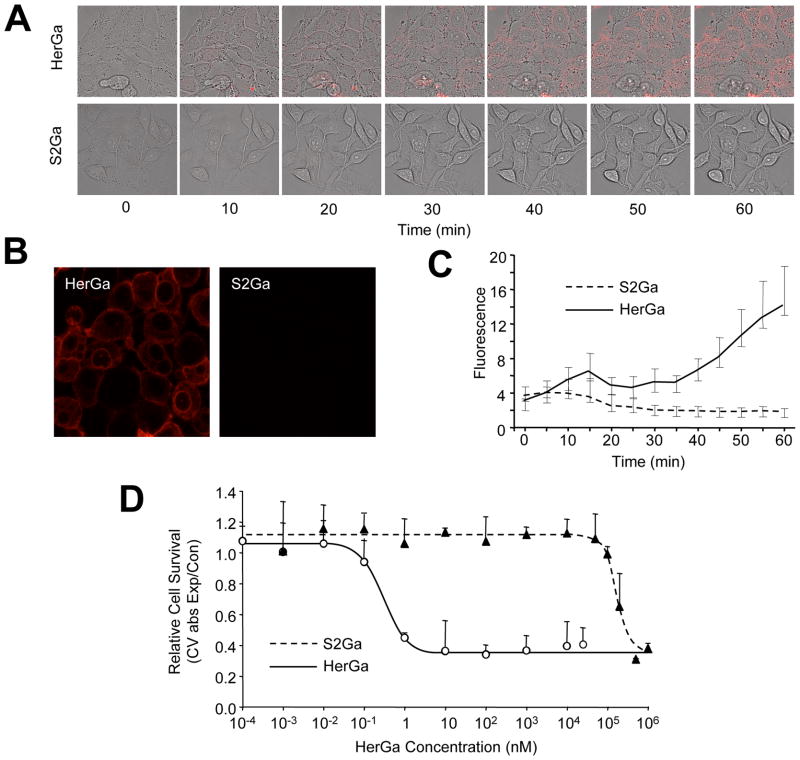
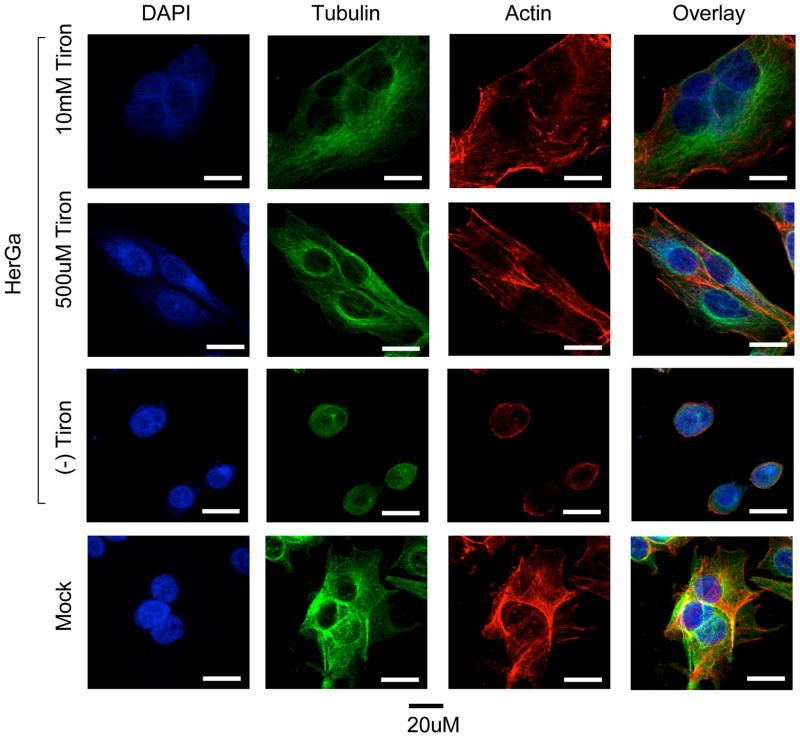
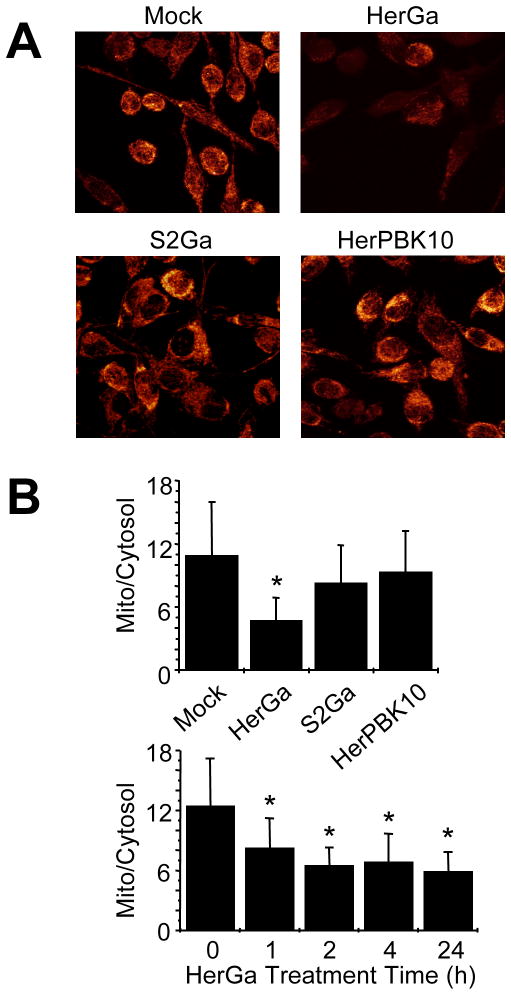
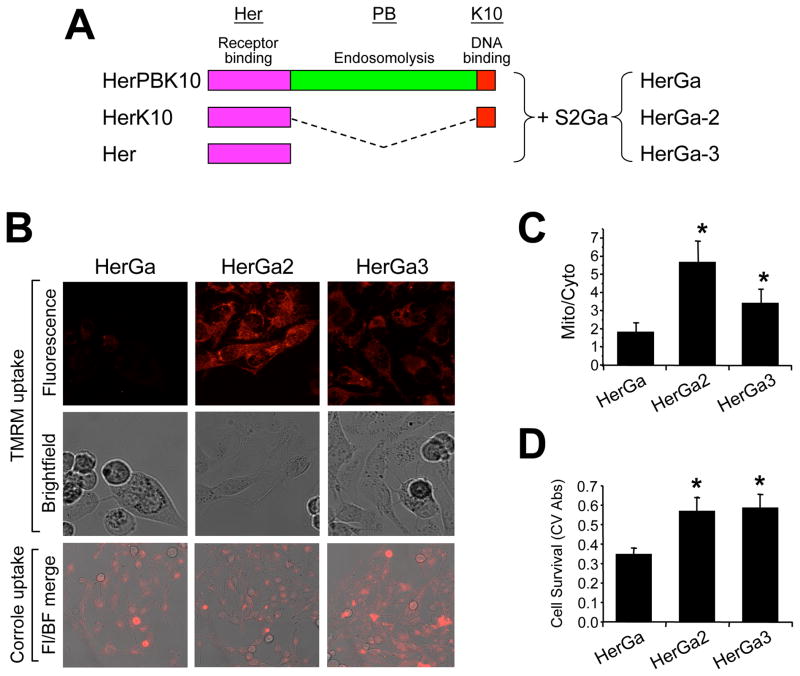
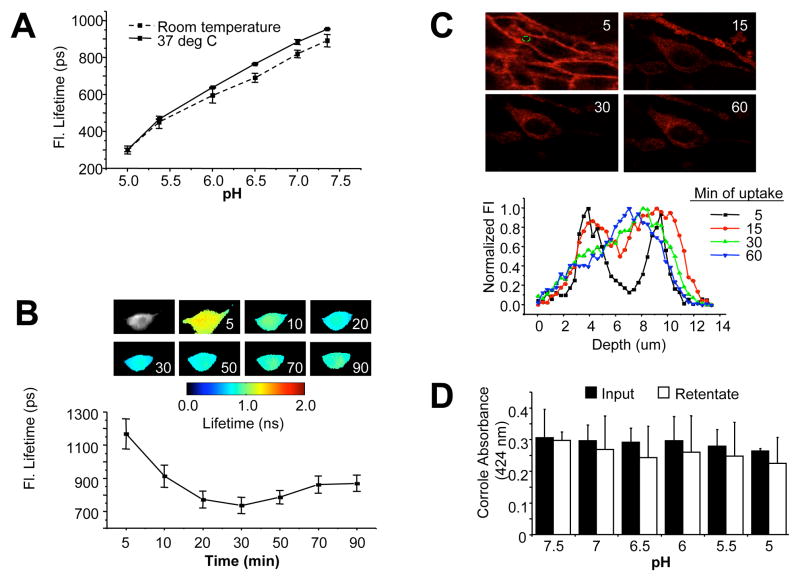
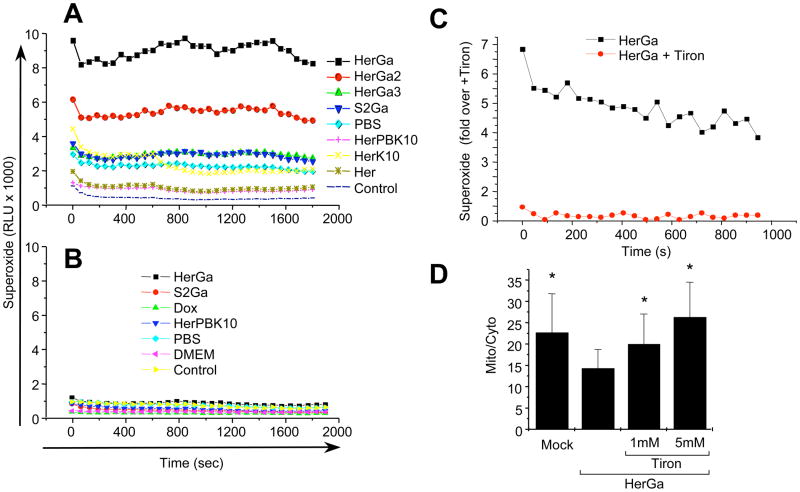
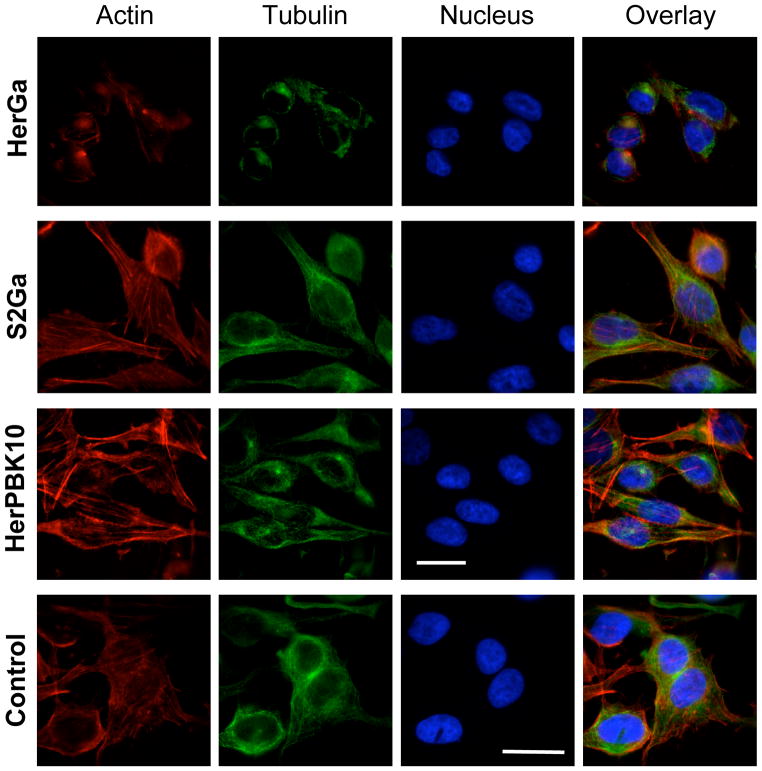
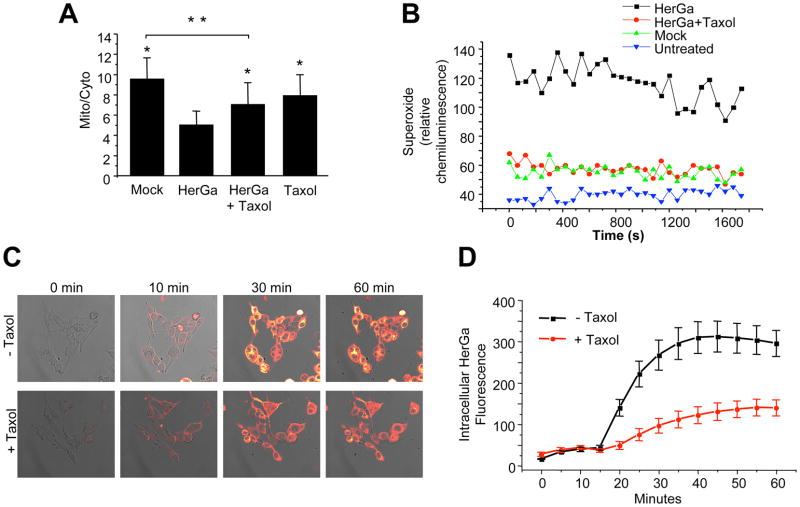
HerGa is a self-assembled tumor-targeted particle that bears both tumor detection and elimination activities in a single, two-component complex (Agadjanian et al. Proc. Natl. Acad. Sci. U.S.A.2009, 106, 6105-6110). Given its multifunctionality, HerGa (composed of the fluorescent cytotoxic corrole macrocycle, S2Ga, noncovalently bound to the tumor-targeted cell penetration protein, HerPBK10) has the potential for high clinical impact, but its mechanism of cell killing remains to be elucidated, and hence is the focus of the present study. Here we show that HerGa requires HerPBK10-mediated cell entry to induce toxicity. HerGa (but not HerPBK10 or S2Ga alone) induced mitochondrial membrane potential disruption and superoxide elevation, which were both prevented by endosomolytic-deficient mutants, indicating that cytosolic exposure is necessary for corrole-mediated cell death. A novel property discovered here is that corrole fluorescence lifetime acts as a pH indicator, broadcasting the intracellular microenvironmental pH during uptake in live cells. This feature in combination with two-photon imaging shows that HerGa undergoes early endosome escape during uptake, avoiding compartments of pH < 6.5. Cytoskeletal disruption accompanied HerGa-mediated mitochondrial changes whereas oxygen scavenging reduced both events. Paclitaxel treatment indicated that HerGa uptake requires dynamic microtubules. Unexpectedly, low pH is insufficient to induce release of the corrole from HerPBK10. Altogether, these studies identify a mechanistic pathway in which early endosomal escape enables HerGa-induced superoxide generation leading to cytoskeletal and mitochondrial damage, thus triggering downstream cell death.
HerGa 是一种自组装的肿瘤靶向颗粒,在单个双组分复合物中同时具有肿瘤检测和消除活性(Agadjanian 等人,Proc. Natl. Acad. Sci. U.S.A.2009, 106, 6105-6110)。鉴于其多功能性,HerGa(由荧光细胞毒性卟啉大环、非共价结合到肿瘤靶向细胞穿透蛋白 HerPBK10 的 S2Ga 组成)具有很高的临床影响潜力,但它的细胞杀伤机制仍有待阐明,因此是本研究的重点。在这里,我们表明 HerGa 需要 HerPBK10 介导的细胞内进入才能诱导毒性。HerGa(但不是单独的 HerPBK10 或 S2Ga)诱导线粒体膜电位破坏和超氧化物升高,这两种作用都被溶酶体缺陷突变体所阻止,表明细胞质暴露是卟啉介导细胞死亡所必需的。这里发现的一个新特性是卟啉荧光寿命可以作为 pH 指示剂,在活细胞摄取过程中广播细胞内微环境 pH。这一特性与双光子成像相结合表明,HerGa 在摄取过程中会早期逃离内体,避免 pH < 6.5 的隔室。细胞骨架破坏伴随着 HerGa 介导的线粒体变化,而氧清除减少了这两种事件。紫杉醇处理表明 HerGa 的摄取需要动态微管。出乎意料的是,低 pH 不足以诱导卟啉从 HerPBK10 中释放。总之,这些研究确定了一种机制途径,其中早期内体逃逸使 HerGa 诱导的超氧化物生成,导致细胞骨架和线粒体损伤,从而触发下游细胞死亡。