Fungal Systems Biology, Laboratory of Systems and Synthetic Biology, Wageningen University, Dreijenplein 10, 6703 HB, Wageningen, The Netherlands.
Microb Cell Fact. 2011 Oct 8;10:78. doi: 10.1186/1475-2859-10-78.
Many filamentous fungal genomes contain complex groups of multicopper oxidase (MCO) coding genes that makes them a good source for new laccases with potential biotechnological interest. A bioinformatics analysis of the Aspergillus niger ATCC 1015 genome resulted in the identification of thirteen MCO genes. Ten of them were cloned and homologously overexpressed.
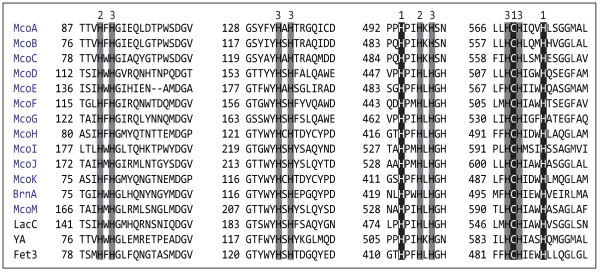
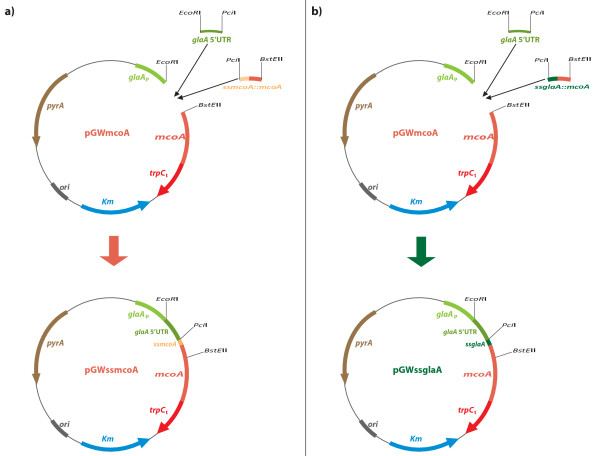
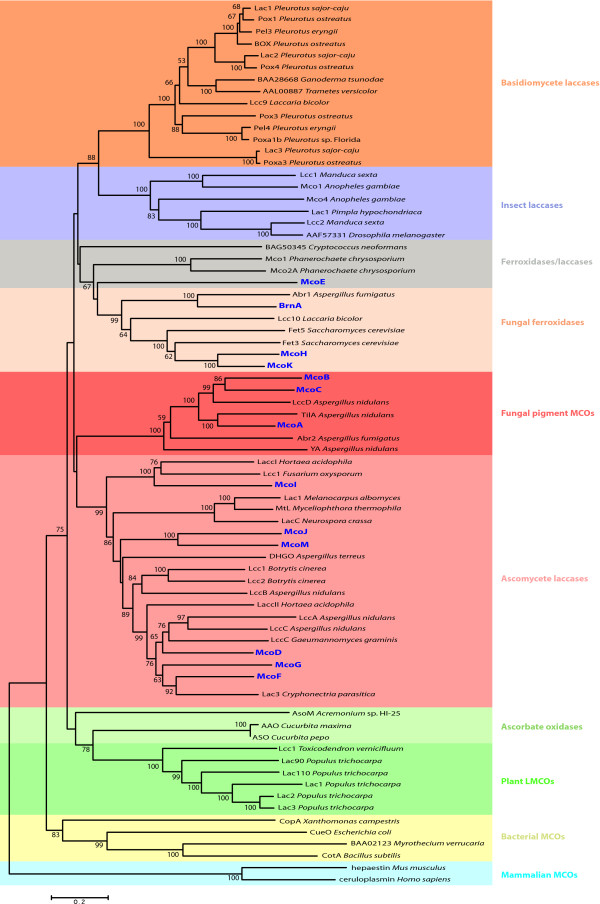
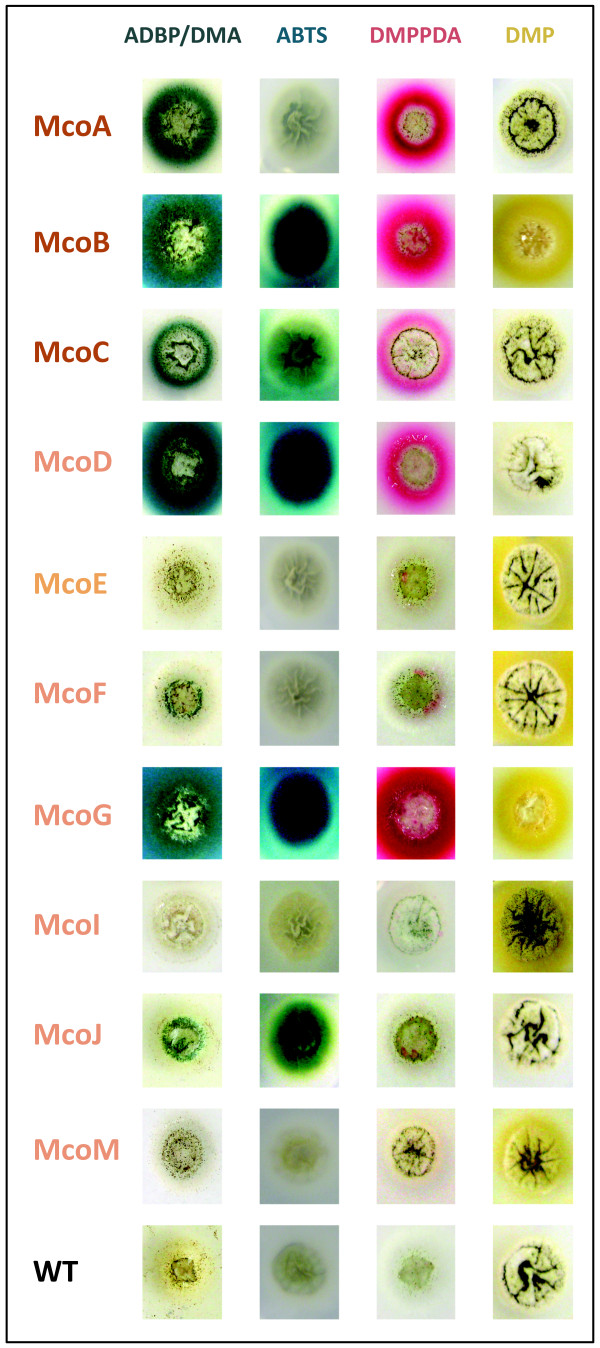
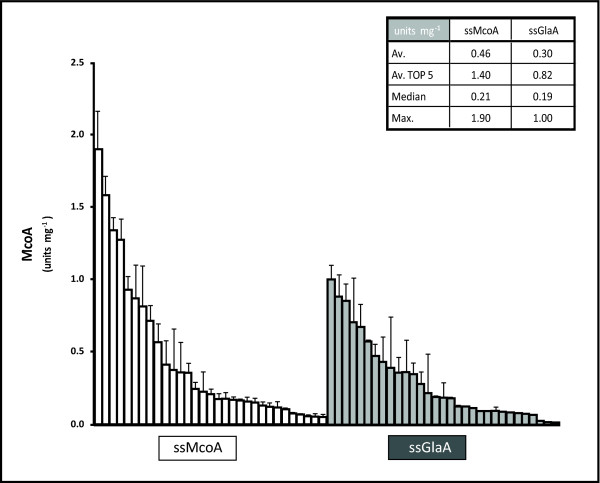
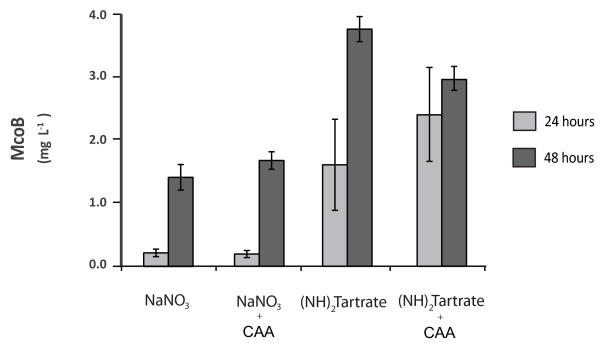
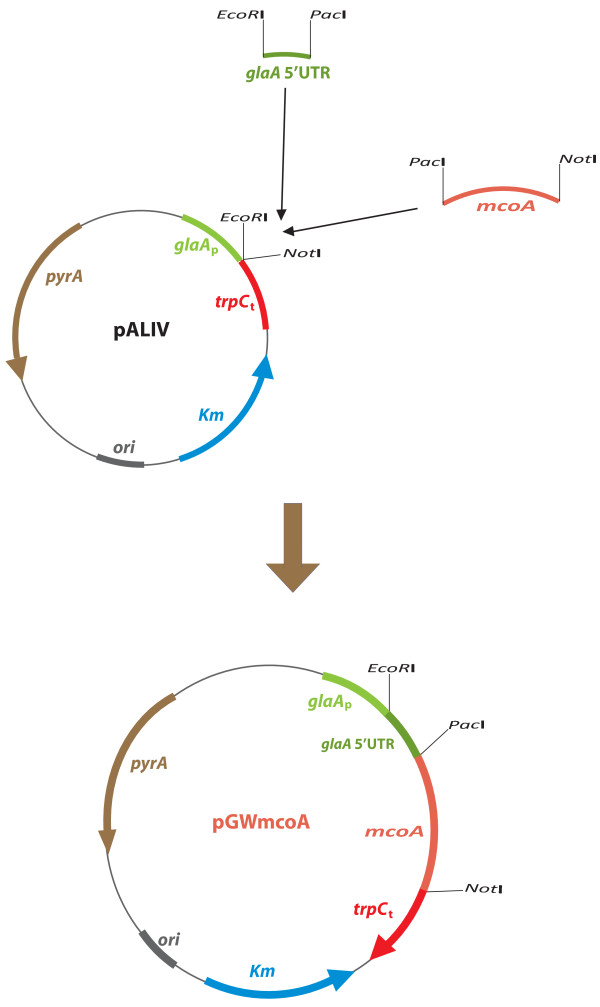
A bioinformatic analysis of the A. niger ATCC 1015 genome revealed the presence of 13 MCO genes belonging to three different subfamilies on the basis of their phylogenetic relationships: ascomycete laccases, fungal pigment MCOs and fungal ferroxidases. According to in silico amino acid sequence analysis, the putative genes encoding for functional extracellular laccases (mcoA, mcoB, mcoC, mcoD, mcoE, mcoF, mcoG, mcoI, mcoJ and mcoM) were placed under the control of the glaA promoter and overexpressed in A. niger N593. Enzyme activity plate assays with several common laccase substrates showed that all genes are actually expressed and code for active MCOs. Interestingly, expressed enzymes show different substrate specificities. In addition, optimization of fungal pigment MCOs extracellular production was investigated. The performance of the widely used glucoamylase signal sequence (ssGlaA) in McoA secretion was studied. Results obtained suggest that ssGlaA do not yield higher levels of secreted McoA when compared to its native secretion signal. Also, McoB synthesis was investigated using different nitrogen sources in minimal medium liquid cultures. Higher yields of extracellular McoB were achieved with (NH4)2 tartrate.
Aspergillus niger is a good source of new laccases. The different substrate specificity observed in plate assays makes them interesting to be purified and biochemically compared. The homologous signal sequence of McoA has been shown to be a good choice for its extracellular overexpression. From the nitrogen sources tested (NH4)2 tartrate has been found to be the most appropriate for McoB production in A. niger.
许多丝状真菌基因组包含复杂的多铜氧化酶 (MCO) 编码基因群,这使它们成为具有潜在生物技术兴趣的新漆酶的良好来源。对黑曲霉 ATCC 1015 基因组的生物信息学分析导致鉴定了 13 个 MCO 基因。其中 10 个被克隆并同源过表达。
黑曲霉 ATCC 1015 基因组的生物信息学分析表明,根据系统发育关系,该基因组存在 13 个 MCO 基因,属于三个不同的亚家族:子囊菌漆酶、真菌色素 MCO 和真菌亚铁氧化酶。根据计算机氨基酸序列分析,推测编码功能性细胞外漆酶的基因(mcoA、mcoB、mcoC、mcoD、mcoE、mcoF、mcoG、mcoI、mcoJ 和 mcoM)受 glaA 启动子的控制,并在黑曲霉 N593 中过表达。用几种常见漆酶底物进行酶活性平板测定表明,所有基因实际上都表达并编码活性 MCO。有趣的是,表达的酶显示出不同的底物特异性。此外,还研究了真菌色素 MCO 细胞外生产的优化。研究了广泛使用的葡糖淀粉酶信号序列 (ssGlaA) 在 McoA 分泌中的性能。结果表明,与天然分泌信号相比,ssGlaA 并不能产生更高水平的分泌 McoA。还研究了在最小培养基液体培养中使用不同氮源时 McoB 的合成。在用 (NH4)2 酒石酸盐时,实现了更高水平的细胞外 McoB 产量。
黑曲霉是新漆酶的良好来源。平板测定中观察到的不同底物特异性使它们具有纯化和生化比较的兴趣。已经证明 McoA 的同源信号序列是其细胞外过表达的不错选择。在所测试的氮源中,(NH4)2 酒石酸盐已被发现是黑曲霉中生产 McoB 的最适宜氮源。