Department of Plant Sciences, University of California Davis, USA.
BMC Genomics. 2011 Oct 7;12:492. doi: 10.1186/1471-2164-12-492.
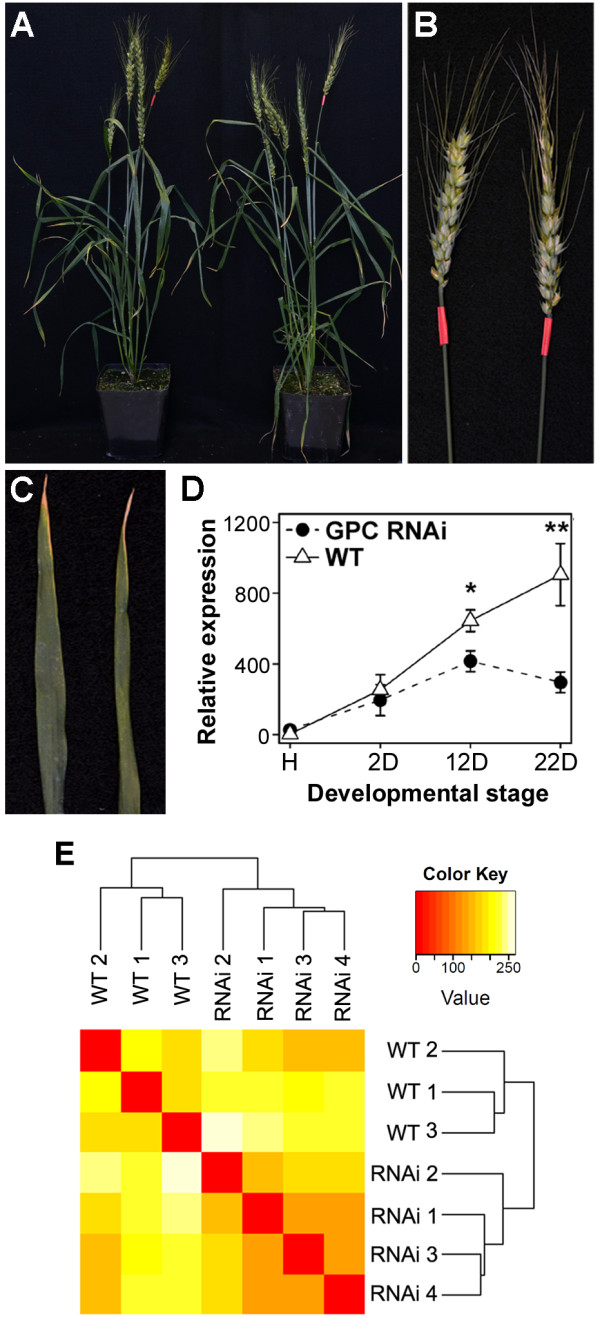
Increasing the nutrient concentration of wheat grains is important to ameliorate nutritional deficiencies in many parts of the world. Proteins and nutrients in the wheat grain are largely derived from the remobilization of degraded leaf molecules during monocarpic senescence. The down-regulation of the NAC transcription factor Grain Protein Content (GPC) in transgenic wheat plants delays senescence (>3 weeks) and reduces the concentration of protein, Zn and Fe in the grain (>30%), linking senescence and nutrient remobilization.Based on the early and rapid up-regulation of GPC in wheat flag leaves after anthesis, we hypothesized that this transcription factor is an early regulator of monocarpic senescence. To test this hypothesis, we used high-throughput mRNA-seq technologies to characterize the effect of the GPC down-regulation on the wheat flag-leaf transcriptome 12 days after anthesis. At this early stage of senescence GPC transcript levels are significantly lower in transgenic GPC-RNAi plants than in the wild type, but there are still no visible phenotypic differences between genotypes.
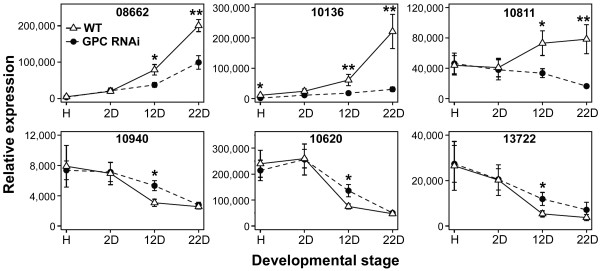
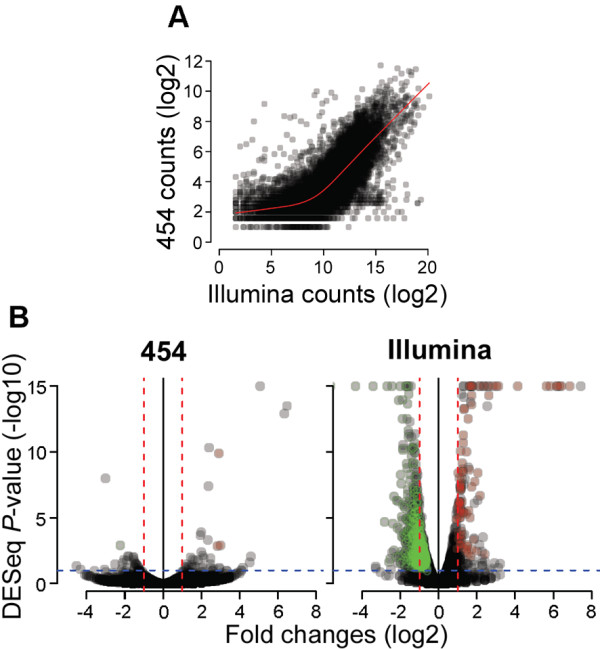
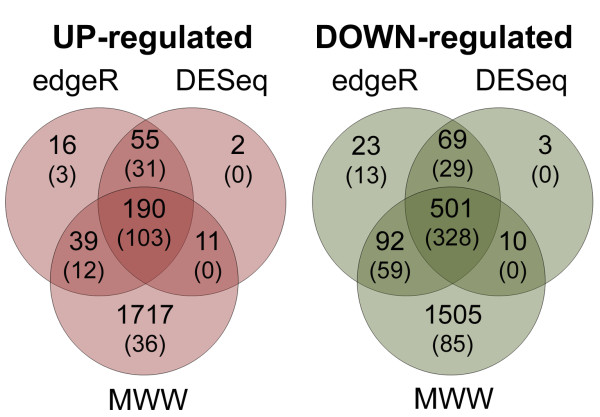
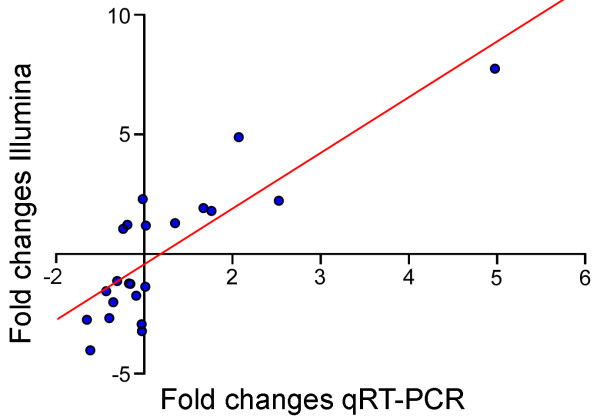
We generated 1.4 million 454 reads from early senescing flag leaves (average ~350 nt) and assembled 1.2 million into 30,497 contigs that were used as a reference to map 145 million Illumina reads from three wild type and four GPC-RNAi plants. Following normalization and statistical testing, we identified a set of 691 genes differentially regulated by GPC (431 ≥ 2-fold change). Transcript level ratios between transgenic and wild type plants showed a high correlation (R = 0.83) between qRT-PCR and Illumina results, providing independent validation of the mRNA-seq approach. A set of differentially expressed genes were analyzed across an early senescence time-course.
Monocarpic senescence is an active process characterized by large-scale changes in gene expression which begins considerably before the appearance of visual symptoms of senescence. The mRNA-seq approach used here was able to detect small differences in transcript levels during the early stages of senescence. This resulted in an extensive list of GPC-regulated genes, which includes transporters, hormone regulated genes, and transcription factors. These GPC-regulated genes, particularly those up-regulated during senescence, provide valuable entry points to dissect the early stages of monocarpic senescence and nutrient remobilization in wheat.
提高小麦籽粒的营养浓度对于改善世界许多地区的营养缺乏至关重要。小麦籽粒中的蛋白质和营养物质主要来源于单株衰老过程中降解叶片分子的再利用。在转基因小麦植株中下调 NAC 转录因子 Grain Protein Content(GPC)会延迟衰老(>3 周)并降低籽粒中蛋白质、Zn 和 Fe 的浓度(>30%),将衰老和营养再利用联系起来。基于 GPC 在小麦旗叶授粉后早期和快速上调,我们假设该转录因子是单株衰老的早期调节剂。为了验证这一假设,我们使用高通量 mRNA-seq 技术来描述 GPC 下调对授粉后 12 天的小麦旗叶转录组的影响。在衰老的早期阶段,转基因 GPC-RNAi 植株中的 GPC 转录物水平明显低于野生型,但基因型之间仍没有明显的表型差异。
我们从早期衰老的旗叶中生成了 140 万个 454 读取(平均约 350 nt),并将 120 万个组装成 30497 个 contigs,作为参考,将来自三个野生型和四个 GPC-RNAi 植物的 1.45 亿个 Illumina 读取映射到参考中。在归一化和统计测试后,我们确定了一组由 GPC 调节的 691 个差异表达基因(431 个≥2 倍变化)。转基因和野生型植物之间的转录物水平比值在 qRT-PCR 和 Illumina 结果之间表现出高度相关性(R = 0.83),为 mRNA-seq 方法提供了独立验证。对一组差异表达基因进行了跨早期衰老时间过程的分析。
单株衰老过程是一个活跃的过程,其特征是在衰老出现明显症状之前就开始发生大规模的基因表达变化。这里使用的 mRNA-seq 方法能够在衰老的早期阶段检测到转录水平的微小差异。这导致了大量的 GPC 调节基因列表,包括转运蛋白、激素调节基因和转录因子。这些 GPC 调节基因,特别是在衰老过程中上调的基因,为剖析小麦单株衰老和营养再利用的早期阶段提供了有价值的切入点。