Department of Pharmaceutical Sciences, University of Colorado, Denver, CO, USA.
Respir Res. 2011 Oct 7;12(1):133. doi: 10.1186/1465-9921-12-133.
Smoking tobacco is a leading cause of chronic obstructive pulmonary disease (COPD), but although the majority of COPD cases can be directly related to smoking, only a quarter of smokers actually develop the disease. A potential reason for the disparity between smoking and COPD may involve an individual's ability to mount a protective adaptive response to cigarette smoke (CS). Glutathione (GSH) is highly concentrated in the lung epithelial lining fluid (ELF) and protects against many inhaled oxidants. The changes in GSH that occur with CS are not well investigated; therefore the GSH adaptive response that occurs with a commonly utilized CS exposure was examined in mice.
Mice were exposed to CS for 5 h after which they were rested in filtered air for up to 16 h. GSH levels were measured in the ELF, bronchoalveolar lavage cells, plasma, and tissues. GSH synthesis was assessed by measuring γ-glutamylcysteine ligase (GCL) activity in lung and liver tissue.
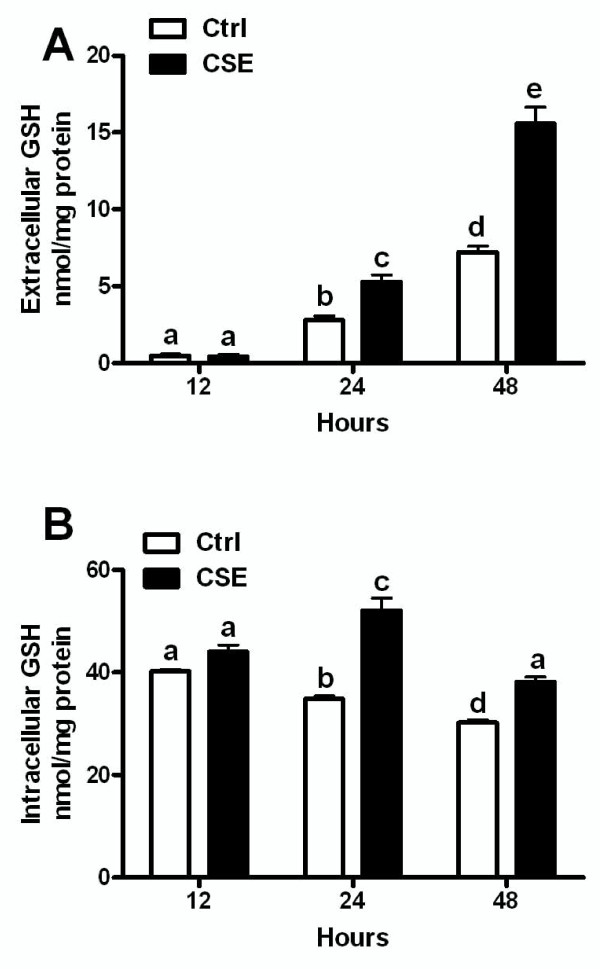
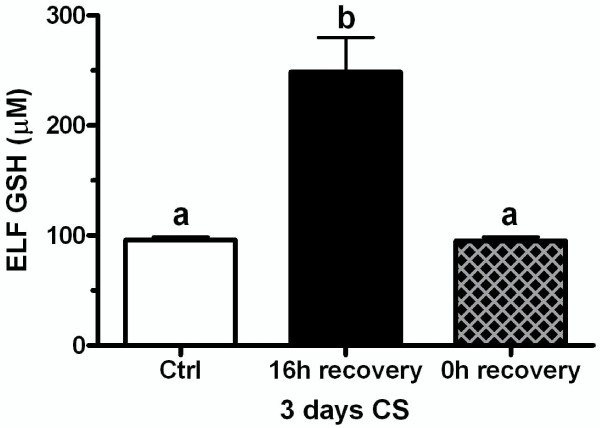
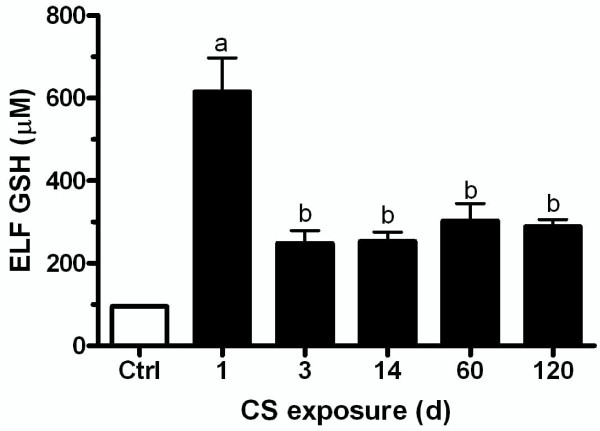
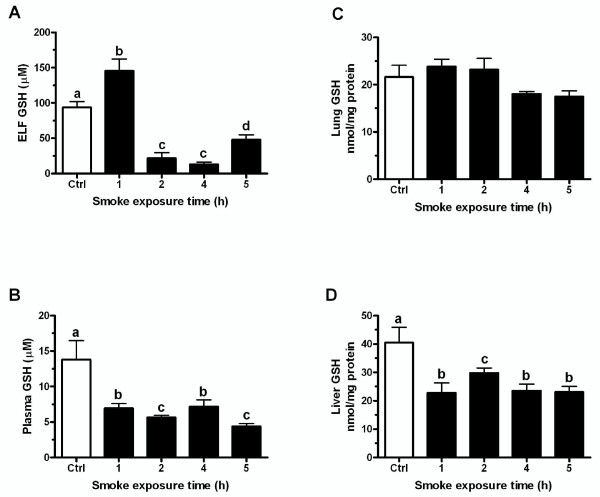
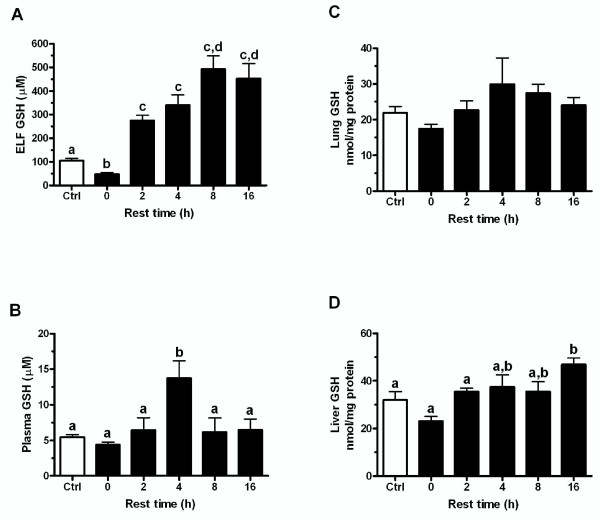
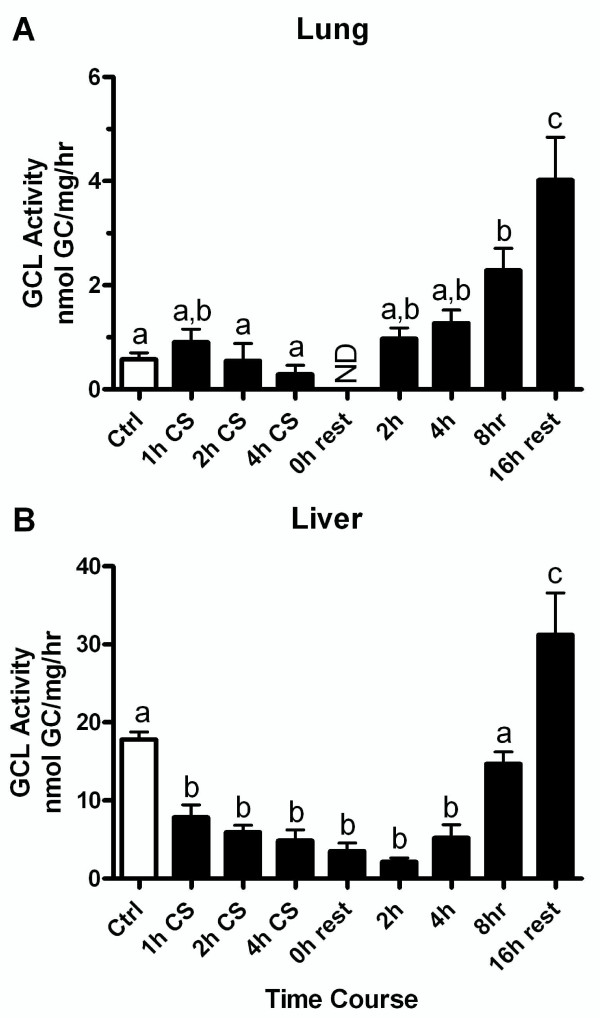
GSH levels in the ELF, plasma, and liver were decreased by as much as 50% during the 5 h CS exposure period whereas the lung GSH levels were unchanged. Next, the time course of rebound in GSH levels after the CS exposure was examined. CS exposure initially decreased ELF GSH levels by 50% but within 2 h GSH levels rebound to about 3 times basal levels and peaked at 16 h with a 6-fold increase and over repeat exposures were maintained at a 3-fold elevation for up to 2 months. Similar changes were observed in tissue GCL activity which is the rate limiting step in GSH synthesis. Furthermore, elevation in ELF GSH levels was not arbitrary since the CS induced GSH adaptive response after a 3d exposure period prevented GSH levels from dropping below basal levels.
CS exposures evoke a powerful GSH adaptive response in the lung and systemically. These data suggests there may be a sensor that sets the ELF GSH adaptive response to prevent GSH levels from dipping below basal levels. Factors that disrupt GSH adaptive responses may contribute to the pathophysiology of COPD.
吸烟是慢性阻塞性肺疾病(COPD)的主要原因,但尽管大多数 COPD 病例可以直接与吸烟有关,但只有四分之一的吸烟者实际上会患上这种疾病。吸烟与 COPD 之间存在差异的一个潜在原因可能涉及个体对香烟烟雾(CS)产生保护适应性反应的能力。谷胱甘肽(GSH)在肺上皮衬液(ELF)中高度集中,可抵抗许多吸入的氧化剂。CS 引起的 GSH 变化尚未得到充分研究;因此,在小鼠中检查了常用 CS 暴露时发生的 GSH 适应性反应。
在 CS 暴露 5 小时后,将小鼠置于过滤空气中休息,最多 16 小时。测量 ELF、支气管肺泡灌洗液、血浆和组织中的 GSH 水平。通过测量肺和肝组织中的γ-谷氨酰半胱氨酸连接酶(GCL)活性来评估 GSH 合成。
在 CS 暴露的 5 小时期间,ELF、血浆和肝脏中的 GSH 水平下降了多达 50%,而肺 GSH 水平保持不变。接下来,检查 CS 暴露后 GSH 水平反弹的时间过程。CS 暴露最初使 ELF GSH 水平降低 50%,但在 2 小时内 GSH 水平反弹至基础水平的 3 倍左右,并在 16 小时达到峰值,增加 6 倍,在重复暴露后,GSH 水平维持在 3 倍以上长达 2 个月。在 GSH 合成的限速步骤 GCL 组织活性中也观察到类似的变化。此外,ELF GSH 水平的升高不是任意的,因为在 3d 暴露期后,CS 诱导的 GSH 适应性反应可防止 GSH 水平降至基础水平以下。
CS 暴露会在肺部和全身引发强大的 GSH 适应性反应。这些数据表明,可能存在一种传感器,它将 ELF GSH 适应性反应设置为防止 GSH 水平降至基础水平以下。破坏 GSH 适应性反应的因素可能导致 COPD 的病理生理学。